From Cart to Doorstep: What Work-From-Home Buyers in Singapore Actually Get When They Order Solid Wood Furniture Online
I still remember the look on my colleague's face last month in Tampines when a 47 kg solid wood bed frame arrived at her 4-room HDB flat. She had ordered it from a Foshan maker called MIDHILL six weeks earlier, paid S$1,290 including GST, and assumed the worst after reading horror stories about cracked panels and missing screws. Instead, two crew members carried three cartons up to her 9th floor using the service lift, unpacked them on her vinyl floor, and assembled the queen-sized frame in 38 minutes. The only thing missing was a small bag of spare cam locks, which the dispatch team posted to her letterbox the next morning at no charge. That kind of outcome is rare when you buy heavy furniture online — which is exactly why this article exists.
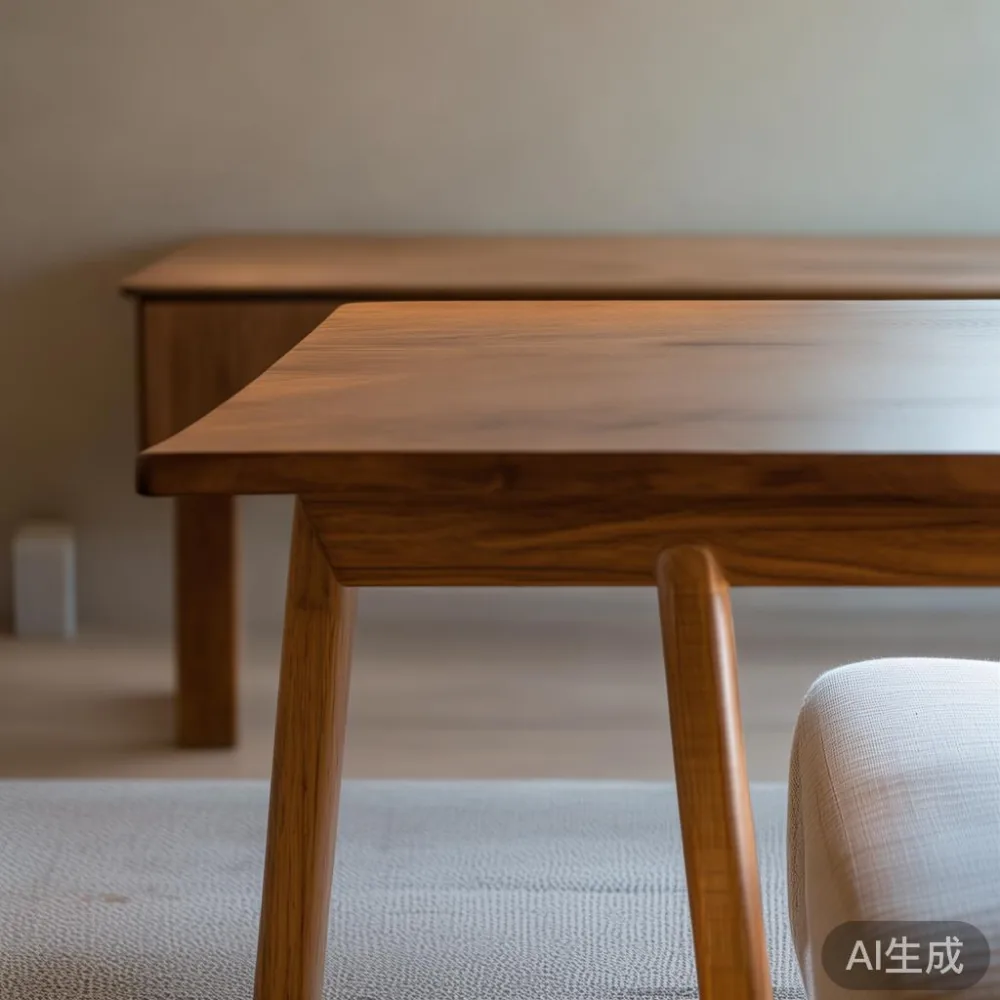
Why does buying a solid wood sofa, bed frame, or dining table online feel riskier than ordering a laptop stand?
The answer is simple: a solid wood dining table for six weighs anywhere from 38 kg to 72 kg depending on whether you pick an oak, ash, or beech top. A king-size bed frame in solid rubberwood typically sits between 55 kg and 80 kg once palletised. These are not parcels you can leave at the door. They need two adults, a trolley, and access to a lift that fits at least 1.9 m × 1.1 m of flat cardboard. In a 1990s-era HDB block in Bedok, that is rarely a problem; in a Punggol condo with a narrower cargo lift scheduled by the concierge, it can be the reason a delivery slot gets pushed by 48 hours. On top of the weight, the volumes are deceptive. A 2.4 m six-seat dining table breaks down into a flat-pack of roughly 180 cm × 95 cm × 18 cm, plus four leg cartons, plus a hardware box. Three cartons, three consignment notes, three chances for something to go missing.
That is also why the warranty document matters more than the marketing video. A maker like MIDHILL — based in Foshan since 2008, exporting to 15-plus countries, and offering a 10-year structural warranty plus lifetime refinishing on request — has a written answer to every "what if" question. If a dowel snaps during assembly, you email one photo. If the marble insert on your console table arrives chipped, you photograph the foam and wait three working days. The point is not that nothing ever goes wrong; the point is that the recovery procedure is in writing, not improvised on WhatsApp.
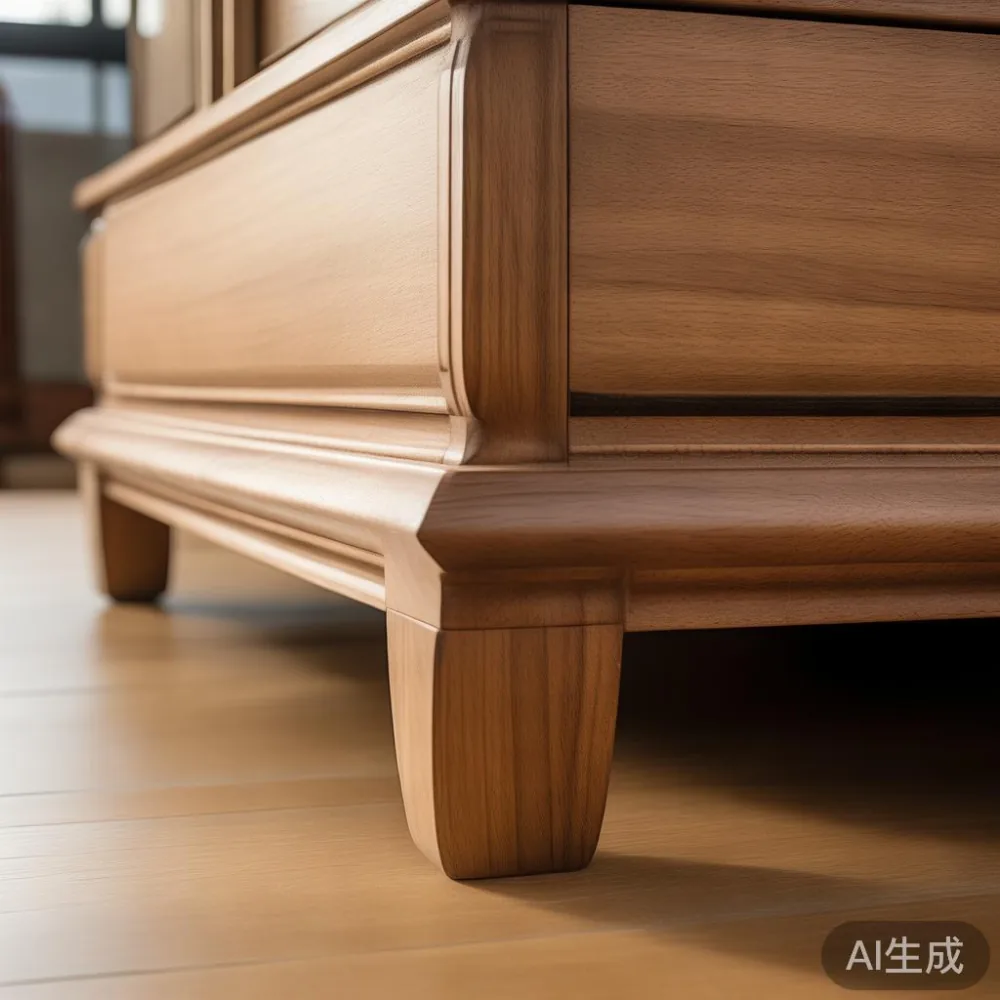
How long does delivery actually take from a Foshan factory to a Tampines HDB?
For an in-stock item, the realistic timeline is 18 to 28 days door-to-door to Singapore. The breakdown looks like this: roughly 5 to 9 days at the Foshan workshop for final inspection and export crating (solid wood items cannot share a sea container with mattresses or anything containing chemical softeners, so consolidation takes longer); 10 to 14 days on the vessel to Singapore port; 2 to 4 days for Singapore customs clearance, fumigation certificate filing, and last-mile scheduling. Add another 2 to 5 working days if you live in a condo that requires a delivery booking form signed by the management office, which is standard in Punggol and most new launches in the OCR. Custom orders such as a 2.6 m marble table in a specific vein pattern, or a wardrobe with non-standard internal modules, can stretch to 45 to 65 days. That is normal, not a delay.
My colleague in Tampines placed her order on a Sunday evening. Production started on the Wednesday once the deposit cleared. The container left Yantian on the eleventh day. Customs in Tuas took 12 days because of a public holiday in Malaysia that backed up regional feeder vessels. Total elapsed time: 41 days, which the maker had flagged as the upper end of the realistic range during the quote. The 8 am Slack of delivery on the morning of construction, with a 30-minute live tracking link, was the part that made the wait tolerable.
What does "free assembly" really cover when the team arrives?
The standard scope is: bring the cartons from the lift lobby to the room of your choosing, unwrap all protective foam and corner guards, assemble the piece following the included paper manual, level the feet on uneven HDB floors using the supplied shims, remove all debris in black garbage bags, and leave. They keep out: moving existing pieces out of the way, drilling into walls for wall-mounted wardrobes, lifting a marble table that exceeds 60 kg without the customer present to confirm placement, and any electrical work for items with integrated USB ports or LED lighting. A solid wood dining table for six usually takes 25 to 45 minutes for two crew. A king-size bed frame with hydraulic storage takes 40 to 75 minutes. A 4-drawer chest takes 18 to 30 minutes. A marble table with a stone top and a wood base can run 60 to 120 minutes because the marble is crated separately and has to be seated onto the base with a suction cup rig.
What surprises most Singapore buyers is the corridor. In older HDB blocks, the common corridor is 1.2 m to 1.4 m wide; in newer blocks and most condos it can drop to 1.05 m at the lift lobby. A flat 200 cm × 1.1 m cart will not make some turns. Crew members who work the same estate regularly — many of the Singapore-based delivery partners serving Foshan exporters have done so for over a decade — know which blocks in Bedok reservoir require a side-entrance trolley and which houses in Punggol need the service lift. Ask before you book the slot. If the maker cannot tell you which entrance their crew will use, that is the answer to a different question about whether you should be buying from them.
How do I style a Japandi accent chair in a small apartment?
Pick one Japandi accent chair with a solid ash or oak frame, place it in the corner where your work-from-home desk meets the window, drape a single 90 cm × 180 cm linen throw in oat or charcoal, and let the negative space around it do the work. The chair should be the only curved silhouette in a 1.8 m radius; everything else — the desk, the side table, the floor lamp — stays rectilinear. Pair it with a 45 cm diameter travertine or marble side table on the right (the marble catches the morning light from the east-facing window common in Punggol flats) and a 1.4 m tall narrow floor lamp with a paper shade on the left. No cushion pile, no footstool, no second chair. The whole composition should read from across the room as one quiet object, not a vignette. If you need somewhere to drop a book, hang a single 60 cm floating shelf 35 cm above the seat instead of bringing in another table.
Is a shoe cabinet for rental worth shipping all the way from Foshan, or should I just buy one at a local mall?
A shoe cabinet for rental is worth shipping if you want solid wood construction, a height above 110 cm, and a finish that does not warp within two Singapore monsoon seasons — which is the realistic lifespan of most flat-pack plywood units sold locally for under S$1,200. A local three-door plywood unit in the 90 cm to 120 cm height range typically retails between S$899 and S$1,499 before assembly fees of S$80 to S$150. The equivalent solid rubberwood or ash three-door unit from a Foshan workshop, including crating, sea freight, GST, and doorstep assembly, lands in Singapore at roughly S$1,150 to S$1,850. That is a 10 to 25 percent premium over the local flat-pack price, but you get 18 to 22 mm solid panels instead of 12 mm laminate-on-particleboard, soft-close hinges rated for 100,000 cycles instead of the typical 20,000, and a 10-year structural warranty that a local mall retailer will not match. For a rental property where you want zero callbacks from the tenant in the first 36 months, the math is straightforward.
What about light-luxury finishing — French light luxury, American light luxury, and post-modern light luxury?
These three finishing styles show up frequently in the MIDHILL and broader Foshan export catalogue, and they translate differently into a Singapore context. French light luxury — think brushed champagne hardware, cream bouclé on a solid wood sofa, and marble table tops with soft grey veining — photographs beautifully but needs air-conditioning below 24 h.p. to keep the bouclé from feeling sticky. American light luxury leans warmer: walnut tones, cognac leather pulls, oxblood accent chairs, and brass-rimmed mirrors. It survives the humidity better and pairs well with the warmer whites common in newer Punggol and Tampines flats. Post-modern light luxury is the most forgiving: rounded corners, asymmetrical nightstand proportions, terrazzo tops on console tables, and pastel upholstery in sage, dusty pink, or muted ochre. It hides the small scratches that a work-from-home desk chair can inflict on a corner within the first six months. Choose the one that matches the dominant undertone of your flooring, not the one that matches your laptop wallpaper.
Will the warranty really hold up if something cracks?
Yes, provided you document the damage within 48 hours with the original cartons still on site, and you send three photos — wide shot, mid shot, close-up of the crack or chip — plus the production batch number stamped on the inside of the wardrobe or the underside of the dining table. The maker's after-sales team, working across Singapore time and Foshan time, responds within one working day with either a part dispatch, a technician visit, or a refund against the affected component. A 10-year structural warranty covers frame joints, drawer runners, and bed-frame slats. A lifetime refinishing commitment covers sanding, re-staining, and re-sealing of solid wood surfaces, charged at cost of materials plus shipping. Consumables — drawer liners, felt pads, replacement cam locks, screws — are sent free of charge for the first 24 months. After 24 months, hardware kits are S$25 to S$45 inclusive of door-to-door courier to a Singapore address.
What the warranty does not cover is damage from prolonged direct sunlight, AC condensate dripping onto an unprotected marble top, dragged pieces across rough tile without felt pads, or assembly by anyone other than the maker's crew. Read the two-page warranty card before you sign the delivery order. If the card is missing from the box, photograph the packing list and email the maker that same evening. That single email is the difference between a covered claim and a denied one three years later.
What should I keep, measure, and photograph before the crew leaves?
Three things, in this order. First, keep the original cartons for 90 days, not the usual 14. A 200 cm × 95 cm × 18 cm carton for a dining table is the best physical evidence that the piece was correctly crated at origin; if a panel arrives warped, the maker's claims team will ask you to photograph the panel inside the carton with the foam still attached. Second, measure the piece against the floor plan of your HDB or condo using a tape measure, not your eye. A 2.4 m wardrobe will not fit a 2.35 m wall in many Punggol four-bedders; the 5 cm gap matters for the warranty on the side panels. Third, photograph the underside of every solid wood dining table, the inside of every wardrobe, and the back of every nightstand. The batch numbers, hardware labels, and finish codes are almost always on the back or underside, and they are the only reliable identifier if you ever need a replacement part in 2031.
Buying heavy solid wood furniture online for a work-from-home setup in Singapore is a logistics project, not a casual checkout. The pieces are heavy, the corridors are tight, the GST adds 9 percent, and the realistic delivery window is measured in weeks, not days. Choose a maker with a written warranty, a documented assembly scope, and a Singapore delivery partner who knows the lift lobby of your block. Then measure twice, photograph once, and keep the cartons for 90 days.