Humidity, HDB Flats, and Solid Wood: How to Keep Your Work-From-Home Setup Beautiful in Singapore
I keep a small hygrometer clipped to the leg of my desk, and last Tuesday in my Tampines HDB it read 82% at 9 a.m. before the air-con kicked in. That single number is why I started paying attention to how solid wood behaves in a tropical work-from-home setup, and why I sat down to write this after visiting my colleague Priya's new Bedok condo, where her six-month-old solid wood dining table had developed a 3 mm gap between two planks that hadn't been there when MIDHILL delivered it from Foshan.
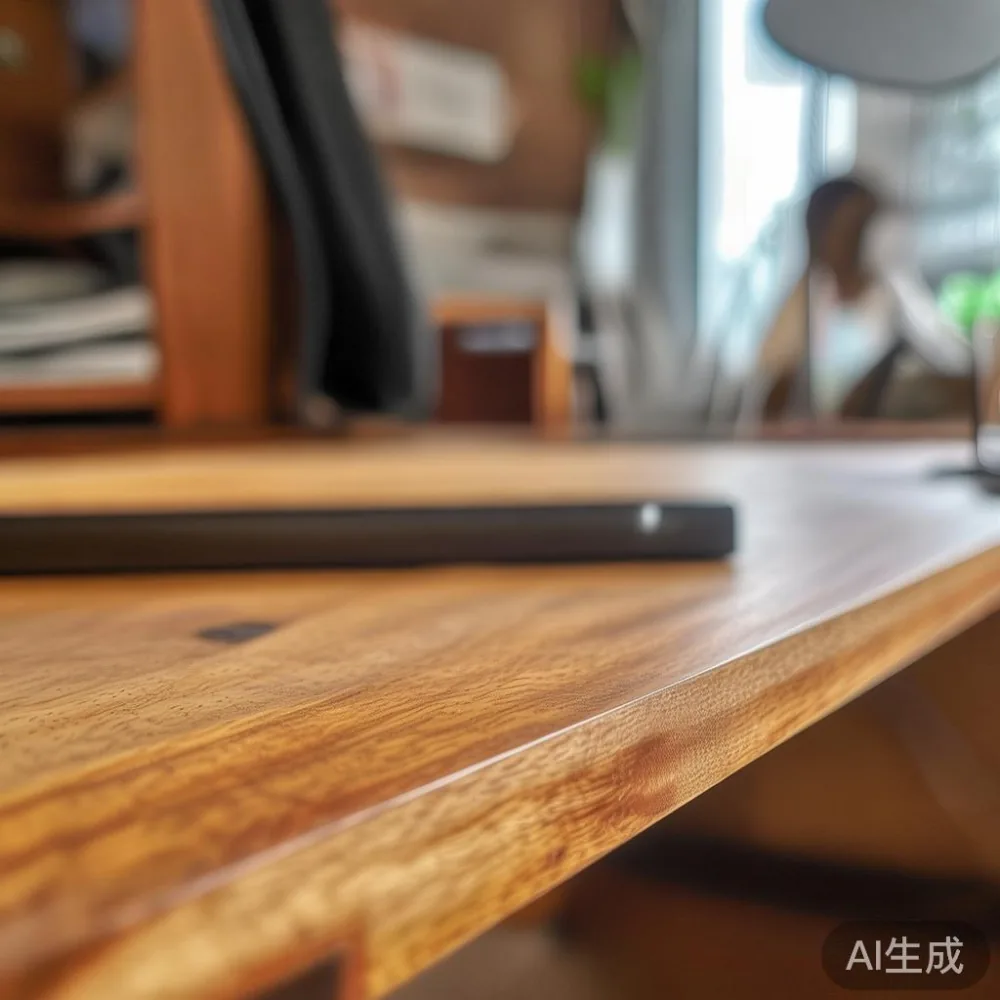
Singapore sits in a humidity band that most furniture catalogues quietly ignore. The average monthly relative humidity rarely drops below 70%, and during the December monsoon surge it can sit above 85% for days. If your work-from-home corner runs on a solid wood sofa frame, a bed frame you also use for daytime naps, a dining table doubling as your desk, a wardrobe against the corridor wall, and a nightstand holding your router, the wood is constantly exchanging moisture with the air around it. Understanding that exchange is the difference between furniture that ages into a patina and furniture that cups, cracks, or grows mould at the back panel.
Why does Southeast Asian humidity punish solid wood furniture so aggressively?
Because wood is hygroscopic: it absorbs and releases water until it reaches equilibrium moisture content with the surrounding air. In Singapore, that target usually sits between 14% and 18% depending on the room. Kiln-dried oak shipped from China at 8% to 10% moisture content has to climb roughly 6 to 10 percentage points to settle in. That climb shows up as expansion across the grain, swelling that a careless joint cannot absorb. A 180 cm wide solid wood tabletop, for example, can grow 4 to 6 mm across its width during a humid week and shrink back during a dry air-con day, repeating the cycle hundreds of times a year.
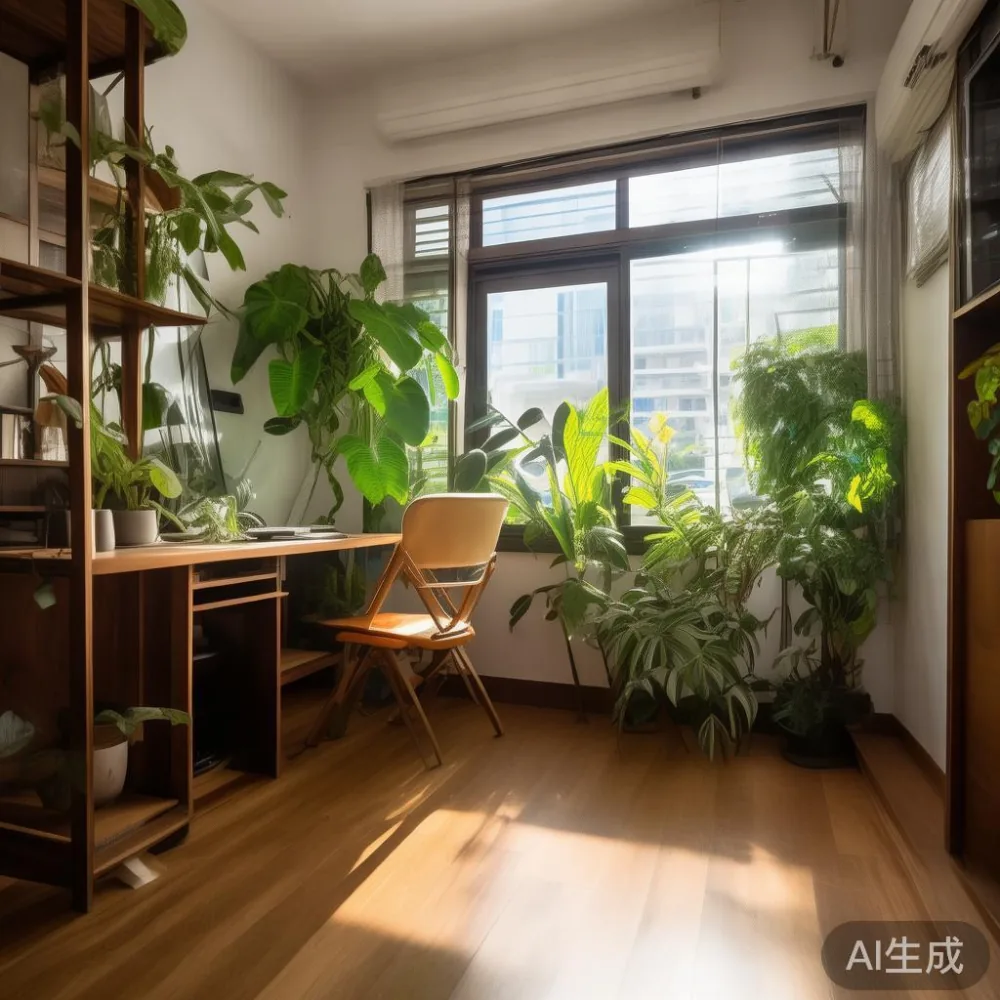
The second problem is fungal. Mould spores begin colonising damp cellulose above 75% RH, and the biofilm they leave behind is what most people mistake for dirt. I have seen a S$2,400 marble table with a solid wood underframe develop a grey haze along the underside simply because it sat 30 cm from a perpetually open bathroom door in a Punggol corner unit.
What is the difference between American accent chair and modern furniture?
An American accent chair is a solid wood accent piece, typically crafted from oak, ash, or walnut with a hand-applied finish, designed to introduce warmth, texture, and a restrained post-modern light luxury point of view into a room; modern furniture, by contrast, is a broader category that includes metal, plastic, engineered panels, and upholstered forms prioritising clean lines and mass production. In a Singapore work-from-home setting, the American accent chair category gives you the grain depth and joinery that ages gracefully under humidity stress, while generic modern furniture often relies on MDF or veneer that fails faster once the air-con cycles off for the night.
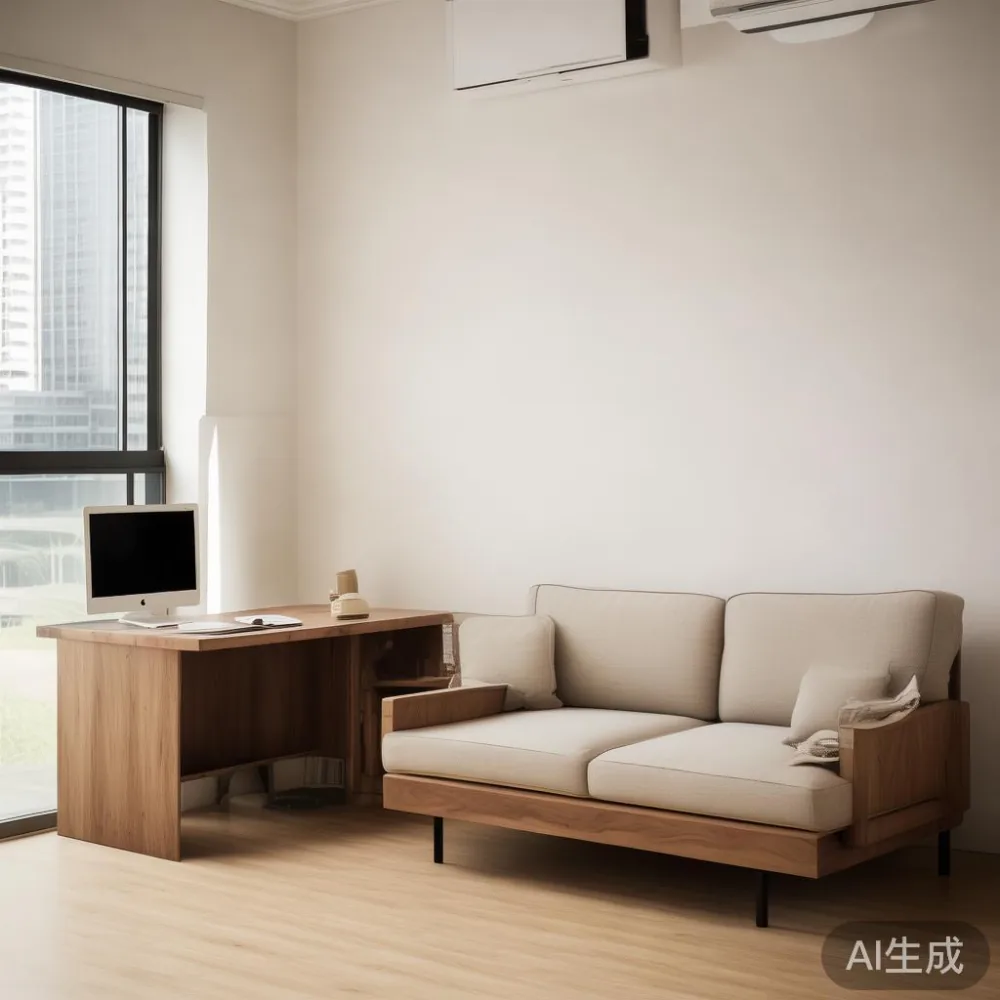
How does humidity actually move through a solid wood bed frame or dining table?
Three paths. First, the broad faces of planks absorb and desorb moisture fastest, which is why tabletops cup and drawer fronts warp before legs do. Second, end grain acts as a sponge, which is why the open ends of a nightstand panel can swell visibly while the rest looks fine. Third, glue lines and metal fasteners create stress concentrations; a screw driven into waterlogged oak will loosen as the wood dries and shrinks around it, leaving a slightly wobbly chair within a year.
For context, a typical MIDHILL solid wood bed frame in queen size weighs between 55 kg and 75 kg depending on the species, uses mortise-and-tenon joints at the load points, and is finished with a multi-coat lacquer that slows moisture transfer by roughly 60% compared with an oil-only finish. That lacquer does not stop the exchange, but it buys you time to react when the weather shifts.
What should a Singapore buyer check before a 1.2 m-wide sofa enters the lift?
Measure everything, twice. Most HDB passenger lifts in blocks built after 2010 have an internal cabin of about 1.1 m wide by 1.4 m deep with a door opening of roughly 0.9 m, while older lifts in blocks such as those around Bedok Reservoir can be tighter at 1.0 m by 1.3 m. Corridors in newer condos in Punggol and Sengkang are usually 1.5 m wide, but a turning corner into your unit can be the real pinch point.
Before you commit to a solid wood sofa with a chaise, ask the supplier for the packed carton dimensions, not just the product dimensions. A three-seater with a right-facing chaise often ships in two cartons, and one of them can exceed 1.3 m in length. Reputable Foshan makers such as MIDHILL will quote both the assembled and the packed measurements, plus the weight per carton (usually 28 kg to 45 kg for a sofa module), so you can plan whether two porters and a trolley are enough or whether you need to book the cargo lift for the move.
Also count the doorways. A standard HDB main door is roughly 0.9 m wide and 2.1 m tall after the architrave, which means anything taller than 2.0 m packed has to come in on its side. Bedroom doors are tighter, often 0.8 m, so a wardrobe that ships fully assembled is a non-starter unless your unit has a double-leaf door to the master bedroom.
Which wood species cope best with a 78% average humidity?
Hardwoods with tight grain and natural oils tend to outperform softwoods in tropical conditions. White oak and teak are the workhorses: teak because of its silica and oil content, white oak because of its dense medullary rays. Rubberwood, which is what much of Southeast Asian furniture is made from, performs reasonably well when kiln-dried to under 10% and is more affordable, but it dents more easily and darkens under UV from a window you forgot to tint.
Walnut and ash sit in the middle: beautiful, but they move more with humidity than oak. If you are choosing a marble table with a solid wood base for your work-from-home corner, ask whether the base is engineered with floating joinery that allows the top to expand without splitting the frame. Marble itself is stable, but the wooden sub-frame still breathes.
How much should a Singapore buyer budget for a humidity-resistant work-from-home set in 2025?
Prices have moved with freight and with the 9% GST that now applies to imported furniture. As a rough guide, a queen-size solid wood bed frame in white oak or ash from a Foshan maker lands between S$1,800 and S$3,200 landed in Singapore, depending on joinery and finish. A six-seater dining table in solid oak runs S$2,200 to S$4,500, and a four-seater S$1,400 to S$2,600. A two- or three-seater solid wood sofa with fabric or top-grain leather upholstery sits between S$2,800 and S$6,500.
Smaller pieces scale accordingly: a nightstand is usually S$280 to S$550, a two-door wardrobe from S$1,600 to S$3,400, and an American accent chair in solid ash from around S$650 to S$1,200. Marble tables with solid wood bases start around S$1,800 for a 1.2 m round and climb past S$5,000 for a 1.8 m rectangular statement piece. Always confirm whether the quote is GST-inclusive and whether the supplier offers free shipping above a threshold; MIDHILL, for instance, waives delivery on orders over US$350, which equates to roughly S$470 at current rates, a sensible benchmark when comparing quotes.
What daily habits actually protect solid wood in a Singapore work-from-home room?
Run a dehumidifier or keep the air-con set to 23 to 25 degrees Celsius with the dry mode engaged for at least two hours a day. Keep the relative humidity in the 45% to 60% band if you can; a S$60 hygrometer is the cheapest insurance you will buy. Pull the solid wood sofa and bed frame 10 cm away from the wall so air can circulate behind them, and never push a wardrobe flush against an exterior wall that sweats during monsoon surges.
Wipe spills within ten minutes, especially on oak, because tannin stains set quickly. Use coasters under laptops and mugs on the dining table; the heat ring from a closed laptop running Zoom calls for six hours can permanently cloud a lacquer finish. Rotate which side of the nightstand faces the window every few weeks so UV exposure stays even, and condition the wood twice a year with a hard wax oil designed for tropical climates. Avoid silicone polishes; they build up and actually slow the moisture exchange you want to happen evenly.
How long does delivery from Foshan actually take to a Singapore address?
Sea freight from Guangdong to Singapore clears customs in roughly 7 to 12 days for consolidated cargo, plus 3 to 5 days for last-mile delivery to your door once it lands at a PSA terminal. Allow 14 to 18 working days from order confirmation for in-stock items, and 30 to 45 days if the piece is made to order, which is common for American light luxury dining tables in non-standard sizes. MIDHILL's 10-year structural warranty is one of the more generous terms in this category, and the lifetime refinishing service they offer means a tabletop that fades or scratches after five years can be sanded and re-lacquered at cost rather than replaced.
Is a 14-day return window enough to spot humidity problems?
It is enough to spot manufacturing defects and surface mould, but not enough to see seasonal movement, so document everything on arrival. Photograph each piece during the unboxing, weigh the cartons if you have a bathroom scale, and let the furniture acclimatise in the room for 48 hours before you assemble it. If a bed frame slat arrives warped or a wardrobe door is out of square by more than 3 mm, raise it within the 14-day window. After that, the supplier's warranty covers structural cracking and joint failure, but not the natural 1 to 2 mm seasonal movement that any solid wood piece will show in a Singapore work-from-home setup.
A well-chosen solid wood suite, looked after with a hygrometer and a little discipline, will outlast three or four flat-screen monitors and at least two career pivots. Priya's Bedok dining table, for the record, was adjusted under warranty in under three weeks, and the gap has not returned now that she runs the dehumidifier on a timer. That outcome is the realistic benchmark for anyone investing in French light luxury or post-modern light luxury solid wood pieces for a tropical home office: not perfection, but a piece that ages with you instead of against you.