How to Choose the Right Size for a Singapore HDB Living Room Without Wasting Floor Space
Last month I visited a friend's three-room flat in Tampines and watched her wrestle a 2.4-metre three-seater sofa through a corridor that, by her own admission, turned out to be only 1.05 metres wide. The lift door on her floor is 0.9 metres across. By the time the movers finished tilting and unscrewing the sofa legs, the light luxury velvet cover had a scuff and the delivery fee had climbed by another SGD 120. The sofa itself was fine. The size was the problem.
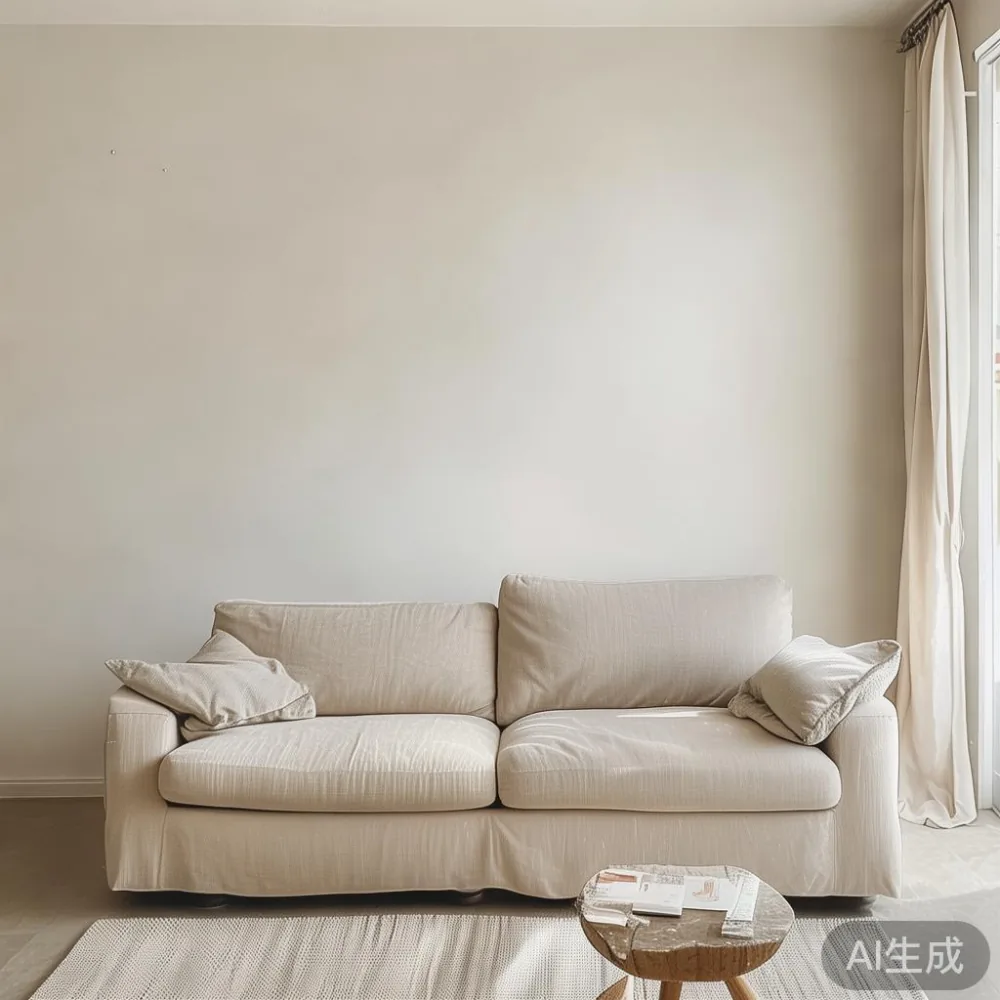
If you work from home in a Singapore HDB flat or a compact condo, the same trap catches nearly everyone. You pick the sofa, the dining table, or the wardrobe from a product photo, then discover on moving day that the lift, the corridor, the stairhead turning radius, and the living room doorway all have opinions about what fits. This guide walks through the actual numbers — in centimetres, kilograms, and Singapore dollars — so the furniture you order lands cleanly the first time.
Why Singapore HDB living rooms punish oversized furniture
Most HDB living rooms in resale blocks measure between 3.2 m × 3.0 m and 3.8 m × 3.4 m. Newer BTOs in Punggol and Sengkang trend slightly larger, but the doorway connecting the corridor to the living room is usually 0.85 m to 0.9 m wide. The service lift on many older blocks has a door width of only 0.8 m and an internal depth of around 1.4 m. Once you account for the fact that movers must angle the piece, you can subtract roughly 0.15 m of usable width from any rigid furniture body.
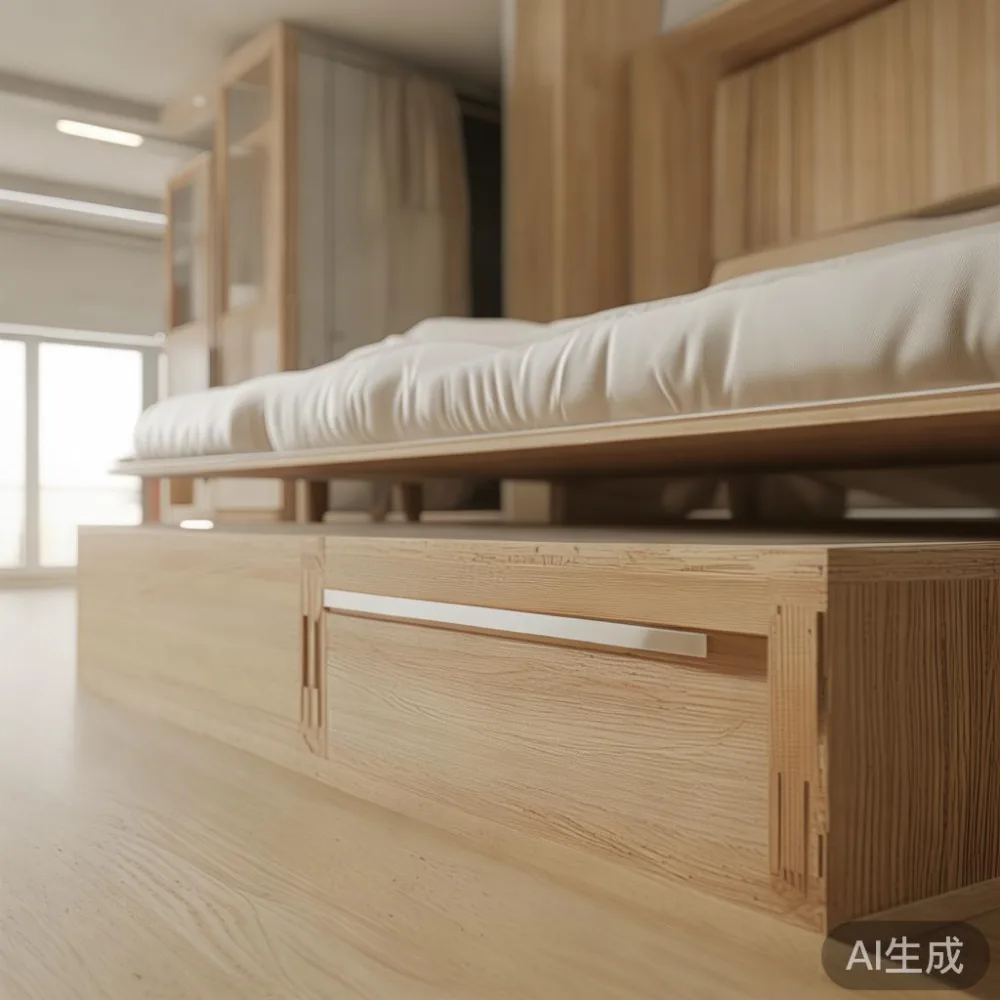
What this means in practice: a solid wood sofa with a fixed frame longer than 2.2 m, or a marble dining table wider than 1.5 m in a single slab, will not make it into the unit without disassembly. Modular pieces survive this journey because each section weighs less than 35 kg and fits the lift. I have measured this myself on a recent visit to a BTO at Bedok North, where the corridor turned 90 degrees within 2.1 m of the lift lobby — anything over 2.0 m long in one piece simply would not pivot around the corner.
Start with the doorway, not the sofa
The right sizing sequence is the reverse of what most people do. Begin with the narrowest opening the furniture has to pass through, then work backwards into the room layout. For a standard HDB corridor door, that opening is the lift door: typically 0.9 m wide by 2.1 m tall for passenger lifts, or 0.8 m wide by 2.1 m tall for service lifts. A solid wood bed frame in king size has an outer dimension of roughly 1.92 m × 2.12 m, which means it cannot enter through a 0.9 m lift without being disassembled into two side rails and a headboard.
Here is a quick rule I use: subtract 20 cm from the narrowest opening to get the maximum rigid length a piece can have. So a 0.9 m lift door gives you a 0.7 m rigid-length ceiling. Any wardrobe, dining table, or sofa component longer than 0.7 m must come apart. Modular wardrobes split into 60 cm-wide bays for exactly this reason, and a well-designed nightstand stays under 0.5 m wide so the whole unit slides through without tools.
Match the furniture to your room in centimetres
Once you know what can physically enter the flat, the next step is matching the piece to the room. A living room of 3.2 m × 3.0 m should host a sofa no longer than 2.0 m — leaving at least 0.6 m of walkway on at least one side. A room of 3.8 m × 3.4 m can absorb a 2.4 m three-seater, but only if the coffee table or marble side table is under 1.0 m long. Anything bigger crowds the walk path and forces you to side-step every time you carry a laptop from the work desk to the dining table for lunch.
For dining tables, the rule is simpler. In a 2.8 m × 2.6 m dining corner next to the kitchen, a four-seater at 1.2 m × 0.8 m leaves enough circulation. A six-seater at 1.8 m × 0.9 m needs at least 3.0 m of wall length, which most HDBs do not provide. Marble tabletops are heavier — typically 70–90 kg per square metre — so the lift and corridor limits matter even more than for a solid wood dining table of the same size.
For work-from-home setups, the desk width matters too. A 1.4 m desk sits two monitors comfortably without overlapping a window sill, which in most HDBs sits 0.9 m above the floor. A 1.6 m desk is workable if you can shift the wardrobe door swing by 90 degrees — usually impossible in a compact flat. My colleague in Punggol learned this the hard way and ended up returning a 1.8 m desk that physically fit the room but blocked her wardrobe door every morning.
Is a assembly difficulty worth the price in Singapore?
Yes, when the assembled-on-site cost in Singapore is lower than the delivered-but-unusable cost you would otherwise pay. A modular solid wood sofa that arrives in four boxes under 30 kg each costs around SGD 80–120 to assemble locally, versus returning a rigid frame sofa that never made it past the lift door, which typically costs SGD 150–250 in restocking, return courier, and a second delivery. Over a five-year ownership window, the modular route is cheaper by roughly SGD 600–900 even before you count the value of your own time.
The calculation shifts when delivery is included free above a spend threshold and when the seller absorbs return shipping. Check the policy line by line — some providers charge a 20% restocking fee on assembled items even if the fault was the sizing, not the build. Others will swap a sofa once at no charge if the first delivery does not fit, provided the second delivery slot is within 14 days.
Read the price tag with GST included
Singapore's GST sits at 9% as of 2024 and is set to move to 9.25% in 2025. Display prices on overseas furniture sites often exclude GST until checkout, which can add 9% to your bill overnight. A solid wood bed frame tagged at SGD 1,800 becomes SGD 1,962 at the register, and a marble dining table at SGD 2,400 becomes SGD 2,616. Always calculate the landed figure before comparing two pieces across different sites.
Shipping is the second hidden cost. Sea freight to Singapore from China takes 18–28 days, and most suppliers add SGD 80–250 per piece for the lift-and-carry service, which covers ground-floor drop-off only. Upper-floor delivery above the fourth storey in HDBs without a service lift can add another SGD 60–120 because the movers carry each box up the common staircase. Free shipping thresholds — for example, free delivery above US$350, or roughly SGD 470 — make a real difference once you are ordering a sofa, dining table, and wardrobe together as a work-from-home package.
Light luxury, post-modern lines, and the Singapore palette
The French light luxury look — slim brass-tipped legs, boucle or velvet upholstery in oat, taupe, and muted sage — works unusually well in Singapore because the palette reflects tropical light without screaming for attention. American light luxury leans heavier on the frame: chunkier solid wood sofa arms, walnut or oak tones, deeper seat depths around 0.6 m that suit taller users working on laptops for eight hours. Post-modern light luxury pushes the silhouette further with curved backs, asymmetrical marble side tables, and tapered plinth bases on the bed frame.
For an HDB living room under 12 square metres, I lean toward French or post-modern light luxury because the slimmer profiles keep visual weight down. An American-style sectional looks generous in a condo but tends to dominate a 3.2 m wide living room wall. Pair a slim 2.0 m solid wood sofa with a 0.9 m round marble side table and a 1.2 m oak dining table, and the room reads as one composition rather than four oversized objects competing for the same floor.
Match weight to floor load and lift capacity
HDB floor load ratings sit at 150 kg per square metre for residential floors. A 2.0 m × 0.9 m solid wood sofa can weigh 85–110 kg distributed across four legs, well within the limit. A marble dining table at 1.5 m × 0.8 m, however, weighs 90–120 kg on a footprint of just 1.2 square metres — already at 75–100 kg per square metre before anyone sits down. Add four diners at 70 kg each, and the load peaks around 380 kg on the same footprint, or roughly 316 kg per square metre, more than double the rated capacity.
Two practical fixes exist. First, choose an engineered marble top on an MDF or plywood substrate, which cuts weight by 40–50% and brings the table back inside the load rating. Second, spread the seating across a 1.8 m table instead of a 1.5 m one — same number of chairs, but the load per square metre drops by roughly 30%. Both options also ease the lift problem, because the heaviest single piece drops from 120 kg to 60–70 kg, which one mover can handle on a narrow corridor.
Plan the work-from-home layout before the box arrives
The reason most furniture fails in HDBs is not the piece itself but the layout. A sofa placed too close to the work desk forces you to swivel your chair through a 90-degree arc every time you stand. The minimum clearance between the front edge of a desk and the nearest obstruction should be 0.7 m for a chair to roll out without scraping. In a 3.0 m × 3.0 m living room, that leaves only 1.5 m for the sofa depth and a 0.4 m walkway behind, which is tight but workable if you choose a 0.85 m deep sofa instead of the standard 0.95 m.
Work-from-home setups also demand quiet corners. Pull the wardrobe at least 5 cm away from the wall to allow air circulation — HDB humidity runs 70–85% on most afternoons, and a sealed wardrobe will transfer that moisture into the solid wood panels over a year. A nightstand next to the bed should be at least 0.45 m wide so a laptop, a glass of water, and a phone all fit on top without crowding the alarm clock.
Why I now default to modular pieces for HDBs
After watching three friends move into Tampines, Bedok, and Punggol over the past six months, my own shortlist has shifted heavily toward modular frames, knock-down joinery, and pieces that ship under 32 kg per box. MIDHILL takes a similar approach with its solid wood sofas and bed frames, designed so each component lifts cleanly into a 0.9 m lift and assembles in the living room in under 90 minutes with one Allen key. That design choice solves the lift, the corridor, the staircase, and the daily layout problem at the same time.
What matters is not the brand label but the geometry. A solid wood sofa with a 0.85 m seat depth, a 2.0 m total width, and four boxes under 30 kg each will fit more HDB living rooms than any rigid-frame alternative at the same price point. A dining table that splits into two halves at 0.9 m each will pass more corridor turns than a single-slab marble top, even if both weigh the same total. The numbers, not the marketing copy, decide what works in a Singapore flat.
Quick checklist before you order
Before paying a deposit, measure three things with a tape: the lift door width on your floor, the tightest corridor turn, and the living room's longest uninterrupted wall. Photograph each measurement with a ruler in the frame. Send those photos to the seller and ask for the outer-box dimensions of each component, not the assembled dimensions. Confirm the per-box weight, the assembly time, and whether re-delivery is included if the first delivery fails to enter the unit.
Add the GST into the price, add the lift-and-carry fee, add the upper-floor carry if you live above the fourth storey without a service lift, and compare the total across two or three suppliers. A piece that costs 15% more but arrives in modular boxes will often land cheaper than the rigid alternative once return shipping, restocking fees, and your own Saturday afternoon are priced in. For work-from-home buyers in Singapore, the right size is the size that survives the lift and the corridor — everything else is decoration.