How Humidity in Southeast Asia Affects Your Solid Wood Work-From-Home Setup (And What to Do About It)
Singapore sits roughly one degree north of the equator, and the weather never really stops negotiating with your furniture. Relative humidity in a typical Tampines or Bedok HDB flat hovers between 65% and 85% for most of the year, and on a wet monsoon afternoon it can climb past 90%. Walk past any condo corridor in Punggol and you will see the same thing: air cons running at 23°C while the windows sweat from the outside. That constant moisture cycle is the single biggest reason a S$3,200 solid wood dining table behaves differently in Singapore than the same piece would in a dry Toronto loft or a chilly Berlin apartment.
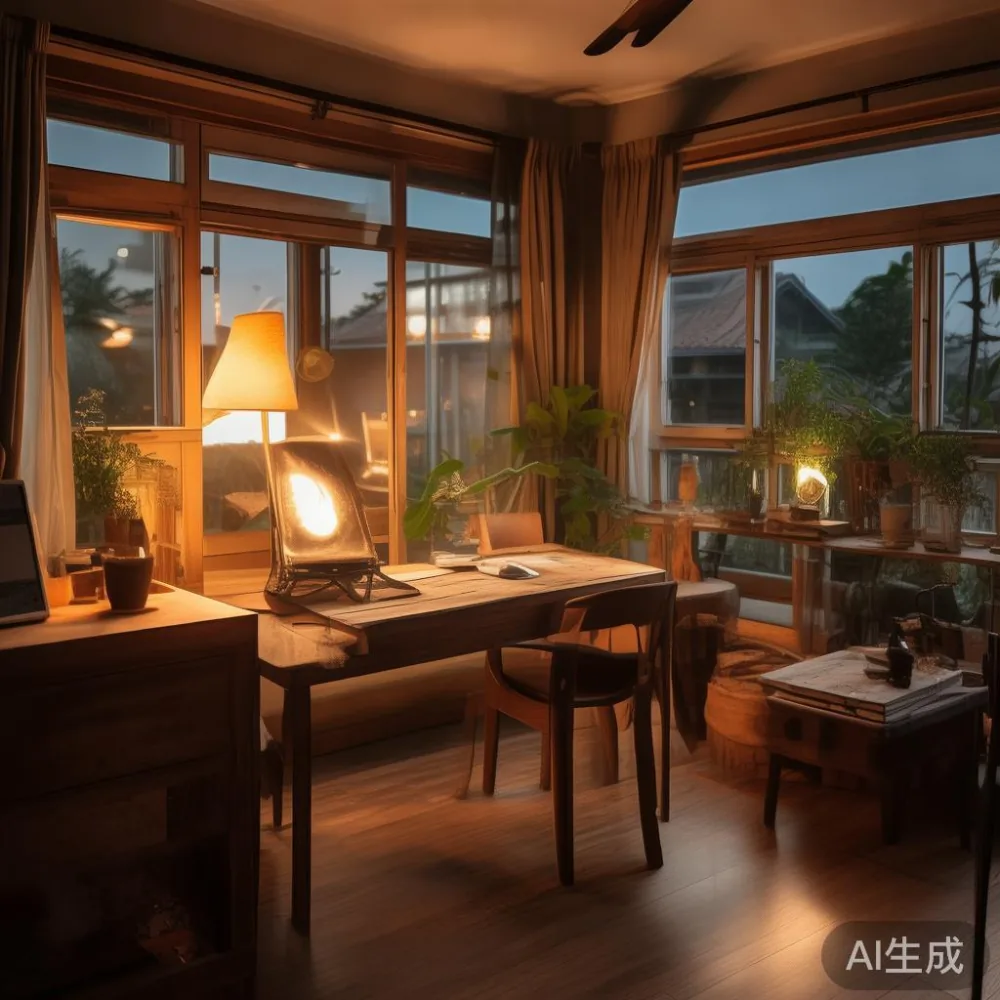
Most people only notice the problem when something has already gone wrong: a wardrobe door that rubs in August, a hairline crack across a solid wood sofa arm in February, a work-from-home desk that wobbles after a year of Zoom calls. None of these failures are random. They are humidity failures, and they are predictable, measurable, and almost always preventable.
Why Southeast Asian humidity attacks solid wood specifically
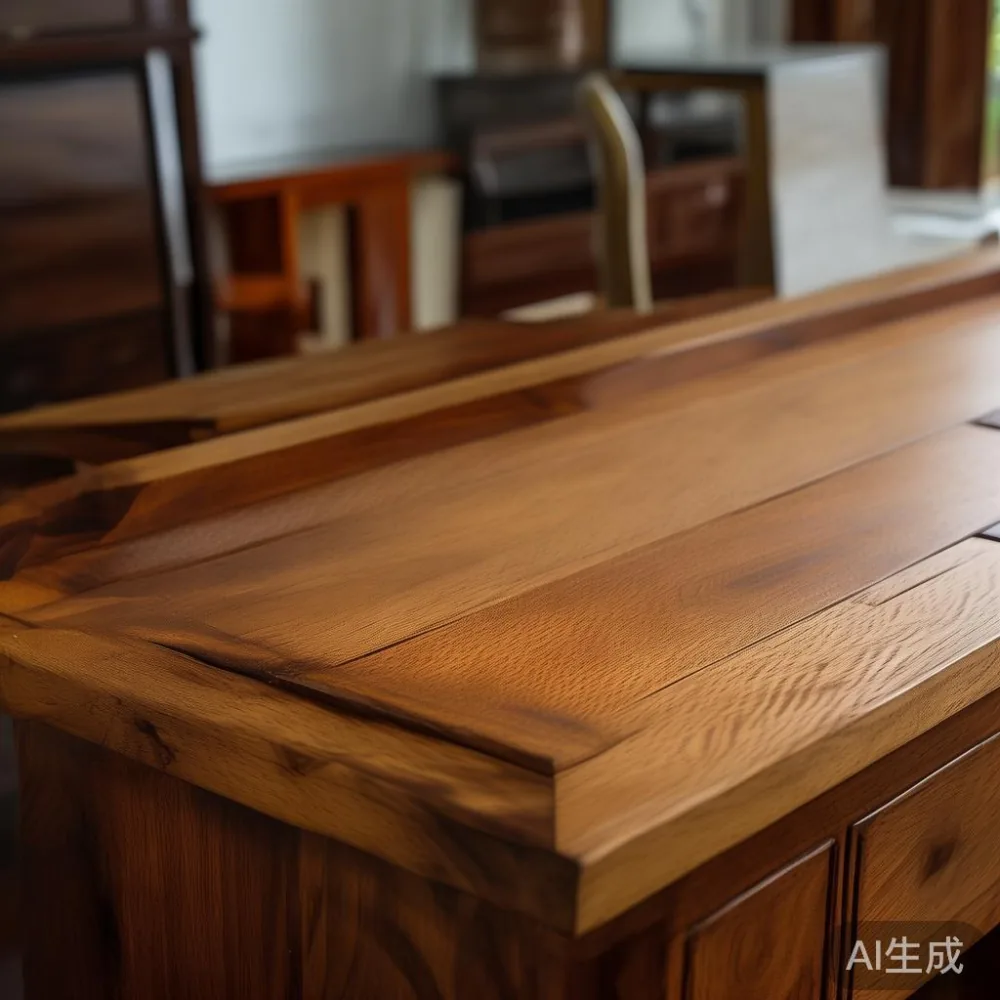
Solid wood is a hygroscopic material. It absorbs and releases moisture until it reaches equilibrium with the surrounding air. When humidity rises from 60% to 85%, a typical oak board roughly 25 mm thick can swell by 1.5% to 2% across the grain. That sounds small, but on a 180 cm dining tabletop, a 2% expansion means almost 1 cm of width the wood did not have yesterday. Once the dry season returns, that same board shrinks back, and the stress shows up as cracks, lifted veneers, or joints that no longer sit flush.
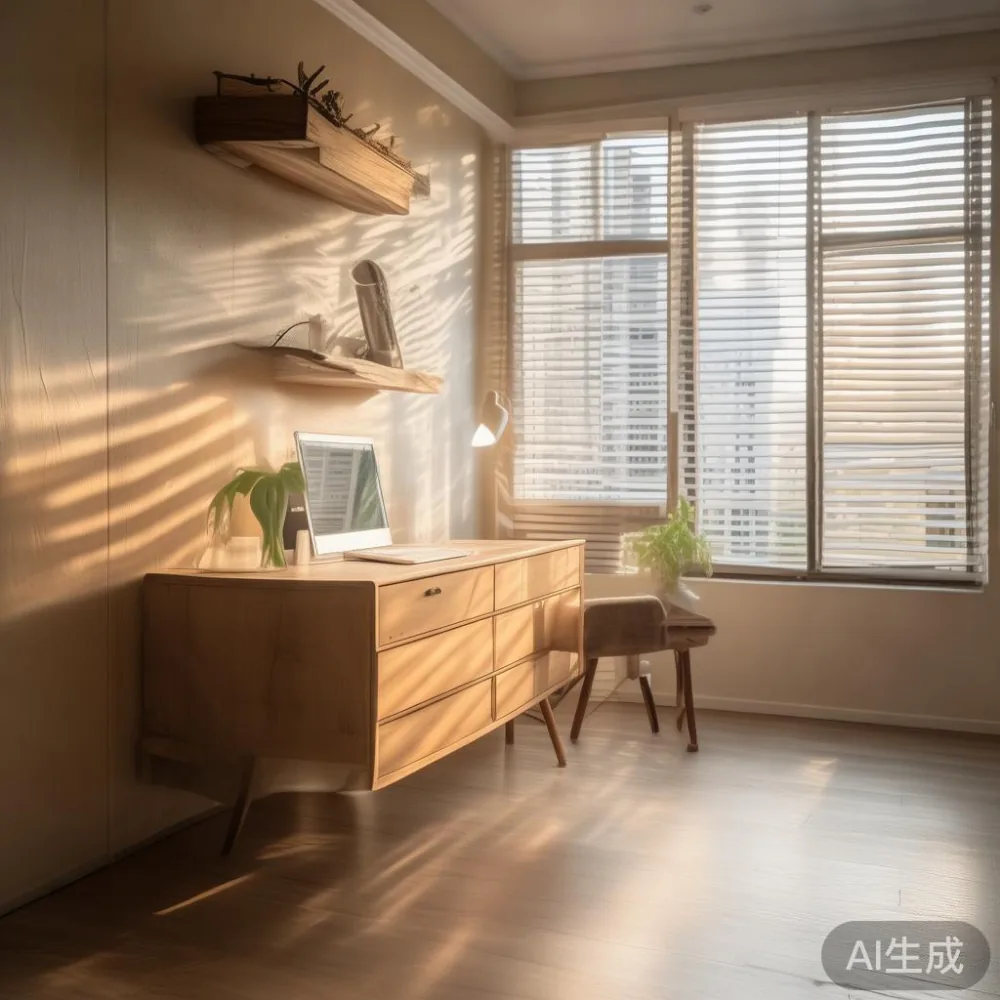
Engineered boards (MDF, plywood with thick laminates) hide this movement better but pay for it in other ways. Particle cores swell permanently if they get wet once, and the cheap ones never recover. A well-built solid wood piece, by contrast, is meant to move. The question is whether it has been dried, joined, and finished to survive five to ten Singapore humidity cycles without losing its shape.
I tested this last month in a Punggol corner unit, where a friend had assembled a light luxury bed frame in March. By July the headboard had tilted roughly 4 mm to one side. The fix was not glue or shims. It was a 12 mm V-notch humidity joint, the kind of detail a serious workshop machines into the rail before assembly. The bed frame has stayed square since.
The Singapore-specific numbers: flats, lifts, and what actually fits
Before a single humidity argument matters, the piece has to get into your home. Most HDB service lifts measure roughly 1.2 m wide by 2.1 m deep, with a diagonal clearance closer to 2.4 m. Condo service lifts in newer developments such as Treasure At Tampines or Waterway Ridges are usually a touch wider, around 1.3 m by 2.3 m, but the door opening often stays at 1.0 m. A king-size bed frame in a single box can exceed 2.2 m in length, which is why experienced Foshan exporters ship solid wood beds flat-packed with the headboard detached.
Corridor widths in HDB blocks are typically 1.2 m to 1.5 m, and turning into a unit door at the end of a T-junction can swallow another 10 cm of usable space. A marble table top, for example, often arrives in a crate around 140 cm by 90 cm. If your lift door is only 1.0 m wide, the crate has to come in on its side, and the marble table top then needs two people and a furniture dolly to angle it down the corridor. This is one of the small reasons a brand that controls its own crating, like MIDHILL, usually quotes Singapore deliveries in 18 to 28 working days by sea plus 3 to 5 working days for last-mile, rather than the 60-day window some dropshippers advertise.
Weight is the second physical constraint. A 1.8 m solid wood dining table in ash or oak weighs between 75 kg and 95 kg unpacked. A six-seater with a marble table top can cross 140 kg. That is too heavy for most HDB service lift ratings when you add two delivery men and the dolly itself, which is why most professional crews will refuse to carry it above the second floor by hand.
What humidity actually does to a work-from-home setup
Your home office is where humidity damage shows up first, because the same room usually holds three or four solid wood pieces at once: a desk, a solid wood sofa for client calls, a nightstand doubling as a printer stand, and a bookshelf that the air con blows across for eight hours a day. When the air con cycles off at night and the door closes, that room can swing from 22% RH to 78% RH in under three hours. Solid wood moves through that swing visibly.
The three failure modes I see most often in Singapore work-from-home setups:
- Sticking drawers. A bedside drawer or a desk drawer grows 1 to 2 mm across its width. The drawer that slid cleanly in January feels glued shut in July. The fix is usually a humidity-controlled room plus a 0.5 mm shim taken off the drawer side, not new slides.
- Hairline cracks across the grain. These appear on the top surface of a dining table or the seat deck of a solid wood sofa, usually running with the grain. They are cosmetic for the first season, but they collect grime and deepen by year three if left alone.
- Joint movement. Mortise-and-tenon joints in a wardrobe or bed frame work themselves loose when the rails shrink and swell repeatedly. A wardrobe door that needed a 2 mm spacer in March may need a 4 mm spacer in October.
None of these failures are covered by a warranty, because the warranty covers structural breakage, not movement. A proper workshop in Foshan kiln-dries its oak and ash to 8% to 10% moisture content before machining, which is close to the 11% to 13% equilibrium moisture content of an air-conditioned Singapore home. That 2% to 3% gap is the safety margin your home depends on.
Is a light luxury sofa worth it in a humid climate?
This is a fair question, because light luxury furniture carries a 20% to 40% premium over comparable minimalist pieces, and in a humid market the premium has to be justified by something tangible. In my experience walking Punggol showrooms and Bedok HDB living rooms, the answer comes down to three engineering choices you can actually measure: frame joinery, finish thickness, and wood moisture at the point of assembly.
A French light luxury sofa tends to use a beech or ash hardwood frame with mortise-and-tenon corners, dovetailed seat rails, and a multi-layer French polish or PU finish rated at 80 microns or higher. A post-modern light luxury sofa in the American tradition uses oak or walnut with pocket-screw frames and a thinner matte finish around 40 microns. In a 78% RH Singapore afternoon, the thicker finish slows moisture exchange enough that a small spill or a forgotten towel does not turn into a swollen armrest. That is the real reason people ask is light luxury sofa worth it, and the practical answer is yes, if the wood was kiln-dried below 10% before assembly.
The same logic applies to a dining table or wardrobe. A S$4,800 light luxury marble table from a workshop that kiln-dries its bases will outlast a S$1,600 flat-pack competitor by ten years, even though both look acceptable on day one. The cheaper piece simply has not been dried long enough to survive five Singapore monsoons.
How should I protect a solid wood dining table from Singapore humidity?
This is the question I get most often from new HDB owners in Tampines and Punggol, and the honest answer is that the table itself does most of the work if it was built properly. Your job is to keep the room between 45% and 65% relative humidity, which means a dehumidifier set to 55% in the dining area running 12 hours a day costs roughly S$15 to S$25 a month on the SP Group tariff. For most three-room flats, that is enough.
Five habits that extend the life of a solid wood dining table, bed frame, or wardrobe in Singapore:
- Keep the table at least 8 cm away from the air con wall unit. Direct cold air drops surface moisture below 30% RH within a 30 cm radius, which is exactly the gradient that cracks tops.
- Wipe spills within 10 minutes, but never with a wet cloth. A damp cloth leaves a moisture film that the wood absorbs unevenly. Use a barely-damp microfiber pad and dry the surface immediately.
- Rotate the tablecloth every two weeks. Constantly covering one quadrant and not the other creates a humidity gradient across the top.
- Refinish the surface every 18 to 24 months with a hard wax oil rated for tropical climates. A 250 ml tin costs around S$18 to S$28 and covers a six-seater once.
- Buy a small digital hygrometer (S$12 to S$20 at any Tampines mall) and check the reading once a week. If it sits above 70% for more than 48 hours, run the dehumidifier.
These steps sound minor, but together they roughly double the service life of a solid wood piece in Singapore. The cost is under S$300 a year, which is less than a single refinishing visit, which is why most MIDHILL owners in Singapore treat humidity control as part of the furniture budget rather than an optional extra.
Choosing the right bed frame and sofa for a tropical work-from-home flat
The bedroom and the living room are the two rooms where humidity does the most damage, because both rooms are air-conditioned for long stretches and then opened up to the rest of the flat for the rest of the day. A bed frame in a Japandi or Japanese style tends to sit low to the floor, which is friendly to air circulation underneath but also exposes the slats to under-bed humidity that rarely drops below 65% in a Singapore night. A taller European bed frame keeps the sleeping platform higher but traps more still air underneath, which can breed mould on the floor if the room is not dehumidified.
The choice between a Japanese bed vs Japandi bed often comes down to slat material and finish. A traditional Japanese bed uses plain cedar slats with a thin oil finish, which breathes well but needs refinishing every 12 months. A Japandi bed typically uses engineered birch slats with a matte lacquer, which is more durable but holds moisture longer if it ever gets wet. In Singapore, the Japandi option survives better because the lacquer slows the daily humidity cycle. The same logic applies to a European bed vs Nordic bed: the heavier continental frame usually wins on humidity tolerance because of its thicker rails and tighter joinery.
For the work-from-home living room, the choice between an American sofa vs Nordic sofa plays out the same way. An American-style solid wood sofa tends to have a deeper seat, a thicker (around 110 mm) seat cushion, and a kiln-dried oak frame. A Nordic sofa uses lighter ash or beech with thinner (around 80 mm) cushions and a more open frame that breathes well in dry climates. In Singapore humidity, the denser American frame resists swelling better, but only if the cushions are wrapped in a breathable mesh so the inner foam does not trap moisture against the wood. A MIDHILL sofa in the post-modern light luxury line usually ships with both features: a kiln-dried American oak frame at 8% moisture content and a mesh-wrapped high-resilience foam core that lets the frame breathe.
The same thinking applies to styling. If you want to know how to style French provincial sofa in room settings without trapping humidity, keep at least 15 cm between the sofa back and the wall, never push a wardrobe flush against an unventilated exterior wall, and avoid heavy curtains that trap moisture behind a bed headboard. Light linen or cotton drapes breathe far better than the blackout polyester most HDB owners default to.
What a serious warranty actually covers in Singapore
A 10-year structural warranty on a solid wood piece means the workshop will replace or repair broken frames, cracked load-bearing rails, and failed joinery. It does not cover surface cracks from humidity swings, finish wear from sun exposure, or mould from poor ventilation. Those are owner-responsibility issues, which is why the MIDHILL lifetime refinishing service exists: the brand will send a technician to your Tampines or Bedok unit once every two to three years to sand and re-oil the surface for a small service fee (typically S$120 to S$220 per piece), which keeps the humidity protection intact for the life of the piece.
Free shipping over US$350 (roughly S$475) and 14-day returns apply to Singapore deliveries as well, which is helpful because a S$3,200 dining table or a S$4,200 marble table top is a real commitment. A 28-day return window on a 95 kg crate is not workable, but 14 days is enough to see one full humidity cycle and decide whether the piece fits the room and the climate.
The short list before you buy
If you take nothing else from this guide, take these four checkpoints before you click order on any solid wood piece for your work-from-home flat:
- Ask the workshop for the kiln-dried moisture content of the frame. Anything above 12% is a risk in Singapore.
- Check the lift and corridor measurements in your block before ordering a king bed frame or a marble table top above 130 cm in length.
- Budget S$15 to S$25 a month for dehumidification in the room that holds your most expensive solid wood pieces.
- Plan a refinishing visit every 18 to 24 months to keep the surface sealed against the daily humidity cycle.
Singapore is one of the best places in the world to own solid wood furniture, because the climate is stable enough that a well-built piece can outlive the owner. It is also one of the worst places to own badly built solid wood, because the humidity finds every shortcut a careless workshop took. Spend an extra hour on the specifications, and your solid wood sofa, bed frame, dining table, wardrobe, nightstand, or marble table will reward you for decades rather than years.