Styling a Small Singapore Apartment for Work From Home Without the Crowded Feeling
I spent last month visiting a colleague's three-room HDB flat in Tampines, and the thing that struck me most was how much breathing room her living room had even though she works from home full-time, has a two-seater solid wood sofa, a 140cm dining table, and a queen bed frame in the master bedroom. The secret wasn't a bigger flat — it was a set of small choices about scale, sightlines, and the weight of each piece. Singapore renters and new BTO owners deal with a very specific spatial puzzle: corridor widths around 1.2 to 1.5 metres, lift openings around 0.9 metres wide, GST added on top of every furniture invoice, and a floor plan that has to host a desk, a dining table, and a bed frame without any one of them stealing the room. This is a long-form guide for people who need real numbers — centimetres, kilograms, Singapore dollars — and who would rather skip the aspirational fluff. I'll cover layout, light, storage, the work-from-home desk problem, and the furniture categories that actually earn their keep in a small flat: solid wood sofa, bed frame, dining table, wardrobe, and nightstand.
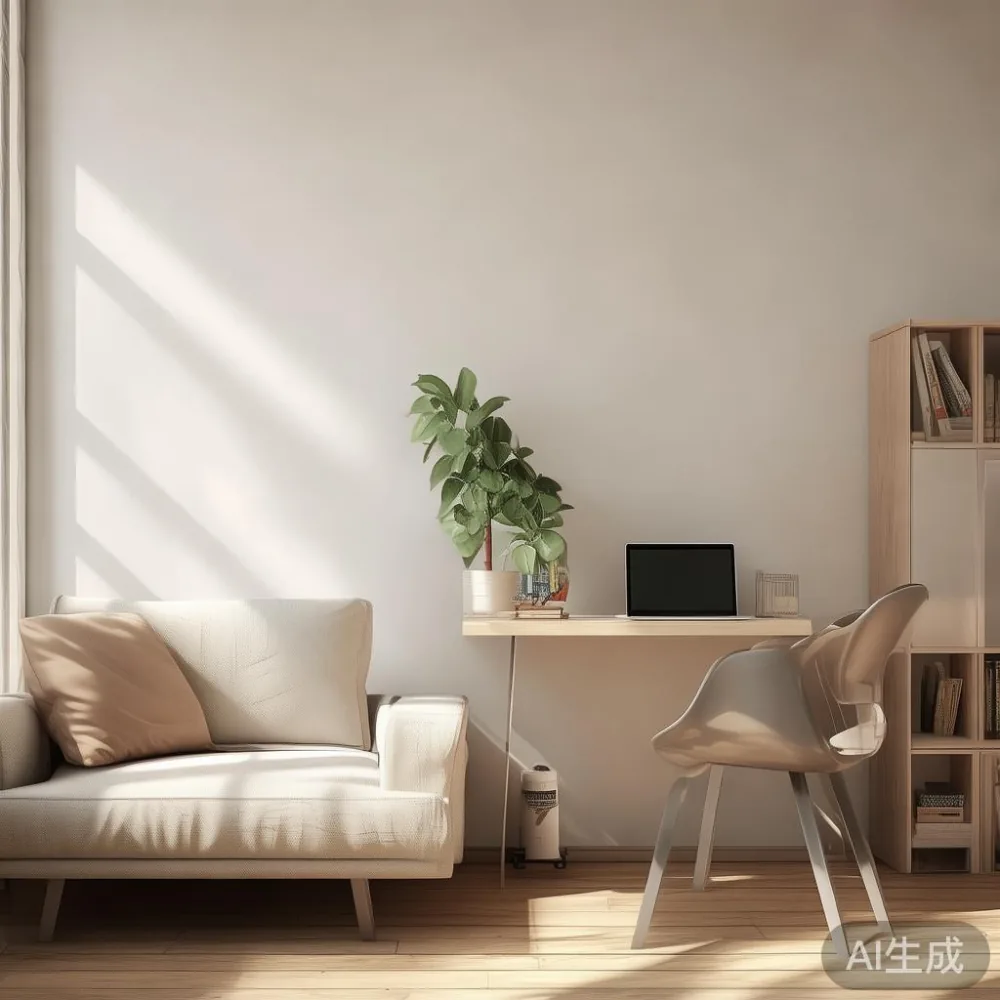
Why a small HDB or condo flat feels crowded in the first place
Crowded isn't the same as small. A 65 square metre flat in Punggol can feel airy, while a 75 square metre unit in Bedok can feel like a storage unit. The difference comes from three measurable things: visual weight, blocked sightlines, and dead circulation space. Visual weight is the dark mass of large pieces — a heavy wooden wardrobe pushed against the only window, a chunky marble table that eats 40 percent of the floor, a 2.4 metre tall shelving unit that interrupts the ceiling line. Blocked sightlines are the worst offender. When a piece of furniture taller than 90cm sits between you and the window, your brain registers the room as half its actual size. Dead circulation is the wasted 60 to 90cm strip around a dining table or the gap between a sofa back and a wall that nothing actually fills.
For a typical Singapore living room of about 3.2 metres by 3.6 metres, the workable footprint is roughly 11.5 square metres. A three-seat solid wood sofa at 200cm long by 85cm deep already takes about 1.7 square metres, which is 15 percent of the floor. Add a 120cm round marble table, a 140cm desk, a TV console at 180cm, and a wardrobe at 180cm wide, and you are pushing past 60 percent of the floor in furniture footprint before you walk through the door. Anything past 50 percent usually reads as crowded, anything past 65 percent reads as a storage problem dressed up as a home.
How much furniture can a small Singapore flat actually hold?
Work backwards from the room, not from the wish list. Take your living room dimensions, subtract 70cm of clear walkway on every primary path between door, sofa, and window, and whatever remains is your furniture footprint budget. In a 3.2 by 3.6 metre HDB living room, that usually leaves 5 to 6 square metres of actual floor that can be occupied by furniture. A 180cm two-seater solid wood sofa at SGD 1,480, a 110cm round coffee table at SGD 520, and a 160cm TV console at SGD 690 will sit comfortably inside that footprint with 80 to 90cm of breathing room on the sides. Add a work-from-home desk and you tip into crowded.
For the bedroom, the math is similar. A standard Singapore master bedroom at 3.0 by 3.2 metres can host a 150cm queen bed frame, two 45cm nightstands, and a 150cm sliding wardrobe without crossing the 50 percent line. Push the wardrobe to 180cm and the room starts to feel narrower than it is. Push the bed to 180cm king and you lose a nightstand entirely. The point is that every 10cm of width on a sofa or wardrobe changes how the room reads, and once you start running these numbers the decisions get much easier.
How do I choose a care sofa for a living room?
Pick a sofa whose seat depth is between 55cm and 60cm, whose frame is solid hardwood at minimum 4cm thick, and whose arm height stays below 65cm so the room keeps its horizontal sightline to the window. For small HDB living rooms in Tampines or Punggol, a 180cm two-seater solid wood sofa with removable cushion covers — usually SGD 1,200 to SGD 1,800 for a kiln-dried ash or oak frame from a Foshan workshop — fits the room better than a generic three-seater at 220cm that blocks the corridor. If you want a quick reference for the build quality side, look up the best sofa frame construction dimensions and match those numbers against the spec sheet: a 4 to 5cm side rail, mortise-and-tenon or dowel joints at every corner, sinuous springs or eight-way hand-tied, and a seat platform that sits roughly 45cm off the floor.
Care in this context means day-to-day maintenance. For a Singapore climate with 80 percent average humidity, a solid wood sofa benefits from a wipe-down with a dry microfibre cloth every two weeks, a light application of beeswax or hardwax oil every six months, and a felt pad under each leg to protect the floor and keep the frame from twisting. Avoid placing the sofa directly under the air-con vent — the cold drop dries the wood and creates cracks within a season. If your flat gets strong west-facing sun in the afternoon, pull the sheer curtain across during peak hours. These are small habits, but over a ten-year span they are the difference between a sofa that looks new and one that looks tired.
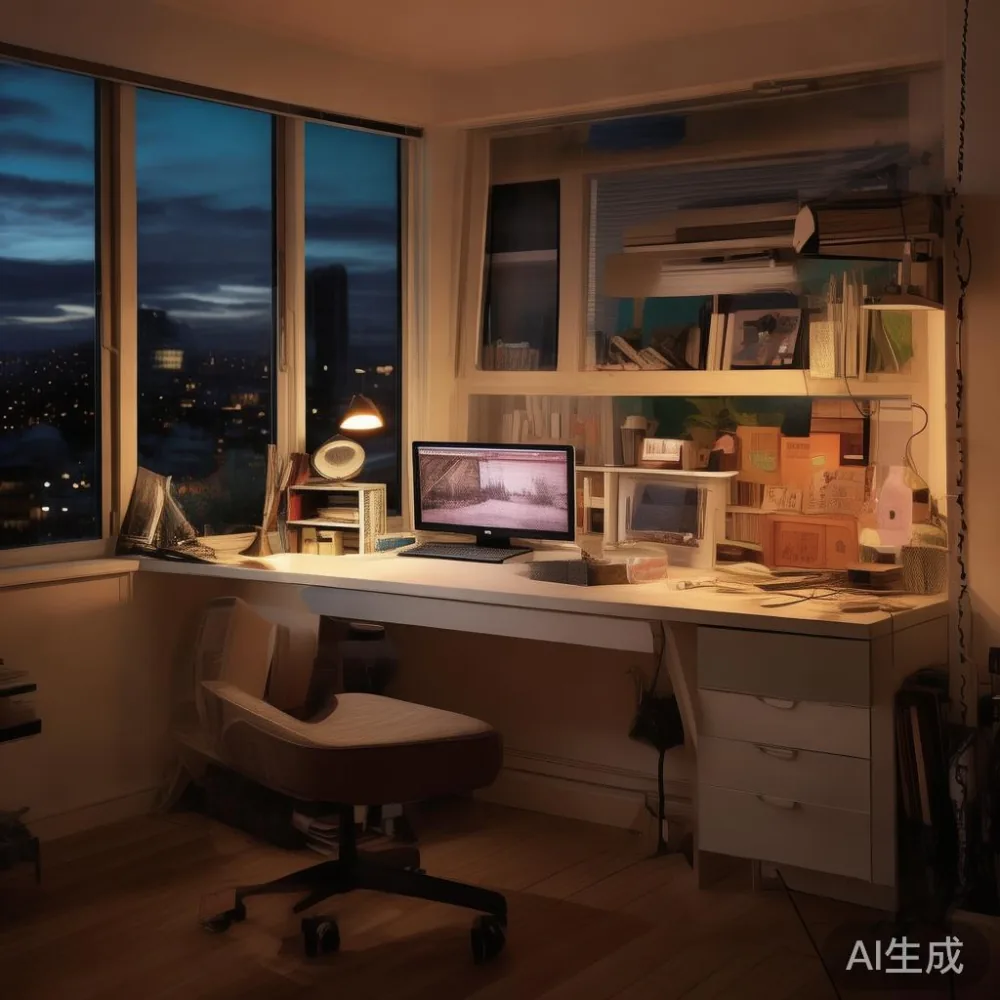
What should a work-from-home desk really look like in a small flat?
A work-from-home desk earns its keep when it disappears into the room when you stop working. The honest spec list for a 120cm to 140cm desk in a small HDB is: solid wood top at 2.5 to 3cm thick, legs no thicker than 6cm so the under-desk view stays open, a back edge that sits flat against a wall or a low console, and a depth of 60cm so a 24-inch monitor plus a 15-inch laptop fit without the keyboard falling off. Avoid glass desks — they show every cable and dust mote, and the visual weight of a transparent surface is heavier than people expect. A 140cm solid wood desk with cable routing holes and a slim steel frame usually lands between SGD 480 and SGD 980 depending on the top species, and pairs well with a chair that tucks fully underneath.
Where you put the desk matters more than the desk itself. The classic mistake in a small Singapore flat is to float the desk in the middle of the living room, which kills two sightlines at once. Push it against the wall under the window instead, perpendicular to the solid wood sofa, and the room reads as a single L-shape rather than two competing rectangles. If your unit has the typical HDB service yard, that 1.5 by 2.4 metre strip can host a compact standing-desk setup for SGD 320 to SGD 560, with a 100cm top that drops out of sight behind a curtain when the work-from-home day ends. Lighting should be 4000K cool white at the desk, 3000K warm white in the rest of the room — that single change makes a small space feel like two zones without adding a single piece of furniture.
Light luxury in a Singapore-sized room: what actually translates?
Light luxury as a style works in a small flat when you treat it as a finish, not a furniture category. French light luxury leans into brass feet, soft curves, and travertine or marble accents — a 110cm round marble table with a pale crema surface and a brass-capped base reads as light luxury without overpowering a 3.2 by 3.6 metre living room, and usually lands between SGD 780 and SGD 1,400 for a real marble top on a solid wood or steel base. American light luxury is straighter, deeper, with walnut or dark oak and brushed nickel — a 160cm walnut TV console at SGD 720 fits the language without filling the wall. Post-modern light luxury is the most forgiving for tight rooms because the lines are sculptural but the volumes are small: a low-slung bed frame with a curved headboard, a pedestal-style nightstand, a dining table with a tapered cylinder base.
The trick is to pick one direction per room and let the rest of the pieces support it. A French-leaning living room can hold a solid wood sofa in pale oak, a single marble table as the focal point, a brass floor lamp at 150cm tall, and nothing else competing for attention. A post-modern dining area can carry a 140cm oval dining table with a 4cm solid wood top on a sculptural pedestal, four chairs that tuck fully under the rim, and a single linear pendant at 70cm above the surface. Anything more, and the small room starts shouting.
Storage that doesn't add visual weight: wardrobes, nightstands, and the under-bed zone
Storage is the easiest place to over-build and the easiest place to over-buy. For a Singapore bedroom, the sliding wardrobe at 150cm to 180cm wide and 240cm tall fits the ceiling line without breaking it, and a 60cm depth swallows everything from business shirts to luggage. Solid wood wardrobes from a workshop like MIDHILL usually run SGD 1,800 to SGD 3,200 for a 180cm three-door configuration, and they ship with internal layouts that can include two hanging zones, three shelves, and two drawers — enough for a one or two-person wardrobe without a separate dresser. The reason solid wood matters here is humidity: an MDF wardrobe in a non-aircon bedroom will swell at the back panel within 18 months and the doors will stop closing square.
Nightstands are where most small bedrooms lose the plot. A 45cm wide nightstand at 50cm tall, in the same wood as the bed frame, slots beside a queen bed without crowding the walkway. Anything above 55cm wide starts to compete with the bed visually, and anything below 40cm loses the lamp. A solid wood nightstand with one drawer and an open shelf below usually lands at SGD 220 to SGD 380. Under-bed storage is the underrated workhorse of the small Singapore flat: a 150cm queen bed frame on a 25cm platform with 18cm of clearance underneath holds four flat storage boxes at roughly SGD 35 each, which is the equivalent of a small wardrobe in volume without taking a single extra centimetre off the room.
Shipping, lift access, and the part nobody talks about
Singapore flats have lift openings around 0.9 metres wide and 2.1 metres tall, corridor widths between 1.2 and 1.5 metres, and turning radii at the lift lobby that swallow anything over 2.2 metres long. Before you order a 2.4 metre wardrobe or a 2.2 metre dining table, measure the diagonal of every doorway from the lift lobby to the bedroom. If the largest piece won't clear the corridor turn, the only options are a flat-pack that assembles inside the room or a workshop that builds to your corridor measurement. MIDHILL, for one, ships flat-packed from Foshan with a structural warranty of 10 years and offers lifetime refinishing on solid wood tops — useful in a climate where humidity and sun do their worst within five years.
Delivery from a Foshan workshop to a Singapore HDB usually takes 25 to 40 days by sea, plus 3 to 5 days for last-mile white-glove delivery to the door. GST is added at 9 percent on the landed value, and a typical four-piece set (solid wood sofa, bed frame, dining table, nightstand) lands between SGD 3,200 and SGD 5,800 all-in depending on species. Free shipping usually kicks in above US$350, which most full-room orders clear comfortably. A 14-day return window is enough to spot-check every joint, every drawer slide, and every finish — set a calendar reminder for day 10 so you have time to file a claim and re-pack if anything is off.
A realistic small-flat furniture plan, with numbers
For a 65 square metre two-bedder in Punggol with one person working from home, the layout that consistently works is: a 180cm solid wood sofa at SGD 1,480, a 110cm round marble table at SGD 880, a 160cm TV console at SGD 690, a 150cm queen bed frame at SGD 1,180, two 45cm nightstands at SGD 280 each, a 150cm sliding wardrobe at SGD 2,400, a 140cm dining table at SGD 860, and four dining chairs at SGD 160 each. Total furniture spend before GST: SGD 8,890, which sits comfortably above the typical free-shipping threshold and gives one room of breathing space in every zone. Drop the dining table to 120cm and the four chairs to two, and the same plan works in a one-bedder at 48 square metres without the crowded feeling.
The pattern across every successful small Singapore flat I've walked through is the same: three large pieces instead of five, two storage-heavy pieces that hide everything, one accent piece in marble or brass that earns the room its character, and a work-from-home desk that tucks away when the day ends. The total floor footprint stays under 50 percent, the sightlines to the windows stay open, and the room reads as a small apartment rather than a crowded one. Furniture is just the easier half of that equation — the harder half is refusing to buy the seventh piece.