How To Match Solid Wood Furniture To A Warm Minimal Work-From-Home Interior In Singapore
I moved into a 92 sqm Build-To-Order flat in Punggol last March, and the first thing my partner noticed was that the air-conditioning supply grille sat exactly where we had planned a work desk. The original 3-room layout had been reconfigured so the study nook opened into the living room, and the morning light from the east-facing window made every surface look either beige or grey by 10 a.m. We had S$6,200 to spend across the sofa, dining table, bed frame, wardrobe, and two workstations, and we needed everything delivered through a single 1.1 m wide lift door on the 14th floor. That is how I ended up spending four weekends in Tampines, Bedok, and Jurong East showrooms, comparing edge profiles, timber densities, and the exact shade of white that pairs with a 2700K bulb. Below is what I learned, mapped to the constraints most Singaporean readers will recognise: narrow corridors, 2.7 m slab-to-slab ceilings, and the way a 9% GST line shows up at checkout.
Why Warm Minimal Works For Singapore Work-From-Home Setups
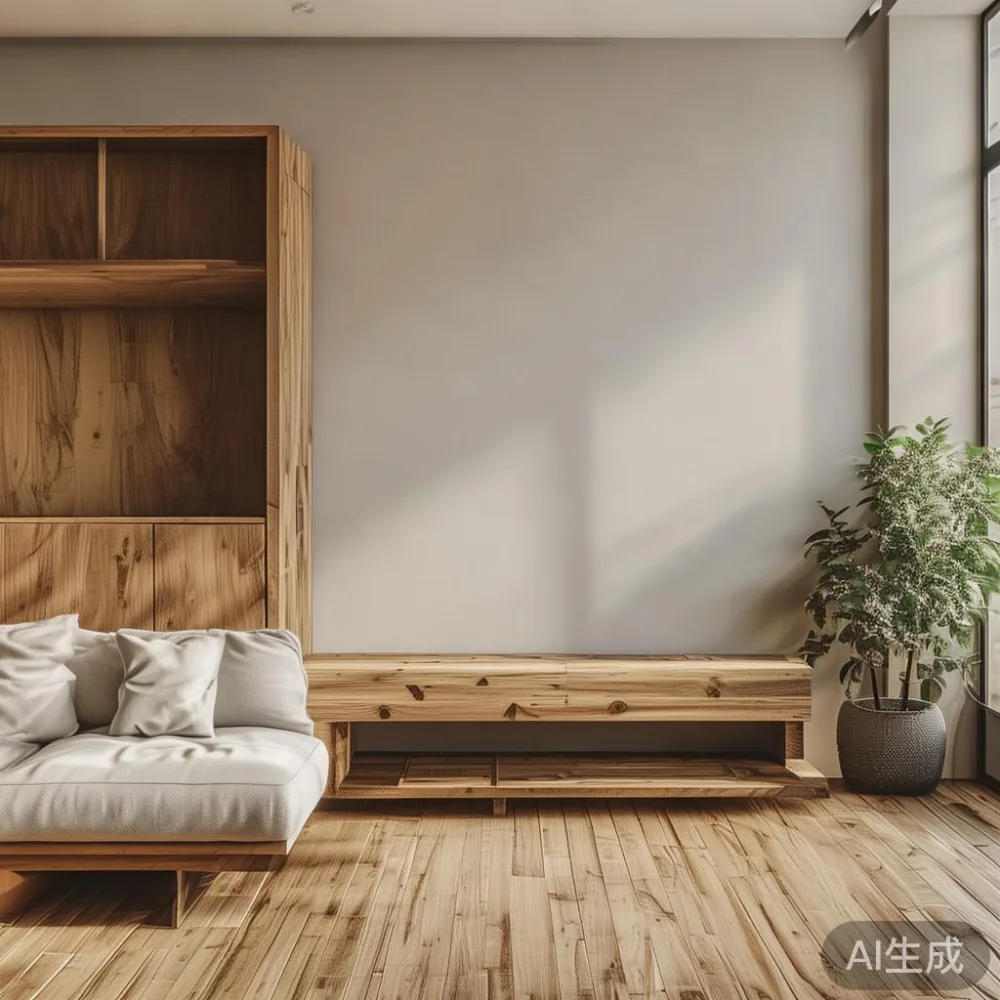
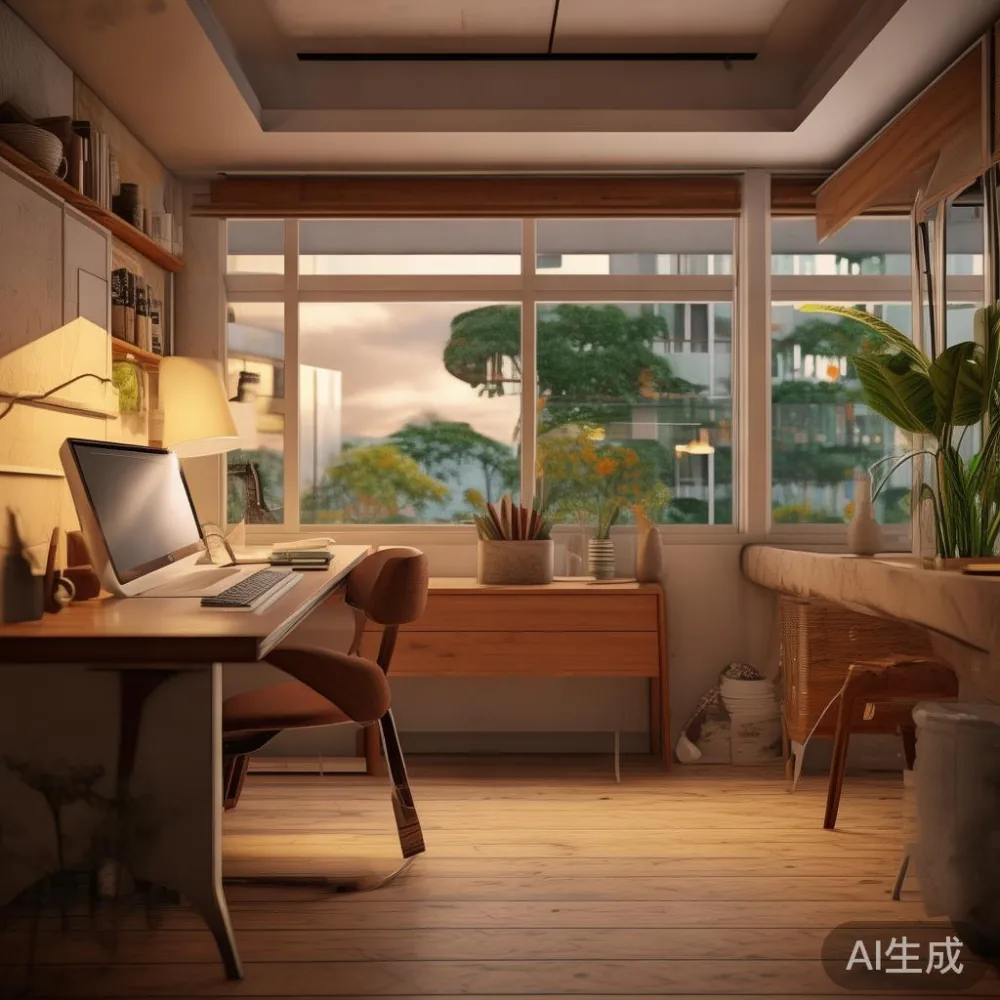
Warm minimal is not a Scandinavian cold room with one plant and a sheepskin. It is a calibrated mix of two temperatures: a neutral structural shell (off-white walls, light oak floors, a 2.7 m ceiling painted in a low-sheen finish), and two or three warm accents that ground the eye. In a home that doubles as a work-from-home studio, this matters because a cold screen, a cold keyboard, and a cold aluminium window frame are already doing visual work. The furniture has to pull its weight in warmth without pulling the room into clutter.
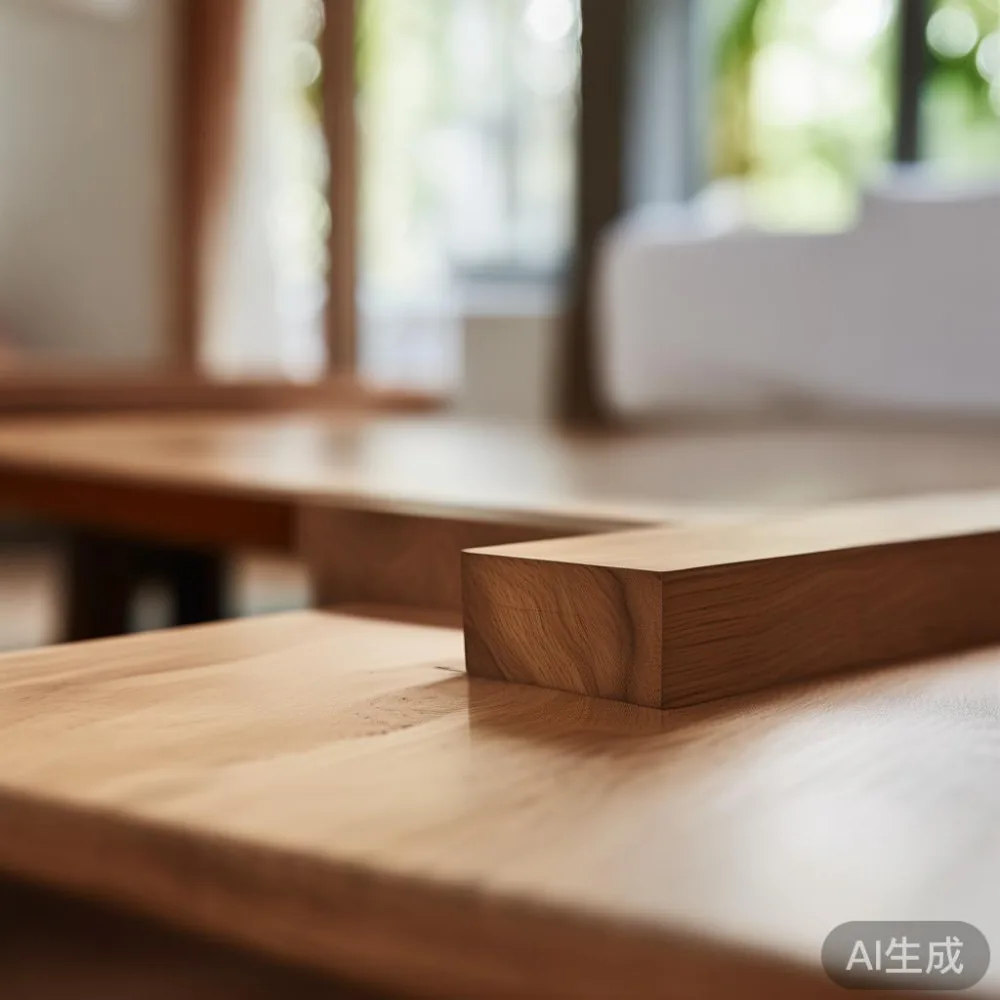
Solid timber does the job in a way veneer cannot. A solid wood sofa frame in white oak, for example, keeps its grain pattern visible at the armrest, so the eye reads warmth even when the cushion is a stone-washed linen. The same trick works for a bed frame in ash, a dining table in walnut, and a wardrobe in natural rubberwood. The trick is to keep the silhouette small: legs no thicker than 6 cm x 6 cm, no carved profiles, no decorative cornices.
Three rules I now follow in every project:
1. One warm wood tone per room, repeated at least twice. If the dining table is walnut, the nightstand should also be walnut, or the same walnut veneer on a smaller piece. Repetition is what turns a collection of objects into a composition.
2. Limit metal hardware to brushed brass or blackened steel. Chrome kills warm minimal because it reads as cool and reflective.
3. Keep the negative space. A 240 cm dining table looks generous in a 3 m wall; a 180 cm dining table looks generous in a 2.6 m wall. Anything in between crowds the circulation path that a work-from-home chair already needs.
What is the best king bed for a small apartment?
A king bed that is 180 cm x 200 cm, has a 4 cm solid wood side rail in ash or white oak, and sits on a low 8 cm plinth is the best king bed for a small apartment in most Singapore HDB and condo layouts, because the footprint matches a standard wardrobe bay, slides through a 0.9 m corridor turn, and leaves 70 cm of walking space on at least one side.
Why 180 cm and not the American 193 cm x 203 cm king? The 13 cm extra width and 3 cm extra length push the bed into the dead zone where the wardrobe door (usually 60 cm to 70 cm deep) cannot open past the mattress corner. I measured this in a 4-room HDB in Bedok last month: a 193 cm king made the wardrobe door hit the mattress at a 30-degree swing, and the only fix was to reverse the door hinges, which the MCST would not approve. The 180 cm king solved it.
Why a 4 cm side rail? Anything thicker eats into the mattress zone. A 4 cm rail gives the bed a solid wood frame look without losing the 200 cm internal length that two adults need. Eight centimetres of plinth height is the sweet spot: high enough to slide a 30 cm tall under-bed storage box under, low enough that the bed does not dominate a 2.7 m ceiling. At this height, the headboard can sit at 95 cm to 105 cm, which keeps the eye line below the curtain rail.
For the warm minimal look, choose an upholstered headboard in a beige boucle or a tan leather, paired with the same wood tone as the nightstand. A full timber headboard works in larger condos, but in a 92 sqm flat the upholstered version absorbs the room echo and makes the morning Zoom call sound less like a stairwell.
Sizing The Pieces To A 92 sqm HDB Or Condo
Most Singaporean three- and four-bedders sit between 88 sqm and 110 sqm, with an internal corridor width of 1.05 m to 1.2 m and lift doors of 0.9 m to 1.1 m. These numbers drive every furniture dimension I recommend.
Dining table. For four people, a 140 cm x 80 cm table is the floor. For six, 180 cm x 90 cm. Anything longer than 200 cm will not work through a 1.05 m corridor turn unless the legs detach, which adds assembly time and risk to a piece that should last 15 years. Solid rubberwood at 4 cm thick weighs around 35 kg to 45 kg for a 180 cm table; that is two-person liftable, which matters when the lift breaks down on a Sunday and the corridor staircase becomes the delivery route.
Sofa. A 220 cm three-seater is the practical ceiling for a 3 m wall. Seat depth should sit between 58 cm and 62 cm; deeper than 65 cm and a 175 cm adult cannot sit upright with back support. For a work-from-home household, choose a sofa with a 60 cm seat depth, so the same seat doubles as a reading perch with a laptop on a lap desk. A solid wood sofa frame in white oak adds about 8 kg to 12 kg over a plywood equivalent, but the frame survives a 10-year structural warranty in a way that no flat-pack does. If the entryway is tight, an extendable sofa for entryway use is worth considering; it folds to a 90 cm depth for delivery and expands to 60 cm seat depth once in position, which is how some Singaporean buyers get a three-seater past a 0.9 m door.
Wardrobe. A 240 cm wide x 60 cm deep x 220 cm tall wardrobe is the standard footprint. Anything taller hits the false ceiling line at 2.4 m and creates an awkward shadow gap. Solid wood wardrobe panels in ash or beech weigh 18 kg to 22 kg per door, so the hinges must be rated to 25 kg minimum. Soft-close is not optional in a work-from-home flat where the bed is 50 cm from the wardrobe door.
Nightstand. A 45 cm x 40 cm x 50 cm nightstand with one drawer and an open shelf below fits beside a king bed and leaves room for a 30 cm table lamp base. Solid rubberwood is enough; you do not need walnut at this scale.
Marble table. For the accent piece, a 50 cm round marble side table on a solid wood base introduces the one cold surface a warm minimal room needs. Marble weighs 18 kg to 25 kg for that footprint, so position it near the load-bearing wall, not in the middle of the work-from-home circulation path. Budget S$420 to S$780 for a Calacatta-look marble top with an ash base.
The Warm Minimal Palette: Three Combinations That Work In Singapore Light
Singapore gets 12 hours of daylight year-round, with a UV index that sits between 6 and 11 from 9 a.m. to 3 p.m. This washes out warm tones faster than a London or Berlin living room. The palette has to compensate.
Combination 1: White Oak + Beige Linen + Brushed Brass. Best for east-facing flats in Punggol and Sengkang. The morning sun turns white oak into honey by 10 a.m. Pair with a stone-washed beige linen sofa and brushed brass handles on the wardrobe. This reads as French light luxury in its restraint, with clean lines and one accent metal.
Combination 2: Walnut + Cream Boucle + Blackened Steel. Best for north-facing units in Bukit Timah or the Tanjong Pagar area, where the light is softer and cooler. Walnut darkens to a tobacco tone under low light, so the cream boucle lifts the value. Blackened steel legs on the dining table keep the silhouette grounded.
Combination 3: Natural Rubberwood + Warm White + Travertine. Best for resale flats in Bedok and Tampines built in the late 2000s, where the original tiles are a warm beige. Rubberwood takes a whitewash well and pairs with a travertine marble table top for a post-modern light luxury feel that is a little softer than the French line.
Across all three, the paint colour should be a warm white with a yellow undertone, not a blue-based white. A blue-based white reads as clinical under Singapore light; a yellow-based white reads as a cloud. Standard options from local paint suppliers include Nippon Timeless White, Dulux Easter Egg, and Jotun Smooth White 1024.
How Should I Deliver A 220 cm Sofa Through A 1.05 m HDB Corridor?
You should measure the corridor turn radius, confirm the lift door width with your MCST, and choose a sofa with detachable legs and a split-frame solid wood construction, because the box dimensions of a fully assembled 220 cm sofa exceed both the 1.05 m corridor and the 0.9 m lift door in most Singapore HDB blocks.
This is the most common delivery surprise I hear from buyers in Tampines and Jurong. The sofa looks fine in the showroom, the dimensions on the website say 220 cm x 95 cm x 85 cm, and the delivery team arrives only to find the lift door is 0.9 m and the corridor turn is a tight 1.05 m. The fix is straightforward but needs to happen before purchase, not on delivery day:
1. Ask the MCST for the internal lift car depth, not just the door width. Many older HDB lifts in Bedok and Toa Payoh have a 1.1 m door but only a 1.4 m internal depth, which limits a horizontal sofa frame to about 1.35 m on its longest side.
2. Pick a sofa with legs that unscrew without tools and a back cushion that lifts off the frame. A solid wood sofa with a bolted frame in three modules (left arm, centre, right arm) will work through a 1.05 m turn when the arms are removed.
3. Budget for a S$60 to S$120 white-glove assembly fee if the corridor staircase has to be used. This is rare, but it happens during HDB lift upgrading programmes, which the Town Council schedules in 6-week blocks.
4. Confirm the corridor has a 90-degree clear turn, not a tight S-curve. A 1.05 m corridor with one 90-degree corner is passable; a 1.05 m corridor with two turns in 3 m is not, regardless of the sofa.
For homes where the corridor geometry is genuinely tight, an extendable sofa for entryway use solves the problem at the design stage rather than at the delivery stage. The shipping box measures 95 cm x 95 cm x 110 cm, well within any HDB lift, and the frame expands once inside the living room. A solid wood extendable sofa for entryway use typically ships in two boxes totalling 65 kg to 75 kg, which is one-person carryable up a staircase in a pinch.
Budget Mapping: Where The Money Goes In A S$6,000 To S$10,000 Setup
A warm minimal work-from-home setup in Singapore, fully landed with GST and delivery, breaks down in roughly these bands. Prices reflect what I saw in Tampines, Bedok, and Punggol showrooms in the last quarter, before the 9% GST adjustment that took effect at the start of the year.
Sofa (3-seater, solid wood frame): S$2,400 to S$3,800. White oak frame with linen or boucle upholstery. The lower end uses rubberwood for the internal frame and oak for the visible rails; the upper end is full white oak with down-blend cushions.
Dining table (180 cm x 90 cm, 4-seater to 6-seater): S$1,400 to S$2,600. Solid rubberwood or ash at 4 cm thickness. A Calacatta-look marble top adds S$600 to S$1,200 over the timber equivalent.
Bed frame (king, 180 cm x 200 cm): S$1,200 to S$2,400. Solid ash or beech side rails with an upholstered headboard. Storage drawers add S$300 to S$500.
Wardrobe (240 cm, three-door): S$1,800 to S$3,200. Solid rubberwood panels with soft-close hinges. Sliding doors save 60 cm of clearance at the cost of S$200 to S$400.
Nightstand (pair): S$400 to S$900. Solid rubberwood or ash, single drawer with open shelf.
Marble side table: S$420 to S$780. 50 cm round top on a solid wood base.
Add S$120 to S$280 for delivery inside mainland Singapore, free above S$350 on most direct-from-factory platforms, and 9% GST on the full subtotal. A complete S$8,000 setup works out to S$8,720 all-in. A complete S$6,200 setup, which is closer to what my partner and I spent, comes in at around S$6,760 after GST.
Working With A Foshan Factory: Lead Times, Warranty, And What To Ask
Solid wood furniture from a Foshan factory ships in two waves. The first wave is the sample or showroom piece, which arrives in 25 to 35 days by sea to Singapore Port, plus 5 to 8 days for customs clearance and delivery. The second wave is a production run after the order is confirmed, which runs 35 to 50 days for in-stock finishes and 55 to 75 days for custom timber tones. For a work-from-home setup that needs to be ready before a lease starts, place the order 90 days out.
Ask for three documents before paying the deposit: a structural warranty statement in writing (10 years on the frame, 2 years on hardware), a finish warranty (5 years against peeling or cracking under normal indoor conditions), and a delivery scope note that lists the floor, the lift, and the room the pieces will be carried to. A factory that has been exporting since 2008 will have these on file. A factory that has been exporting since 2008 and ships to 15 or more countries will also have multilingual care guides and a refinishing service for scratches that happen in year six or seven.
MIDHILL, a Foshan maker focused on solid wood pieces for work-from-home households, fits this profile and publishes its warranty terms in plain language. My colleague in Bedok received a replacement side rail on a five-year-old bed frame under their refinishing programme, with the delivery team handling the disassembly and reassembly in under 90 minutes. That kind of after-sale coverage matters more in a 14-year-old HDB flat than the showroom discount, because the piece has to outlive two more rental cycles.
For Singapore buyers, three customs and logistics points are worth knowing. First, the Harmonised System code for solid wood furniture (9403.60, 9403.50) attracts 0% duty but 9% GST, so the landed cost is the ex-works price plus freight plus 9% GST. Second, sea freight from Foshan to Singapore averages S$180 to S$260 per cubic metre for residential-grade pieces, with a 25-day transit window. Third, the Singapore importer of record is responsible for the fumigation certificate on solid wood, which most Foshan factories arrange as part of the export documentation.
Frequently Asked Questions From Tampines And Bedok Buyers
Does solid wood furniture warp in Singapore humidity? It can, if the timber is not properly kiln-dried. Ask for kiln-dried timber at 8% to 12% moisture content, which is the standard for export-grade pieces from Foshan factories operating in a climate similar to Singapore's. Keep the furniture away from the direct airflow of the air-conditioning supply grille; a 1.5 m clearance is a good rule for any solid wood wardrobe or dining table.
How long does a work-from-home setup take from order to delivery? For a Foshan factory shipping to Singapore, 60 to 90 days is the realistic window. Allow 35 to 50 days for production, 25 to 35 days for sea freight, and 5 to 8 days for customs and last-mile delivery. A 14-day return window starts from the delivery date, not the order date.
Can I mix timber tones in the same room? Yes, but limit the palette to two close tones, such as white oak and ash, or walnut and beech. Three different tones read as a showroom, not a home.
What is the lightest solid wood option for a small flat? White oak at 720 kg per cubic metre is the lightest of the common furniture-grade timbers. Ash at 670 kg per cubic metre is lighter still, but less common in export runs. Rubberwood at 560 kg per cubic metre is the lightest practical option for a bed frame or wardrobe, and it takes a whitewash finish that lifts the visual weight further.
Is American light luxury the same as French light luxury? They overlap in restraint and material quality, but the American light luxury line tends toward larger volumes, wider seat depths (65 cm to 70 cm), and a slightly more relaxed silhouette. The French line is tighter: 58 cm to 62 cm seat depth, lower backrests, and a more architectural frame. For a 92 sqm HDB flat, the French line scales better; for a 130 sqm condo, the American line gives more presence.
How does MIDHILL handle delivery above S$350? The standard policy is free shipping above US$350, which at the current SGD rate is roughly S$475, well below any complete work-from-home setup. Delivery includes ground-floor drop-off; upstairs delivery in HDB blocks without a lift is quoted separately, usually S$20 to S$40 per floor for pieces above 30 kg.
A Practical Plan For The Next 90 Days
If a warm minimal work-from-home setup is on your roadmap, the practical order of operations is: measure the corridor and lift, lock the palette to one warm wood tone and one neutral upholstery, place the dining table and sofa order first because they have the longest lead times, then the bed frame and wardrobe, then the nightstand and marble accent table. Schedule delivery for a Saturday so the assembly team has the full day, and confirm the corridor measurements with the MCST in writing before the truck leaves the port. A 14-day return window covers finish and dimension disputes, but it does not cover a corridor that turned out to be 95 cm wide instead of the 1.05 m the buyer remembered. Measure twice, order once, and keep the warm minimal room quiet enough that the work-from-home video call still looks like a home, not a studio.