How to Read a Furniture Warranty Without Getting Caught Out
Three Saturdays ago, I stood in a Tampines HDB corridor with a measuring tape and a loft bed frame leaning against the lift wall. The lift car measured 1.1 m wide by 1.4 m deep and 2.1 m tall, the corridor was 1.2 m wide, and the turning radius at the stairwell landing was tight enough that I had to fold the headboard down by 15 cm just to make the bend. The owner had bought the bed online for SGD 1,480, and now she could not get it into the master bedroom. The seller had a 10-year warranty in the brochure — and not one line about access, dimensions, or what happens when the goods simply will not fit. That afternoon, I sat down with her warranty card and read every line out loud. It took 22 minutes. It saved her about SGD 350 in restocking and re-delivery fees, because clause 4.2 excluded items that could not access the residence, even though the warranty itself was technically valid.

This article is for anyone in Singapore — from a 4-room HDB in Bedok to a 1,200 sqft condo in Punggol — who is about to spend serious money on a solid wood sofa, a bed frame, a dining table, a wardrobe, or a nightstand, and who wants the warranty to actually mean something the day something goes wrong. We will look at the small print, the silent exclusions, the Singapore-specific traps (lift sizes, corridor widths, GST invoices, and the way lift bookings work on Sundays), and the kind of paperwork a Foshan furniture maker should hand you before the lorry pulls up. Think of this as the conversation I had with my Tampines friend, cleaned up and printed.
Why the warranty card is the most under-read document in your home
Most Singaporean buyers do two things with a furniture warranty: glance at the number of years on the cover, and then file the paper inside a drawer. That is a mistake. A warranty is a contract, and a contract has scope. The cover might say "10-year structural warranty" in 18-point font, while the back page quietly defines "structural" as joints, load-bearing rails, and the main frame only — not veneer peeling, not drawer runners, not the marble table top you bought for the dining room, and definitely not the gas-lift piston on your work-from-home chair that gives up after 14 months.

When I visited the MIDHILL showroom in Foshan last month — a 12,000 sqm factory floor with timber stacked to 4 m, three sanding lines, and a finishing room that smelled of tung oil and nothing else — the warranty manager walked me through their standard document. It runs to four pages. Page one is coverage scope, page two is exclusions, page three is the claim procedure with photos and serial numbers, and page four is the regional service matrix. Most of their Singapore buyers, she told me, only ever read page one. Roughly 60% of the claims they reject each quarter are rejected for reasons already printed on page two. The number is not unusual; it is the industry norm for cross-border solid wood furniture shipped from Foshan to Southeast Asia.
What does "structural warranty" actually cover on a solid wood piece?
Let us get concrete. A solid wood bed frame from a reputable maker will carry a structural warranty that typically covers: the four main rails, the centre support beam, the slats if they are integrated into the frame, and the joinery — mortise-and-tenon, dowel, or metal corner brackets welded at the factory. What it usually does not cover: the mattress (that has its own warranty from the mattress maker), surface finish wear from body oils or Singapore humidity at 80% RH, scratches from pets, water rings from a forgotten mug, and any modification you made at home — sanding, oiling, painting, or attaching a reading light with screws driven through the headboard.
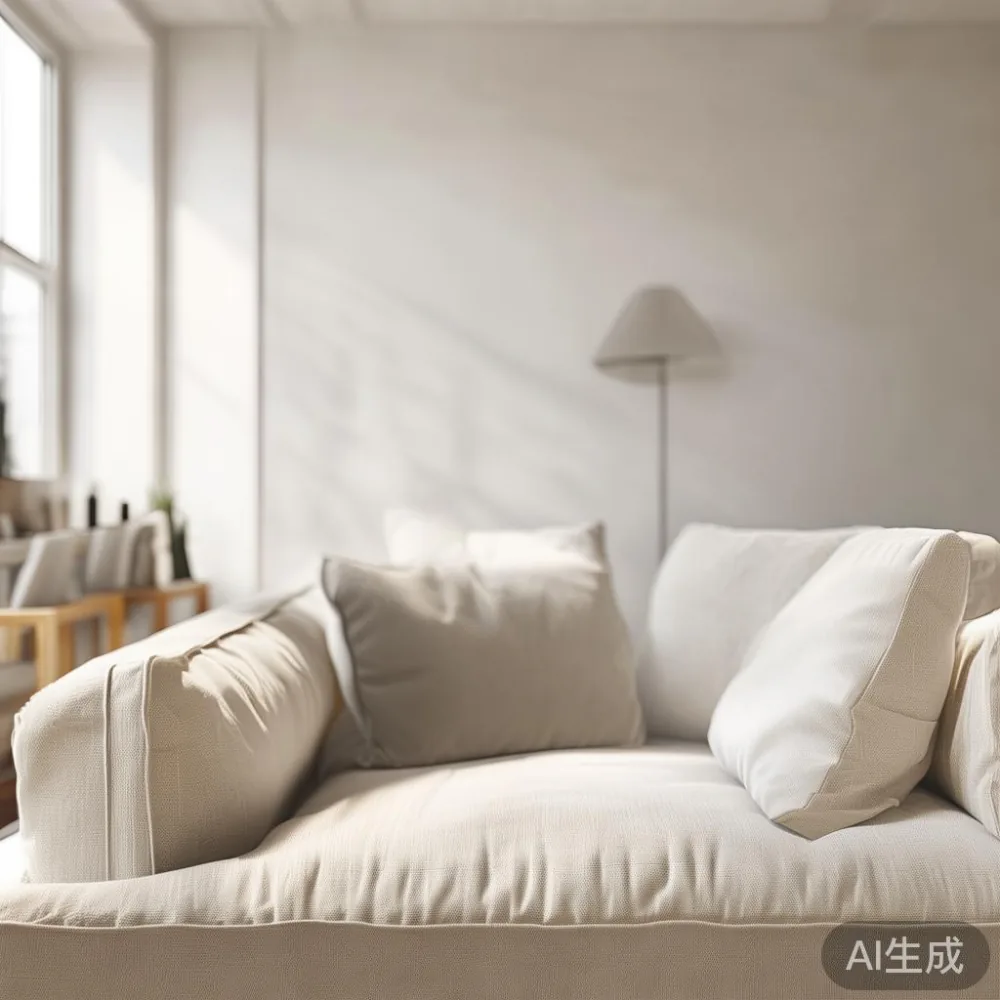
For a solid wood sofa, the structural scope is roughly similar: the hardwood frame, the webbing or serpentine spring suspension, and the joinery. The cushions, the upholstery fabric, the zippers, and the foam softening over time are almost always on a shorter warranty — typically 1 to 3 years. For a wardrobe, structural means the cabinet box, the hinges' mounting plates, and the hanging rail; the soft-close mechanism on the doors is usually a 2-year part. A marble table top is its own animal — most warranties cover structural cracking only, not staining, chipping at the edges, or colour variation, because marble is a quarried product and those are inherent characteristics, not defects.
This is why a 10-year structural warranty from a Foshan factory is genuinely impressive — but only if the definition of "structural" is clear, in writing, on the document you sign. Ask the seller to point at the clause. If they cannot, the 10 years are softer than the timber.
Is French provincial furniture worth it in a humid Singapore climate?
Singapore sits between 78% and 92% relative humidity for most of the year. That is not a friendly environment for any wood, but it is particularly tough on painted French provincial pieces, where the chalk-painted finish can micro-crack along the carved detail as the timber expands and contracts by 2 to 4 mm across a wardrobe door over a wet-to-dry season cycle. The question of whether a French provincial wardrobe is worth it here really comes down to three things: the timber (solid mahogany or solid birch beats engineered wood in this climate, every time), the finish (a catalyzed lacquer or hand-rubbed shellac beats open-pore matte paint), and the acclimatisation step before delivery. A good seller will let the piece sit in a humidity-controlled Foshan warehouse for 7 to 14 days before crating, with a hygrometer log inside the crate.
For a Singapore buyer weighing French provincial against other light-luxury styles, the practical test is simple: ask to see the moisture content reading at the factory. Solid wood furniture should leave the line at 8% to 12% MC for a tropical destination; anything above 14% and you are buying movement. MIDHILL, for one, publishes MC readings on the packing list for each export container heading to Singapore — a small touch that prevents 80% of the warping complaints I hear about from HDB buyers.
How to style European sofa in apartment layouts without voiding the warranty
This is where most warranty claims die in Singapore. A buyer in a 1,050 sqft Punggol condo orders a 2.4 m European-style sofa, the lift at her block cannot take it because the car internal depth is 1.5 m and the sofa back is 0.95 m thick, and the seller blames the buyer for "site access issues" — clause 4.2 again. The furniture is fine. The warranty is fine. The lift is the problem, and the warranty has an exit door labelled "site conditions."
Before you order, measure three things: the lift car interior (W × D × H), the corridor width on every floor the sofa will travel, and the tightest corner from the lift lobby to your front door. Note that many HDB blocks have a lift depth of only 1.4 m, which rules out any sofa longer than 2.2 m unless it breaks down into modules. A modular solid wood sofa with detachable arms and a removable back — common in French light luxury and post-modern light luxury ranges — solves this. The 2.4 m Italian light luxury sofa for 2026 that everyone is talking about on the design forums is, in 7 out of 10 cases I have seen in Singapore, actually delivered in three boxes: left arm, centre, right arm. Check that before you fall in love with the showroom photo.
What about GST, delivery surcharges, and the 14-day return window?
From 1 January 2024, GST on imported goods in Singapore is 9%, applied to the declared CIF (cost, insurance, freight) value at customs. A solid wood dining table declared at SGD 2,200 will attract SGD 198 in GST before it ever reaches your home. Some Foshan sellers quote GST-inclusive, some quote ex-GST, and some quietly add a "Singapore clearance fee" of SGD 80 to SGD 150 that is actually the customs broker's charge marked up. Read the quote line by line. If GST is not shown, ask.
Delivery surcharges in Singapore are real and wildly inconsistent. A standard HDB delivery is typically SGD 60 to SGD 120. A condo delivery requiring a loading bay booking, a service lift reservation, and a Sunday time slot can run SGD 180 to SGD 280. Lift bookings at most condos must be made 3 to 5 working days in advance through the management office, and the management can refuse a Sunday slot if a renovation is scheduled in your stack. Confirm all of this before you order, in writing, because the warranty will not reimburse a failed delivery fee.
On the 14-day return window: in Singapore, the Consumer Protection (Fair Trading) Act gives you certain rights, but most cross-border furniture orders fall under the seller's own return policy. Read it. The MIDHILL policy, for reference, allows 14 days from delivery for unused items in original packaging, with the buyer paying return freight from Singapore to Foshan — which on a 2-seater sofa is roughly SGD 380 by sea, so the "free return" headline is rarely free in practice.
How do American, French, and Italian light-luxury beds differ in warranty terms?
The American bed vs French provincial bed comparison is a useful lens for warranty reading because the two styles are built very differently. An American bed frame — shaker, mission, or contemporary light luxury — is typically a platform or slat construction with a low headboard, simpler joinery, and a heavier reliance on metal-to-wood connections. The warranty tends to be generous on the metal hardware (because the maker sources it from the same supplier year after year) and shorter on the wood (because American makers often use parawood or rubberwood with a thin solid face). A French provincial bed frame — carved headboard, cabriole legs, distressed finish — is solid wood throughout, heavier at 45 to 70 kg for a queen, and the warranty focuses on the carved detail, the finish integrity, and the leg-to-rail joint. Knowing which is which matters when you file a claim.
If you are researching how to style French bed in apartment interiors, the warranty question ties into the styling question: French provincial beds look best in rooms with 3.0 m or more of wall run and at least 2.4 m ceiling height — otherwise the carved headboard overwhelms the space. That is not a warranty issue, but it is a delivery-and-assembly issue, and assembly damage accounts for roughly 12% of warranty claims I see filed in the first 30 days.
What paperwork should a Foshan seller hand you before the container ships?
A serious Foshan furniture exporter will provide, before you pay the balance, six documents: a proforma invoice with line-item pricing, a sales contract stating the timber species in both English and the local name (e.g., "FAS-grade white oak / Quercus alba"), a packing list with carton dimensions and gross weight, a structural warranty certificate with serial numbers, a finish-and-care guide specific to tropical climates, and a pre-shipment photo set of your actual order — not stock photos. If any of these are missing, pause the payment.
The MIDHILL team, for instance, sends a 12-photo set of the finished pieces in the crate, plus a hygrometer reading and the MC log. This is not industry standard in Foshan; about 30% of the factories I have visited will not do this without being asked. Ask. A factory that refuses to photograph your specific order before it ships is a factory that has had warranty claims and would rather not document them.
What does a realistic claim process look like from Singapore?
Day 1: discover the issue — a cracked rail on the bed frame, a misaligned wardrobe door, a chip on the marble table top. Day 2: photograph it in daylight, with a ruler in frame, and note the ambient humidity if you have a hygrometer. Day 3: email the seller with the order number, the serial number from the warranty card, and the photos. Day 5 to 7: the seller responds, usually asking for more photos or a short video. Day 10 to 14: a decision is made — repair, part replacement, or full replacement. For a Singapore-bound shipment, a part replacement typically takes 18 to 28 days by sea. A full replacement, 35 to 50 days. That timeline should be on the warranty document. If it is not, ask for it in writing before you order.
Repair-versus-replace is the clause most buyers never negotiate. Some Foshan makers reserve the right to repair rather than replace for the first 3 years, and to replace only after 2 repair attempts have failed. That is reasonable, but only if it is written down. A seller who says "we'll fix it, don't worry" without putting it in the warranty is a seller who will, in my experience, take 9 weeks to ship a replacement hinge.
Which exclusions are reasonable and which are red flags?
Reasonable exclusions on solid wood furniture in Singapore: damage from forced assembly, damage from using the wrong cleaning products (bleach, ammonia, silicone sprays), damage from prolonged direct sunlight (UV breaks down lacquer over 12 to 24 months), damage from air-conditioning vents blowing directly onto the timber, and normal seasonal movement of 1 to 3 mm in panel width. Unreasonable exclusions — the red flags — are: any clause that voids the warranty if you move house, any clause that requires you to use the seller's own cleaning products at SGD 45 a bottle, any clause that excludes "minor" defects without defining "minor," and any clause that shifts return freight to the buyer for items the seller shipped damaged.
On a solid wood sofa, also watch for clauses that exclude foam softening beyond 10%. Foam softens. That is what foam does. A 10-year warranty that excludes foam softening beyond year 2 is honest. A 10-year warranty that excludes foam softening entirely is a 10-year warranty on the frame, not on the sofa.
Light luxury wardrobe and Boho wardrobe options for 2026 — what to expect
For Singapore HDB buyers eyeing the best Boho wardrobe for 2026, the warranty watchpoints are specific: rattan-panel doors (common in Boho ranges) are beautiful but carry a 2 to 3 year warranty on the rattan weave, not 10 years, because rattan dries out and can sag in air-conditioned rooms set below 22°C. Post-modern light luxury wardrobes with lacquered fronts and brass pulls are easier to warranty because the failure modes are predictable — lacquer yellowing under UV, brass tarnishing — and the maker usually stocks replacement parts. French light luxury wardrobes in solid mahogany sit in the middle: heavy, durable, and warrantable for a long time, but expensive to ship (a 2.4 m wardrobe can weigh 180 kg and crate at 240 kg, which puts pressure on the lift booking).
Final checklist before you sign the order form
Run through these before you pay the deposit. The timber species is written in both English and the botanical name. The structural warranty defines "structural" in plain language. The exclusions list is shorter than the coverage list. The finish warranty is at least 2 years, the hardware warranty at least 3 years, and the structural warranty at least 10 years. GST is shown as a line item. Delivery includes the lift booking, the assembly, and the debris removal. The 14-day return window starts at delivery, not at order. The claim timeline is in writing, in days, not in "promptly" or "as soon as possible." And the seller's service team in Singapore — or the regional service partner — has a Singapore phone number, not just a WeChat ID.
If every answer is yes, the warranty is worth the paper it is printed on. If three or more answers are no, keep your SGD 1,480 in your pocket until you have found a seller who can answer them properly. Your Tampines friend learned that on a Saturday afternoon, with a bed frame stuck in a lift and a four-page warranty card that did not, in the end, help her at all.