Solid Wood vs Veneer in Singapore: A 5-Year Cost Comparison for the Work From Home Home
I still remember the first time I visited a Tampines HDB in early March last year to help a colleague spec out her new home office. She had her eye on a $1,290 dining table from a local furniture expo and a $2,400 solid wood desk from a maker in Foshan she had read about on a work from home forum. The expo table looked gorgeous under the showroom lights, but when she asked the salesperson what was inside, she got a vague answer about "engineered timber with a real wood top layer." That single phrase is the entire reason I am writing this article: the difference between veneer furniture and solid wood furniture shows up in your wallet, in your back, and in your HDB corridor on delivery day. Over five years in a Singapore home office, that difference adds up to real dollars.
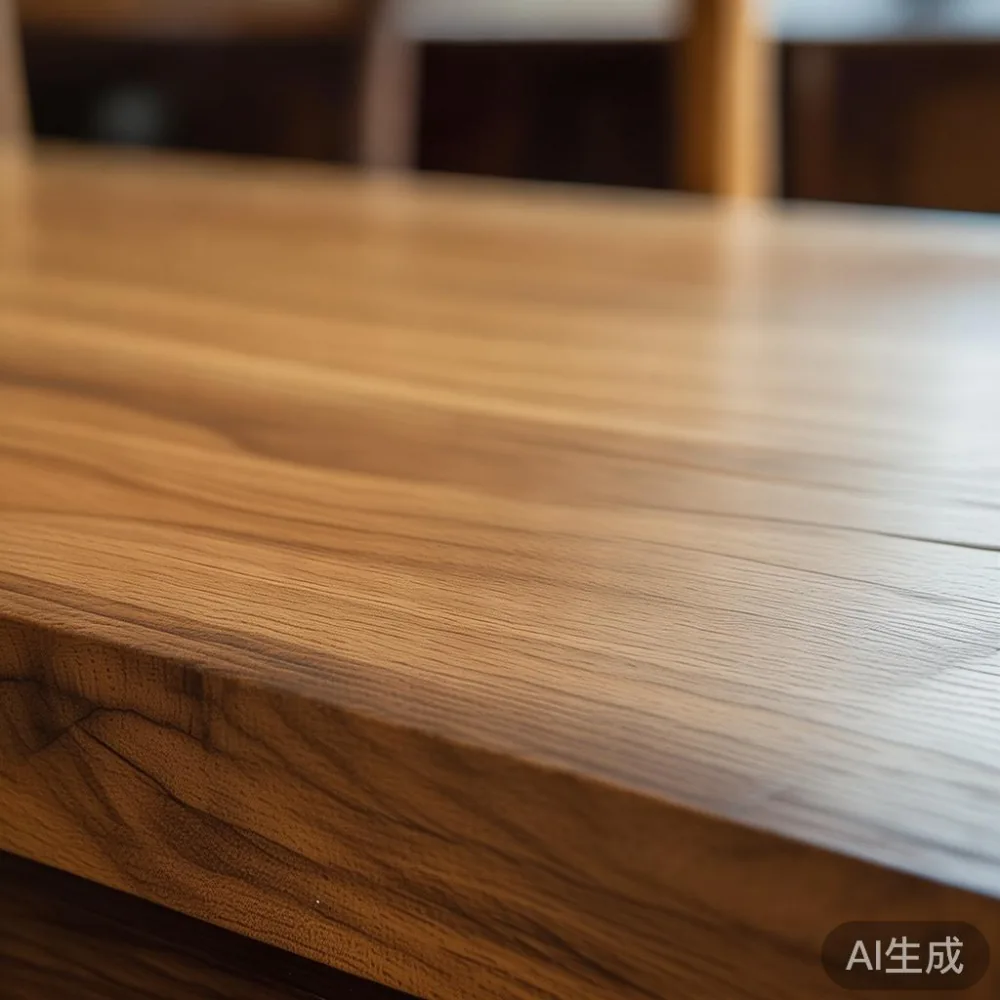
Veneer panels are real wood, but only the outer 0.3 mm to 0.6 mm. Beneath that, you will find MDF, particleboard, or plywood. Solid wood means the entire board, from the surface down to the core, is cut from one piece of timber. That construction detail drives everything: weight, durability, repairability, and how the piece behaves when your air-conditioner runs 23°C all year and your HDB ceiling fan sits two metres above the wardrobe. In this guide, I will walk through five years of actual ownership numbers, then answer the questions I hear every week from readers in Bedok, Punggol, and Bukit Merah.
What does veneer furniture actually cost in Singapore over 5 years?
Let us use a realistic work from home desk setup. A veneer desk in Singapore from a mainstream brand retails between S$450 and S$900. Add a matching pedestal, you are looking at S$1,100 to S$1,600 for the full workstation. After 5 years, a 1.2 m veneer desk in a non-airconditioned spare room will typically show bubbling at the corners, lifting near cable grommets, and a dull patch where your forearms rest. Refinishing is rarely an option because the veneer layer is too thin to sand. Most owners replace the desk at year four or five.
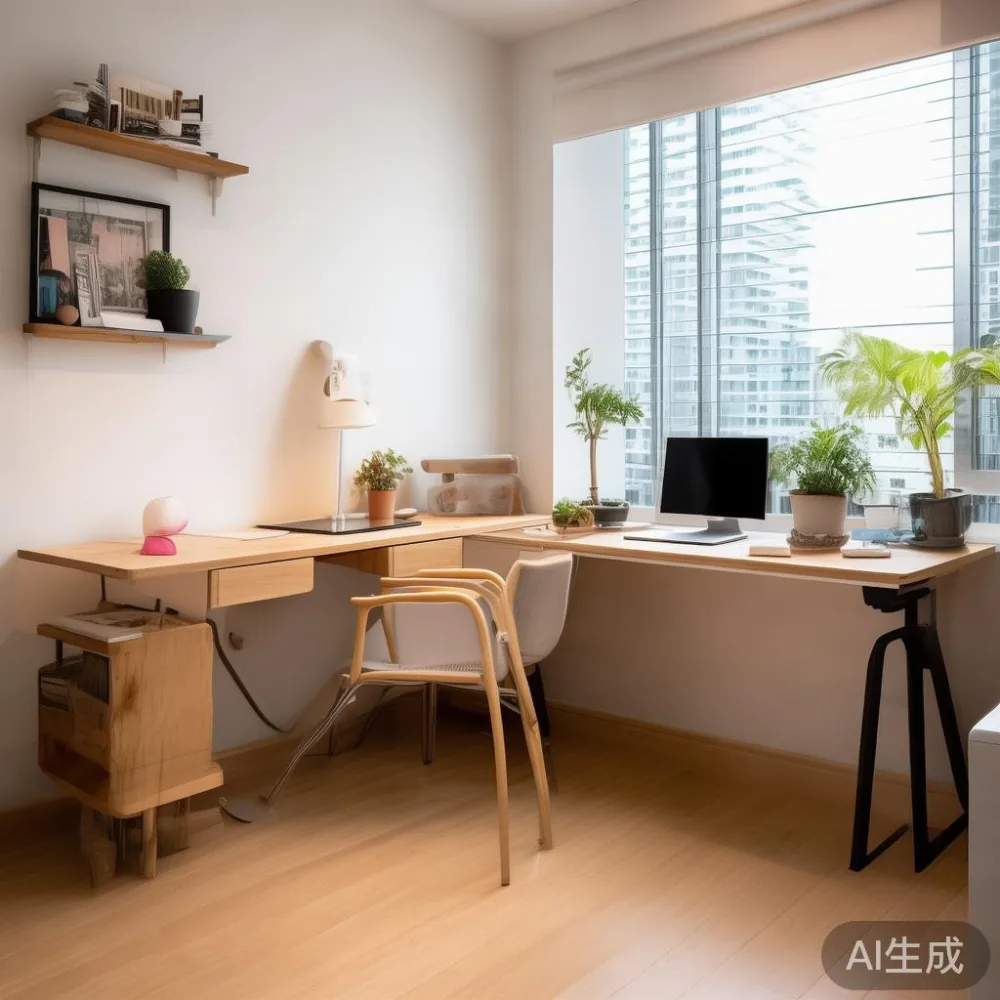
Replacement cost: S$1,100 to S$1,600 for desk two, plus disposal fees (HDB bulky item removal is about S$30 to S$80 per trip, and not every estate runs daily pickups). Add a coat of sealant, a new mousepad, and a Sunday spent disassembling flat-pack with a missing cam lock. Over five years, the realistic total for veneer: S$1,500 to S$2,200. That is before GST, which is 9% in 2025.
Where can I buy a chaise lounge in Singapore?
You can buy a chaise lounge in Singapore directly from a Chinese factory such as MIDHILL with free consolidated shipping on orders over US$350, from local furniture chains like Castlery and Scanteak, or from parallel importers on Carousell. For a work from home buyer who plans to keep the piece for more than three years, ordering direct from a Foshan solid wood manufacturer typically costs 25% to 45% less than a Singapore showroom equivalent, with delivery in 25 to 40 days.
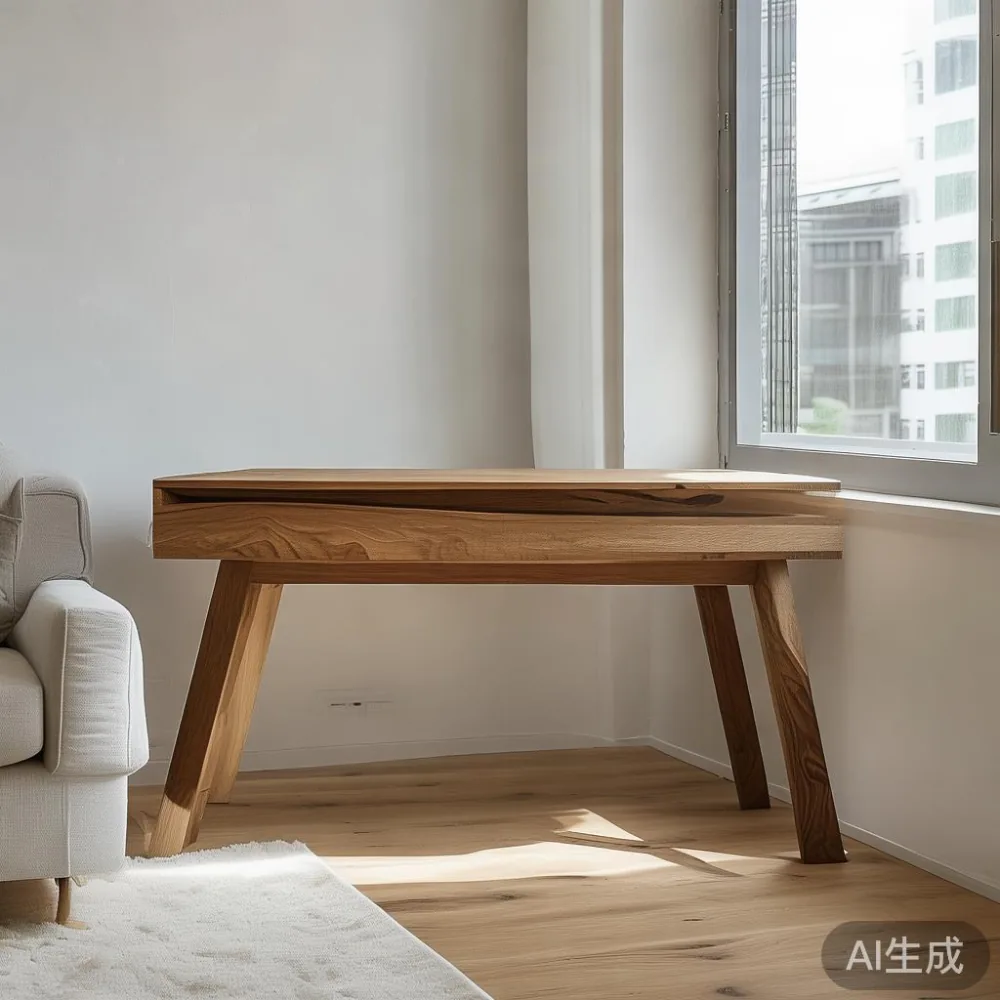
One caveat: chaise lounges are bulky, often 180 cm to 210 cm long. Always measure your HDB lift door (most are 80 cm wide) and your corridor turning radius before ordering. A solid wood chaise in ash or walnut will weigh 35 kg to 55 kg, so two-man delivery is non-negotiable above the second floor. If you live in a Punggol Build-To-Order block with a single goods lift, book the lift slot a day ahead.
Solid wood 5-year cost: the realistic numbers
A comparable solid wood desk in oak, ash, or rubberwood from a direct-from-factory maker sits between S$1,400 and S$2,800. At MIDHILL, a 1.4 m solid oak work desk with cable management and a soft-close drawer lands around S$1,950 landed in Singapore, including sea freight consolidation, GST prepay, and doorstep delivery to a typical HDB in Bedok. That is more upfront than the veneer option, yes, but the math over five years looks very different.
Year 1 to 3: no maintenance beyond a damp microfibre cloth once a week. Year 4: a 60 ml tin of hard wax oil (about S$22 from a local hardware store) and 40 minutes on a Saturday morning. Year 5: still going strong, no replacement. Refinishing cost over five years: S$22 to S$60. Lifetime refinishing is offered by established makers such as MIDHILL, which can shave the figure to zero if you send the top back during a shipping consolidation window. Five-year total for the solid wood setup: S$1,950 to S$2,200, almost identical to veneer at first glance, but you still own a desk that can run another decade.
Now scale the same logic across the rest of a work from home household. A solid wood bed frame (queen, 152 cm by 188 cm) is S$1,800 to S$3,200; veneer equivalents are S$900 to S$1,800 and rarely last past year six. A six-seater solid wood dining table in ash runs S$2,200 to S$3,800; veneer dining tables start at S$1,200 and often delaminate at the joint where humidity meets spilled kopi. A three-door solid wood wardrobe (180 cm to 210 cm tall) is S$2,800 to S$4,500; MDF wardrobes at S$1,500 start chipping on the edges within two Singapore monsoon seasons. A pair of solid wood nightstands sits at S$700 to S$1,200 for the pair; the veneer version at S$300 to S$500 will likely show rings from your bedside mug by month eighteen.
Why does veneer fail faster in a Singapore work from home setup?
Three reasons, and none of them are the manufacturer's fault. First, humidity. Singapore sits at 70% to 90% relative humidity year-round, with daily swings your air-conditioner does not fully control. MDF and particleboard absorb that moisture at the edges, where the veneer seal is thinnest. Solid wood breathes with the room because the entire board expands and contracts as one piece. Second, repairability. When the corner of a veneer desk chips, you cannot sand and re-stain; you patch and hope. When a solid wood work desk chips, you sand 220-grit, then 320, oil, buff, done. Third, loading. A work from home setup often means a 27-inch monitor arm (about 4 kg), a desktop PC (8 kg to 12 kg), a docked laptop, and speakers. Over five years that adds up to thousands of micro-vibrations on the desk surface, and only solid wood absorbs them without joint failure.
The aesthetic angle matters too. Solid wood develops a patina. My colleague's old rubberwood desk from her Tampines flat now has a soft amber tone in the centre from two years of elbow contact. That cannot be faked with veneer, and it is one of the small pleasures of working from a real wood surface every day.
Light luxury positioning: what does French or post-modern light luxury mean for a work from home buyer?
You will see the term light luxury (轻奢) on most modern Chinese factory websites. French light luxury tends to mean curved silhouettes, brass-finish hardware, and marble accents, think a Carrara marble table top on a solid ash base, or a bouclé-upholstered headboard on a solid oak bed frame. American light luxury runs heavier, more walnut, more leather, fewer curves, more straight lines and dark stains. Post-modern light luxury is the category most Singapore HDB buyers land in: clean lines, mixed materials, matte black metal legs against warm timber, and one statement piece such as a solid wood sideboard or a marble console in the entryway.
For a work from home home, post-modern light luxury is the easiest category to execute without overspending. A solid wood sofa in ash with a 220 gsm linen-blend cover, a solid wood dining table that seats six, and a marble table for the entry console will look coherent in a 90 sqm Punggol condo. The trick is to keep the silhouettes simple and let one or two materials carry the weight. Solid wood does the warm half, marble does the cool half, and your eye reads the room as intentional rather than busy.
How does delivery into a Singapore HDB actually work for solid wood?
Solid wood is heavy. A 1.8 m solid wood dining table in ash can weigh 65 kg to 85 kg. A queen-size solid wood bed frame disassembled into four or five cartons still runs 70 kg to 110 kg total. Two things save you: lift access and packaging. Most BTOs and newer condos have a 1.0 m or 1.2 m wide goods lift that will fit a 1.4 m flat-pack carton at an angle. Older HDBs in Bedok and Tampines sometimes have goods lifts only on certain stacks, so check with your town council before booking delivery.
Sea freight from Foshan to Singapore typically takes 12 to 18 days, plus 3 to 5 days for last-mile customs clearance and HDB doorstep delivery. Total door-to-door is usually 20 to 30 days, depending on monsoon schedules. Consolidation is your friend: ordering a solid wood desk, a solid wood bed frame, and a solid wood nightstand together from the same factory usually saves 15% to 25% on shipping versus three separate orders, and you only have to coordinate one delivery slot.
Will my work from home desk survive a Singapore move in year three?
This is the question I get most often from tenants on two-year leases in condos near Paya Lebar or one-north. Yes, with one condition. Buy solid wood furniture that bolts together, not that glues together. Look for mortise-and-tenon joinery, dowel-and-bolt construction, or metal bracket reinforcement at the stress points. Disassemble, label, and reassemble with the original hardware. A well-made solid wood work desk can survive two to three moves with no joint loosening. A flat-pack veneer desk usually survives one move, sometimes two, before the cam locks strip and the desktop wobbles.
If you are moving between HDB and condo, remember that condo corridor widths can be narrower than HDB corridors in some developments, and you may need to bring the desk up a service stair rather than a passenger lift. Measure before the movers arrive, and you will save an hour of swearing in the carpark.
Is Japandi color mismatch a real risk in Singapore light-luxury homes?
The short answer is yes, and it is one of the easiest mistakes to make. Japandi style pairs warm Scandinavian timber tones with cooler Japanese restraint, which sounds easy until you stand in your Tampines living room at 7 pm under a 4000 K downlight. A solid wood dining table in natural oak next to a solid wood bed frame in a warmer chestnut stain will look like two different woods in the same room, even though both are technically oak. This is the Japandi color mismatch Singapore buyers run into when they mix pieces from different factories and different stain batches.
The fix is to order major pieces from the same maker, in the same stain code, in the same shipment. A factory like MIDHILL will keep a stain library across collections, so a solid wood wardrobe, a solid wood bed frame, and a solid wood nightstand in the same batch will match under your HDB ceiling lights. Ask for a sample swatch (most factories post a 50 mm by 80 mm timber chip for under S$15) and tape it to your wall for a day before you commit. Light changes everything in a tropical home, and what looked right at noon can look orange by night.
The honest five-year tally for a Singapore work from home buyer
For a realistic work from home starter set: a 1.4 m solid wood desk, a solid wood bed frame, a six-seater solid wood dining table, a three-door solid wood wardrobe, and a pair of solid wood nightstands. Veneer total over five years: roughly S$5,800 to S$9,300, with two pieces likely replaced and minor repairs on the rest. Solid wood total over five years: roughly S$9,000 to S$13,500, with optional hard wax oil maintenance under S$80 across the period. The gap upfront is real, often S$3,000 to S$4,500, but the resale and longevity math works in favour of solid wood the moment you cross year six. A solid wood dining table resells on Carousell for 50% to 65% of retail after three years. A veneer dining table resells for 15% to 25%, and only if you can find a buyer who does not ask why the corner is bubbling.
Add the intangibles: a real timber surface under your forearms during a 9 pm video call, a wardrobe that does not smell of MDF in a closed room, a bed frame that does not creak when you roll over at 2 am, and you start to see why Singapore buyers who plan to stay in the same flat for five or more years keep coming back to solid wood. The work from home era is not a temporary pivot for most professionals; it is a multi-year arrangement, and your furniture is the surface on which that arrangement happens every single day.