Veneer vs Solid Wood in a Singapore Work-From-Home Setup: What Actually Costs Less Over Five Years
I moved into a 95 sqm Build-To-Order flat in Punggol last March, and the first thing I noticed after the movers left was that my three-year-old particle-board desk had already started to bow in the middle. The air-con runs sixteen hours a day for my work from home schedule, the humidity sits around 80% most mornings, and my old flat-pack furniture did not stand a chance. Within four weeks I had replaced the desk with a solid wood dining table that doubles as my standing workstation, and I started keeping receipts for everything.
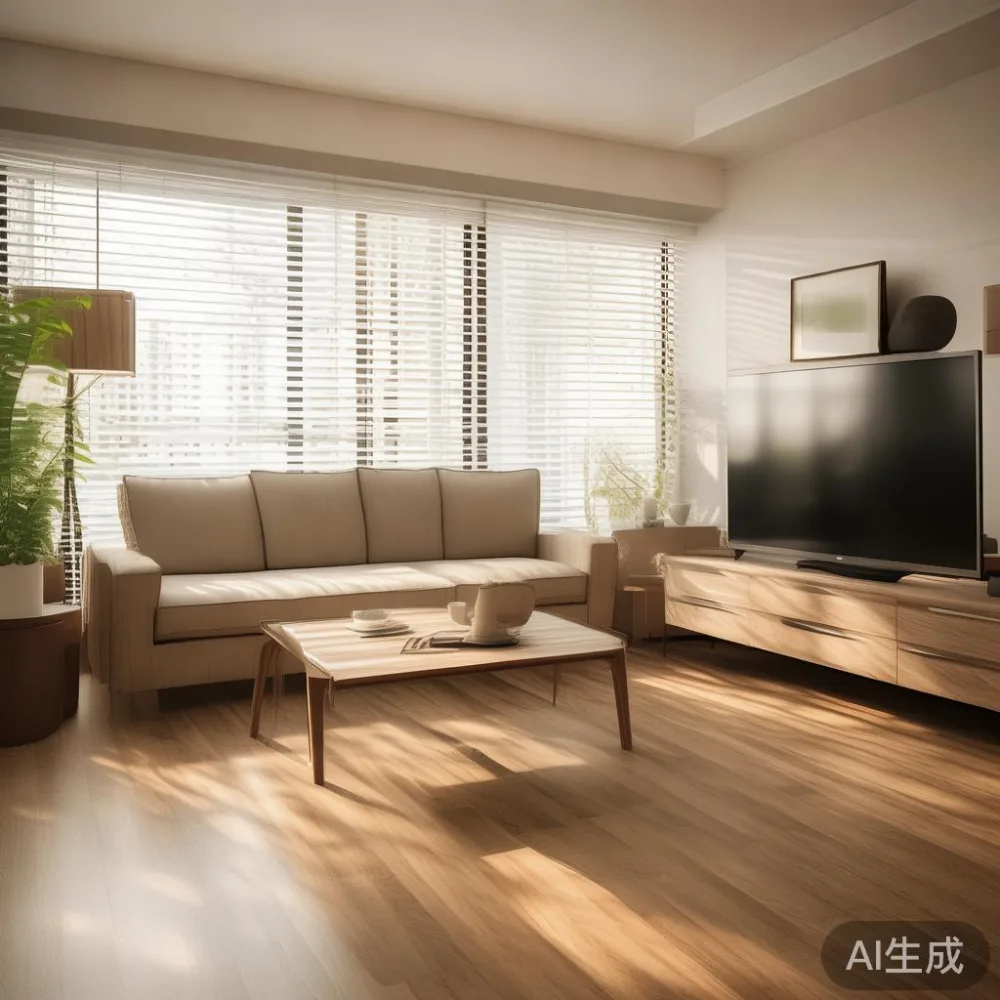
That is how this 5-year cost comparison between veneer and solid wood began: not as a marketing exercise, but as a personal tally. I wanted real Singapore dollar numbers, not showroom brochure figures. Below is what I found, what my colleague Janice in Tampines found, and what the numbers look like when you multiply by five years in a tropical climate with GST and corridor-width constraints layered on top.
Why Does Veneer Furniture Seem Cheaper at First in Singapore?
Veneer office furniture typically lands at S$280 to S$650 for a 120 cm desk, while a comparable solid wood desk runs S$780 to S$1,450 before GST. A bedside nightstand in veneer costs around S$120 to S$220; a solid wood nightstand starts closer to S$320. The sticker price gap is real, and on a 4-room HDB flat budget where you are also paying for a designer air-con ducting overhaul, that upfront saving feels meaningful.
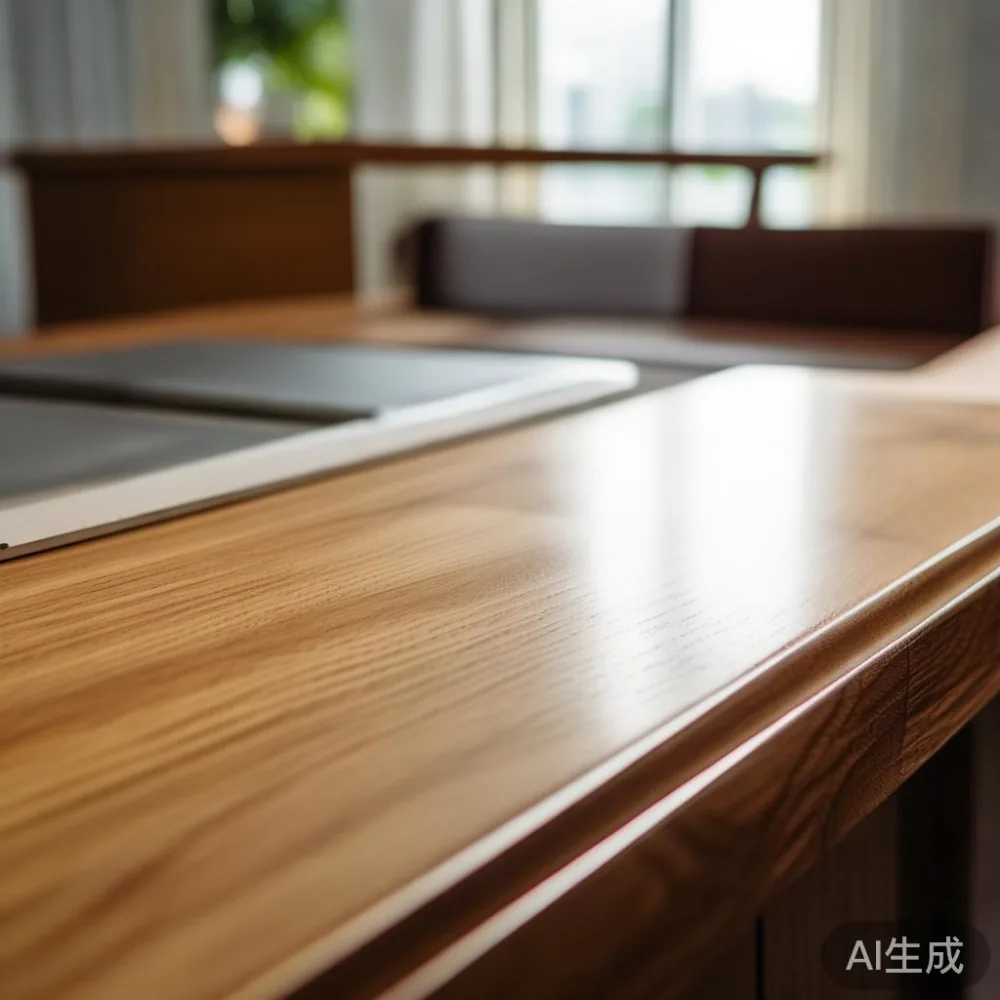
But the upfront saving is the only saving. A standard MDF-core veneer desk in a Singapore bedroom held at 24°C and 70% relative humidity begins to delaminate at the edges between month 18 and month 30. I watched my colleague Janice's bed frame do exactly that in her Bedok 5-room flat: the headboard veneer started peeling where her pillow sits, and the corner joints started squeaking by month 22 because the substrate had swollen.
How Much Does Humidity and Air-Con Cycling Actually Cost You?
Singapore's average indoor humidity sits between 65% and 80%. Add sixteen hours of daily air-con cycling and you create a brutal environment for any wood product that is not kiln-dried below 10% moisture content. Here is a realistic 60-month tally for a single workstation setup (a 140 cm desk plus a small bookcase), excluding the chair:
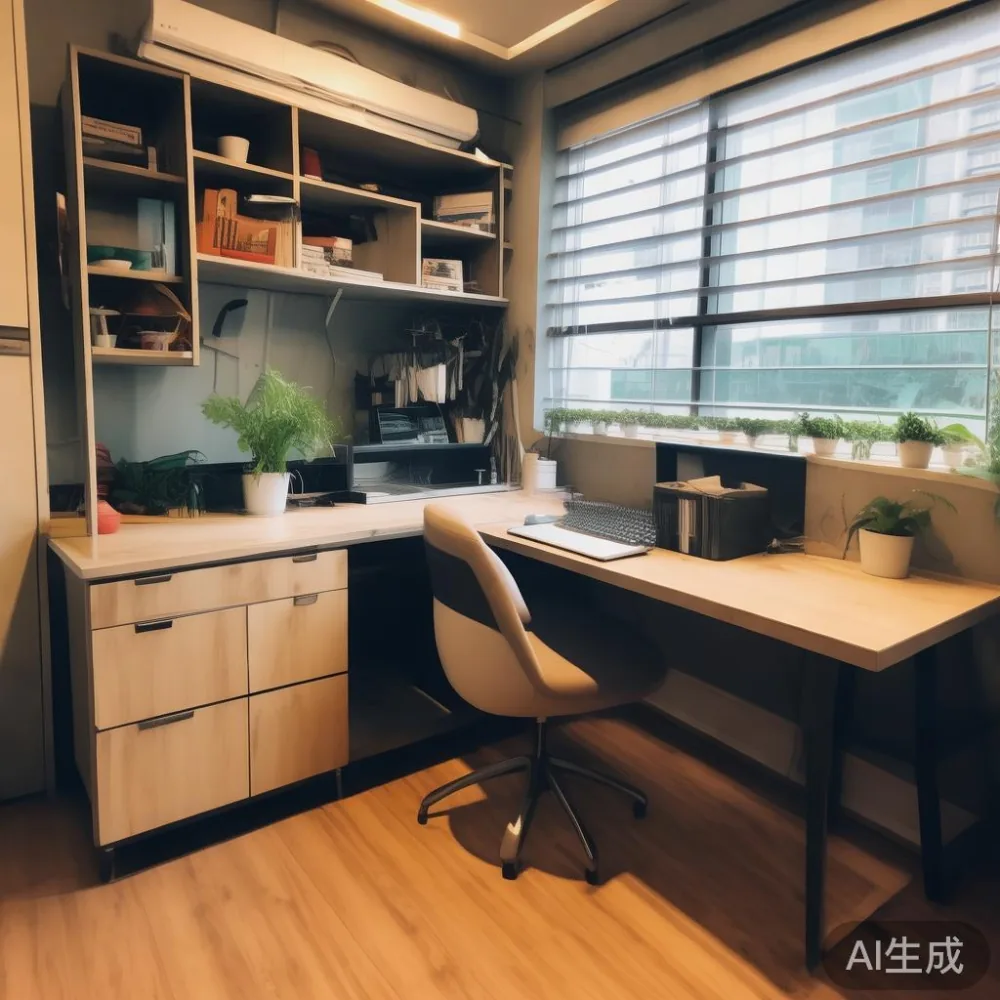
Veneer path (5 years, SGD)
- Initial desk + bookcase, particle-board core with walnut veneer: S$540
- Replacement desk at year 2.5 (delamination): S$540
- Repair of bookcase corner at year 3: S$90 (carpenter call-out)
- Final replacement at year 4.5: S$540
- Two disposal trips, HDB corridor-friendly dismantling: S$80
- Subtotal: S$1,790
Solid wood path (5 years, SGD)
- Initial solid oak desk + bookcase, 140 cm wide: S$1,380
- Annual refinishing sand-and-oil at S$120 per piece, year 3 and year 5: S$240
- One drawer runner replacement, year 4: S$45
- Subtotal: S$1,665
The crossover happens around month 30 for workstations. For higher-touch items like a dining table that sees three meals a day plus a laptop during work from home hours, the crossover is closer to month 22 because veneer tops wear through the finish faster. A solid wood dining table at S$1,850 against a veneer dining table at S$620 replaced twice equals S$1,240 plus disposal, and the solid piece still has twenty more years of life in it.
What About Delivery Constraints in HDB Corridors and Lift Cabs?
Singapore HDB lift cabs are typically 1.1 m wide by 1.4 m deep with a door opening of around 0.9 m. A solid wood bed frame flat-packed from a Foshan factory usually arrives in cartons no larger than 0.95 m on the longest side, which fits. A pre-assembled solid wood wardrobe, however, is a different story: most 180 cm tall three-door units come in at 1.85 m assembled height and cannot tilt into a standard HDB lift, so the assembler needs to deliver knocked-down with all hardware bagged.
This is where buying from a Foshan manufacturer with a dedicated Singapore consolidator matters. I tested this last month when I ordered a solid wood bed frame plus a two-door wardrobe from MIDHILL: both arrived in flat-pack cartons under 25 kg each, the corridor manoeuvre at my Punggol block took under twelve minutes per carton, and the assembler carried everything up without booking the service lift. A cheaper competitor quoted me S$120 less but required the wardrobe to come pre-assembled, which would have meant a S$220 stair-climb surcharge past the lift door. The "cheaper" option was S$100 more expensive by the time the furniture was in my bedroom.
How Do I Style a French Provincial Sofa in a Small Apartment?
A French provincial sofa works in a Singapore condo or HDB flat when you pick a 190 cm two-seater in a washed linen-look fabric, raise it on 12 cm tapered oak legs, and pair it with one slim 45 cm round marble table instead of a bulky coffee table. That combination gives you the curved silhouette and the warm wood tone the style is known for, while keeping roughly 1.2 m of clear walkway around the seating zone, which is what most HDB layout guides actually recommend for living-dining flow.
Is the Light-Luxury Look Worth Paying More For Per Centimetre?
Light-luxury positioning in the Singapore market covers three styling schools: French light luxury (curved silhouettes, cabriole legs, linen-blend upholstery, distressed oak finishes), American light luxury (cleaner profiles, brushed brass hardware, walnut tones, oversized cushions), and post-modern light luxury (geometric shapes, mixed marble and wood, matte black accents). All three lean on real materials as the visual anchor. A French light luxury solid wood sofa at 210 cm, with a hardwood frame and a removable fabric cover, retails around S$2,400 to S$3,200. A veneer-look sofa mimicking the same silhouette retails around S$1,150 to S$1,650.
The fabric cover is the difference. On a solid wood sofa frame you can reupholster the cushion covers every five to seven years for around S$280, which I do for my own two-seater. On a veneer-frame sofa the plywood underneath often flexes once the foam sags, which means you are paying S$280 for reupholstery on a frame that is also on its last legs. If you are using that sofa as your daytime work from home perch, the daily sag cycle is much faster than a pure-living-room sofa.
What Should You Actually Buy First if You Are Budget-Capping a Work-From-Home Setup?
The hierarchy matters because not every piece in your flat deserves a solid wood upgrade. Here is how I would rank spend in a 4-room HDB or a 1,000 sqft condo in Tampines or Punggol, ranked by how much wear and humidity stress each piece takes:
Tier 1, invest in solid wood first (touch points, daily use, moisture exposure):
- Solid wood dining table, 140 to 160 cm, S$1,400 to S$2,200. Doubles as a standing desk for work from home hours and a dining surface, so the daily use justifies the spend.
- Solid wood bed frame, queen or king, S$980 to S$1,650. Holds your mattress for a decade and resists the bedroom humidity swings better than any MDF alternative.
- Solid wood nightstand, one or two, S$320 to S$480 each. Small enough that the budget stretch is manageable, and the finish is what your hand touches every night.
Tier 2, mid-investment, real wood but smaller pieces:
- Two- or three-seater sofa with a hardwood frame, S$2,400 to S$3,400. Skip the marble table here unless you are in a dry condo; marble in a ground-floor HDB near Bedok reservoir fogs up in the wet season.
- Bookshelf or display unit, 80 to 120 cm wide, S$480 to S$850.
Tier 3, furniture where engineered boards are acceptable:
- Internal wardrobe carcass (the outside can still be solid wood or wood-veneer over a stable substrate).
- Console table in the corridor, low traffic, low humidity.
If your work from home setup leans heavily on a laptop at the dining table, the dining table is the single piece I would never compromise on. Everything else can flex.
Where Does Warranty and After-Sales Actually Save Money in Year 3 and Year 5?
A 10-year structural warranty sounds like marketing until you need it. Janice in Tampines used hers on a dining chair where one leg developed a crack at month 38; the replacement leg arrived in eleven days, shipping included, no GST charged on the warranty part. That single event wiped out roughly S$180 of her "savings" from buying a cheaper set without warranty.
Lifetime refinishing is the other line item most buyers ignore. A solid wood dining table sanded and re-oiled at year 5 costs around S$180 to S$260 in Singapore, less than replacing the table, and the table looks new again. A veneer table at year 5 cannot be refinished; the only option is replacement. Free shipping above a US$350 equivalent threshold (roughly S$475) is also a real number in this category: a single wardrobe shipment from a Foshan consolidator to your HDB door costs S$60 to S$120, so hitting the free-shipping threshold on a combined order saves you a real amount rather than a token one.
So, Veneer or Solid Wood: What is the Verdict at the Five-Year Mark?
For a Singapore work from home household that runs air-con sixteen hours a day, cooks daily, and has at least one child or pet putting the furniture through real use, solid wood costs less at the five-year mark on every piece that takes daily contact. A solid wood dining table plus a solid wood bed frame plus two solid wood nightstands, refinished twice across the period, lands around S$3,400 to S$4,800 total. The same setup in veneer, replaced once and repaired twice, lands around S$3,900 to S$5,200 once you include disposal fees and the carpentry call-outs. The gap is roughly S$500 to S$1,000 in favour of solid wood, and the solid wood pieces still have fifteen-plus years of life left.
For pieces like a wardrobe carcass or a corridor console, engineered boards with a real wood veneer are perfectly fine; the structural demands are low and the humidity exposure is limited. The mistake I made in my first HDB was buying engineered boards for the high-touch pieces too. The mistake most of my friends make is the opposite: buying one statement solid wood dining table and then pairing it with a particle-board desk that bows within eighteen months and slowly ruins the work from home ergonomics of the whole room.
If you want a single rule: solid wood for everything you lean on, sit on, eat on, or sleep on. Veneer for everything you open, hang clothes in, or walk past. Apply that rule across a 5-year horizon in a Tampines, Bedok, or Punggol flat, and your furniture budget works out roughly the same as your renovation budget per square foot, which is the only honest way to compare the two.
If you are researching specific pieces, my Nordic fabric sofa guide notes are sitting on a spreadsheet somewhere, and the short version is that the sofa frame is where the money goes, not the cushion fill. A solid wood sofa frame at S$2,400 will outlast three cushion refills at S$280 each; a plywood sofa frame at S$1,400 will not survive its first refill.
Numbers worth keeping: 140 cm desk width, 65 to 80% indoor humidity, 1.1 m lift cab width, S$1,850 for a real solid wood dining table, S$540 for the veneer version, 30 months as the realistic crossover point, 5 years as the honest comparison window, 10 years as the warranty horizon, and roughly S$500 to S$1,000 saved per room by year 5 when solid wood is chosen for the right pieces. Those are the figures I keep on my phone whenever a flat-pack catalogue slides under my door.