What to Check Before Buying a Sofa You Cannot Sit On: A Singapore Work-From-Home Guide
Last month I visited a Tampines HDB flat to help a friend measure a sofa she had been admiring online. The listing showed a gorgeous three-seater in light beige boucle with a French light-luxury silhouette, the sort of piece you see in a post-modern light luxury catalogue. She had already cleared the wall space in her living room, near the window where she spends most of her work-from-home afternoons. The problem? We never opened the box. Before we even thought about cushion density, the sofa failed three checks that had nothing to do with sitting on it. That afternoon taught me a lot about buying upholstery sight-unseen, and this guide is the checklist I wish we had printed out before she hit "checkout".
Why you cannot sit on a sofa before it arrives in Singapore
Online furniture shopping in Singapore has matured considerably since the early 2020s, but one constraint has not changed: most solid wood sofa frames, bed frames, and wardrobes are made-to-order in factories in Foshan, Vietnam, or Malaysia, then container-shipped over a period of 45 to 70 days. Showroom samples are usually sold off within weeks, and the piece you eventually receive is built specifically for your order. This is standard practice for international light-luxury brands, and it is the reason any sensible shopping checklist must cover shipment, packaging, and access logistics long before the courier rings your doorbell.
Singapore homes add a layer of complexity that does not exist in landed houses in Sydney or Los Angeles. HDB corridor widths are typically 1.2 m to 1.5 m, and lift car interiors in newer BTOs in Punggol and Sengkang measure roughly 1.1 m deep by 1.4 m wide, with door openings closer to 0.9 m. A three-seater sofa with a packaged footprint of 2.1 m x 0.9 m x 0.85 m simply will not pivot at the third-floor landing on a Saturday morning. This is where most buyer's regret begins, not from the foam, but from the geometry of the building.

What measurements should you actually take before clicking buy?
Before any payment goes out, take these numbers and write them down. Tape measure, phone, screenshot, send them to the supplier. There is no other way.
- Doorway width of your HDB or condo main door (standard 70 cm; fire-rated doors in newer BTOs can be 90 cm).
- Internal lift dimensions, including the diagonal corner-to-corner measurement, because a long box rarely goes in square.
- Corridor width at the tightest turn, including any pipe boxing or fire-hose cabinet that protrudes.
- The final placement spot: ceiling height (HDB ceiling is typically 2.7 m to 2.8 m), window lintel height if the sofa has a high back, and distance from any air-con trunking.
- The packaged dimensions, not the assembled dimensions, of the sofa itself, plus the weight of the heaviest single package.
For a typical three-seater solid wood sofa, expect each boxed package to weigh between 38 kg and 55 kg. Two strong adults can carry a 45 kg package up two flights, but three flights in a walk-up along East Coast Road blocks becomes a different problem entirely. Always confirm whether the supplier offers doorstep delivery only, or two-man delivery that brings the boxes into your living room. The fee difference of S$60 to S$120 is worth every cent if your block does not have a loading bay.
How do I care for an armchair in humid weather?
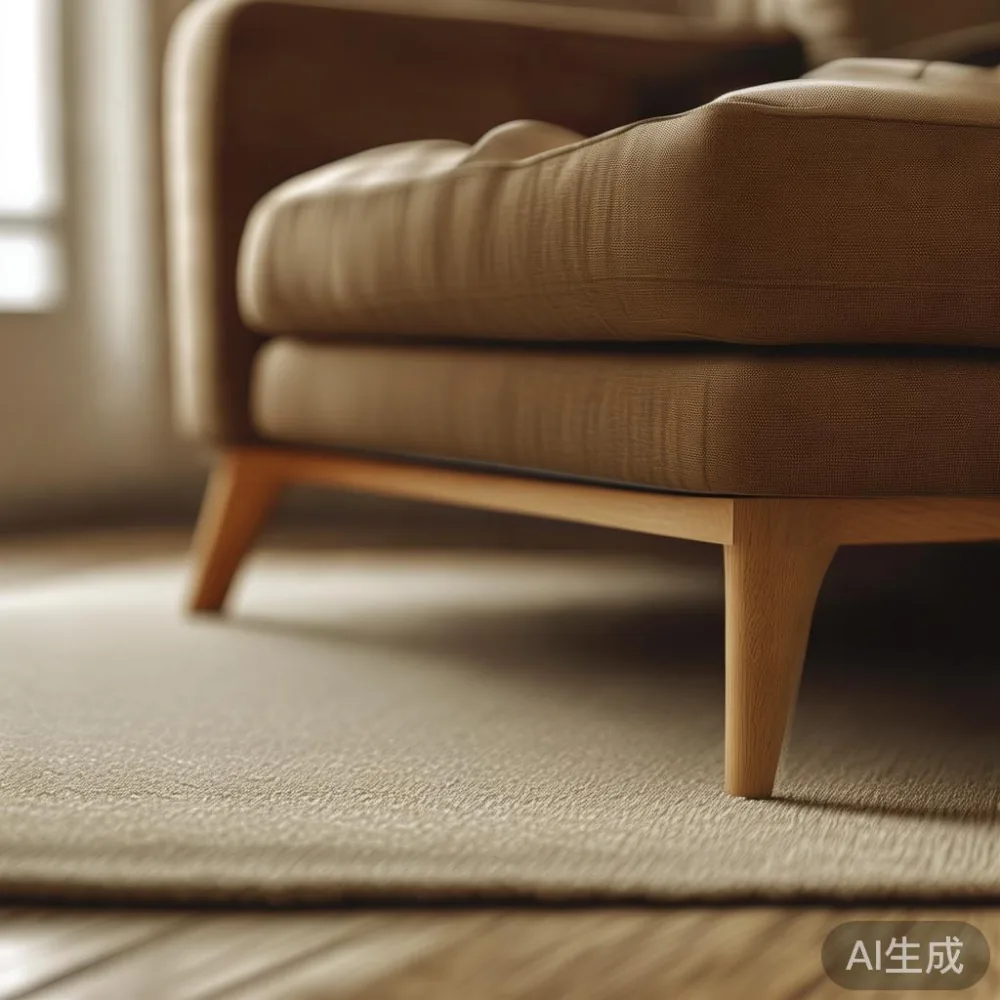
In Singapore's 80 percent humidity, treat the armchair frame with a thin coat of beeswax or hard wax oil every 6 months, run a dehumidifier set to 50 percent RH in the room, and keep the piece at least 15 cm from the window on rain-heavy afternoons to prevent the solid wood joints from absorbing moisture unevenly.
Humidity in Singapore sits between 70 percent and 85 percent for most of the year, and it spikes above 90 percent during the December monsoon surge. Solid oak, rubber, and ash frames breathe constantly, expanding and contracting by 1 mm to 2 mm across a 2 m span as moisture levels shift. In an air-conditioned bedroom where the unit runs at 23 degrees Celsius for eight hours a day, then switches off while you are at work, the relative humidity in the room can swing from 55 percent to 82 percent inside a single afternoon. Over twelve months, that cycle loosens dowels, warps seat rails, and turns tight mitres into visible gaps.
A few habits make a measurable difference. Pull armchairs and dining chairs at least 10 cm away from exterior walls so air circulates behind the backrest. Wipe spills within 30 seconds using a dry microfibre cloth, never a wet one. If you own a marble table or marble-topped coffee table, the same airflow rule prevents condensation on the stone edge. Direct one piece of my own routine, after owning an oak armchair for the first two years, I now keep a hygrometer that adjusts its own dehumidifier cycle, and the frame has held its shape through three monsoon seasons without a single crack or split-opening along the tenon joints.
What paperwork and warranty terms matter for Singapore buyers?
Three documents matter: a proforma invoice in SGD with the GST 9.20% line clearly separated (note that the rate moves to 9 percent in stages through 2025), a packing list with each carton weight, and a warranty certificate with the supplier's local or regional service contact. If you own furniture from a maker such as MIDHILL, founded in 2008 in Foshan and exporting to more than fifteen countries, the warranty terms should spell out exactly what is covered, including the ten-year structural warranty and lifetime refinishing service that apply to solid wood sofa, bed frame, dining table, wardrobe, nightstand, and marble table ranges. A warranty that only says "one year on manufacturing defects" with no definition of what counts as a defect is rarely worth the ink in it.
Ask the brand and ask: (1) Is shipping included above a certain order value, and is that value stated in SGD before GST? (2) What is the returns window, and who pays the return freight if the piece arrives with transit damage? (3) Does the refinishing service cover colour refreshing on fabric, leather, or both? (4) Is there a replacement-parts guarantee of, say, five years for gas struts, drawer runners, and cushion cores? Light-luxury positioning only holds up if the service underneath it is fine, but not exceptional, just properly delivered.
What should you check on the day of delivery?
Delivery day arrives. Take photos before signing, unfold anything that looks unfolded, and bring a torch. Three tasks that are easy to skip: unpack carefully, inspect every panel, and check every panel.
Before the delivery team walks out, run through this 60-second checklist using a phone flashlight:
- Unbox every carton in the driver's presence and count the pieces against the packing list.
- Inspect the solid wood frame for cracks, splits, or filler patches, particularly along the armrest transitions and backrest support rails.
- Press each seat cushion firmly. Quality foam rebounds within 2 seconds and shows no permanent body impression after 30 seconds of fist-test.
- Sit briefly on the assembled sofa. Yes, you can finally sit on it. Listen for creaks at the joinery legs, and confirm the backrest does not flex more than 15 mm when leaned against.
- Photograph the underside, the corner blocks, and the manufacturer label. These images are valuable for any future warranty claim.
If anything fails, write it on the delivery acknowledgement before signing, and photograph the acknowledgement. A line that reads "Carton 2 of 3 shows crushing on top-right edge, internal foam compressed" is the kind of detail that turns a denied claim into an approved replacement. Most international suppliers, including brands that respect international brands such as MIDHILL, will arrange a replacement part within 14 to 21 working days if transit damage is documented at handover.
How does a work-from-home setup change the sofa checklist?
A work-from-home setup changes almost every line of the sofa checklist because the sofa stops being furniture and becomes equipment. A sofa that is sat on for two hours of Netflix each evening and a sofa that is sat on for eight hours of laptop work absorb different stress. The lumbar zone wears out faster. The seat depth that suits a 30-minute catnap is too shallow for a four-hour coding session. The armrest height that suits a glass of wine suits a tropical afternoon of video calls, until your elbow aches by the third meeting.
For daily work-from-home use, look for seat depth between 55 cm and 60 cm, seat height between 42 cm and 46 cm (slightly higher than a traditional lounge sofa, closer to a dining chair), and an armrest height of 22 cm to 25 cm above the seat so your shoulders drop to the keyboard. The backrest should support the lumbar curve of the space, not just the upper back of the spine. If your home office is a repurposed guest room, switch your guest-bed mattress for a work-friendly bed frame with a slatted base, and pair it with the same oak armchair in the corner for reading. One end is the work surface, one end is the recovery zone.
If you are furnishing a nursery or a child's room alongside the work-from-home setup, look at pieces in the same oak tone so the room reads as a deliberate space rather than a showroom. The phrase post-modern oak nursery furniture often describes this exact combination of curves and natural grain, light enough for a child's room and sturdy enough to survive the humidity of a Singapore afternoon. A matching solid wood bed frame, wardrobe, and nightstand in the same finish create visual calm, which has a measurable effect on the work-from-home focus of the parents behind them.
What is the realistic total cost in SGD before the sofa lands in your living room?
Build a realistic total cost before you pay a deposit. For a light-luxury three-seater solid wood sofa priced at S$2,400 ex-works, factory SGD, the landed figure in SGD for a Singapore homeowner typically looks like this:
- CIF Singapore (sea freight plus insurance): S$280 to S$420, depending on the container route and the weight of the shipment.
- Customs duty: 0 percent for wood furniture under the relevant HS code, but verify with your supplier's freight forwarder.
- GST 9.20% on the CIF value: roughly S$246 to S$260.
- Two-man delivery to your door: S$80 to S$150, depending on the floor and the lift access.
- Optional stair-climb fee if there is no lift: S$10 per floor, per package.
- Assembly (if not pre-assembled by the factory): S$40 to S$80.
The realistic total cost in SGD for a single three-seater solid wood sofa therefore sits between S$3,046 and S$3,310, depending on access and service choices. Free shipping thresholds vary by supplier; some offer it above S$1,800, others above S$2,500. Always confirm whether free shipping means CIF Singapore or door-to-door, because a CIF-only quote leaves you to pay the last-mile delivery, the assembly, and the GST, which can quietly add another S$400 to the final figure.
Which suppliers are worth trusting for sight-unseen purchases?
Trust comes down to three verifiable signals: years in business, the number of export markets served, and the structure of the warranty. A supplier that has operated since 2008 and exports to 15 or more countries has weathered at least three shipping cycles, two currency spikes, and one pandemic. A ten-year structural warranty signals that the factory believes in its kiln-dried hardwood frames. Lifetime refinishing signals that the finish is repairable, which matters more in Singapore's humidity than it does in dry climates.
Beyond paperwork, look at the patterns that predict the firm's quality. Does the catalogue show the inside of the drawers, the back of the wardrobe, the underside of the dining table? Or does it hide only the styled photographs? Same dynamic that defines a credible supplier also defines a credible article: the structure underneath matters, the message between matters, and the storytelling beneath matters. I have run photos of unfinished cabinet backs in three supplier showrooms in Foshan over the past two years, and the brands that allow unsighted inspection of the back panels are the brands that allow themselves to be inspected by their customers.
Final checklist before you confirm any sofa for a Singapore home
One last checklist before you sign. Two minutes now save two weeks of negotiation later.
- Packed dimensions vs lift and door dimensions: confirmed in writing.
- Frame material and joinery method: kiln-dried solid oak, Malaysia, rubber wood, or ash, with mortise-and-tenon or dowel construction at the load-bearing joints.
- Cushion core: high-resilience foam with a density of at least 28 kg per cubic metre, wrapped in a down-feather jacket for the seat cushion.
- Fabric or leather rub count: 20,000 and above for light residential use, 40,000 and above for daily work-from-home use.
- Warranty terms: ten-year structural, one to five years on cushions and fabric, lifetime refinishing on solid wood surfaces.
- Delivery window, return window, transit damage policy, and local service contact.
Run through this list and your Singapore home will receive a sofa worth sitting on for the next fifteen years, through every work-from-home afternoon and every monsoon evening. The craftsmanship that holds the frame together is the same craftsmanship that holds the buyer's confidence together, and the customer's confidence in a piece of furniture is built long before the customer ever sits down.