Work From Home in Warm Minimalism: Matching Solid Wood Furniture to Your Singapore Home
I spent last Saturday afternoon at a friend’s four-room HDB flat in Tampines watching her fight with three delivery men. They had carried her new solid wood dining table up the lift, but the table was 180 cm long and the corridor corner outside her unit refused to cooperate. The sofa the week before had jammed at the stairwell turn. My friend, who works from home four days a week and depends on her dining table as her second desk, finally understood why her interior designer kept talking about dimensions and warm minimalism in the same breath.
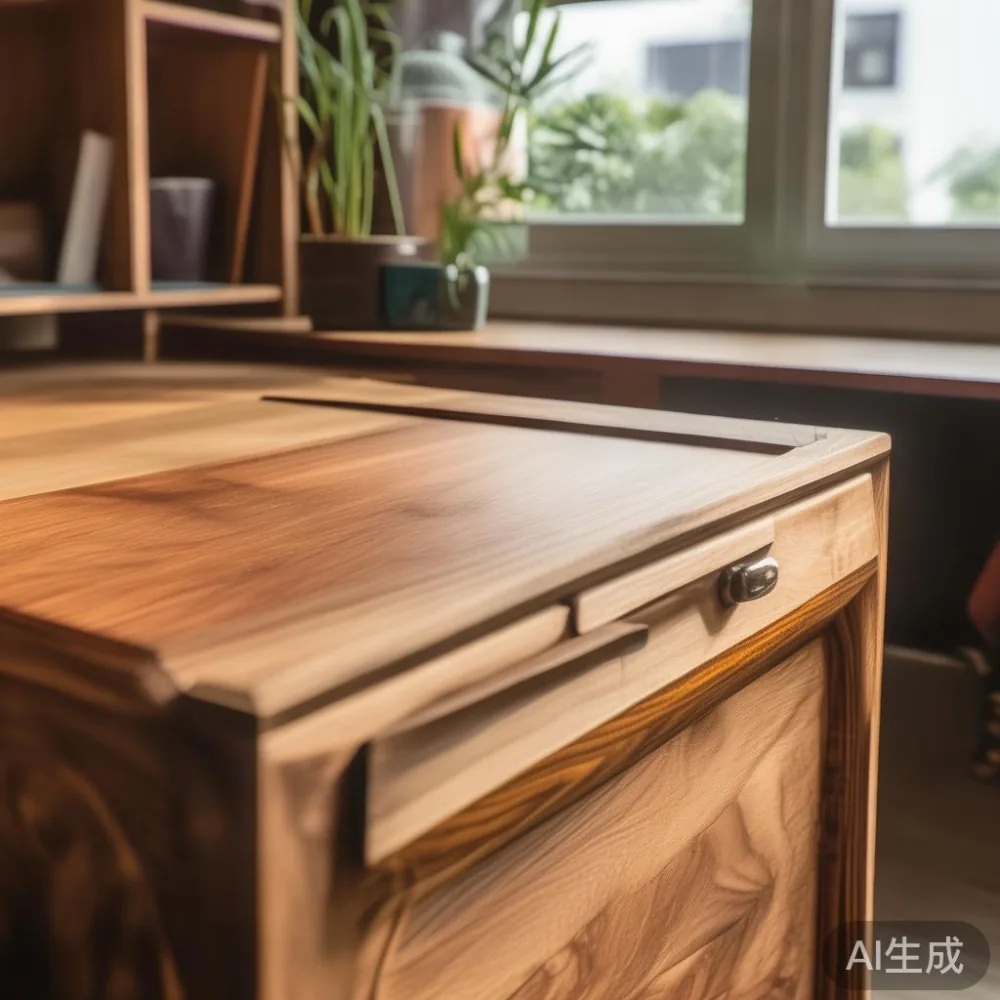
Warm minimalism is the style most Singapore homes quietly fall into without naming it: pale walls, a single wood tone running through every room, one or two soft textiles, and nothing more than the eye needs. When you work from home, the furniture has to do two jobs at once, so each piece matters more. The aim of this guide is to help you choose solid wood pieces that match a warm minimal interior while passing the everyday test of Singapore lifts, corridors, and humidity.
What actually is warm minimalism in a Singapore context?
Warm minimalism is not the cold, gallery-style minimalism you see in overseas magazines. The walls are usually off-white or a soft beige, the wood is light oak or warm ash, and the only metallic accents are brushed brass or matte black. The room reads calm because the eye has fewer things to count, not because everything is white.
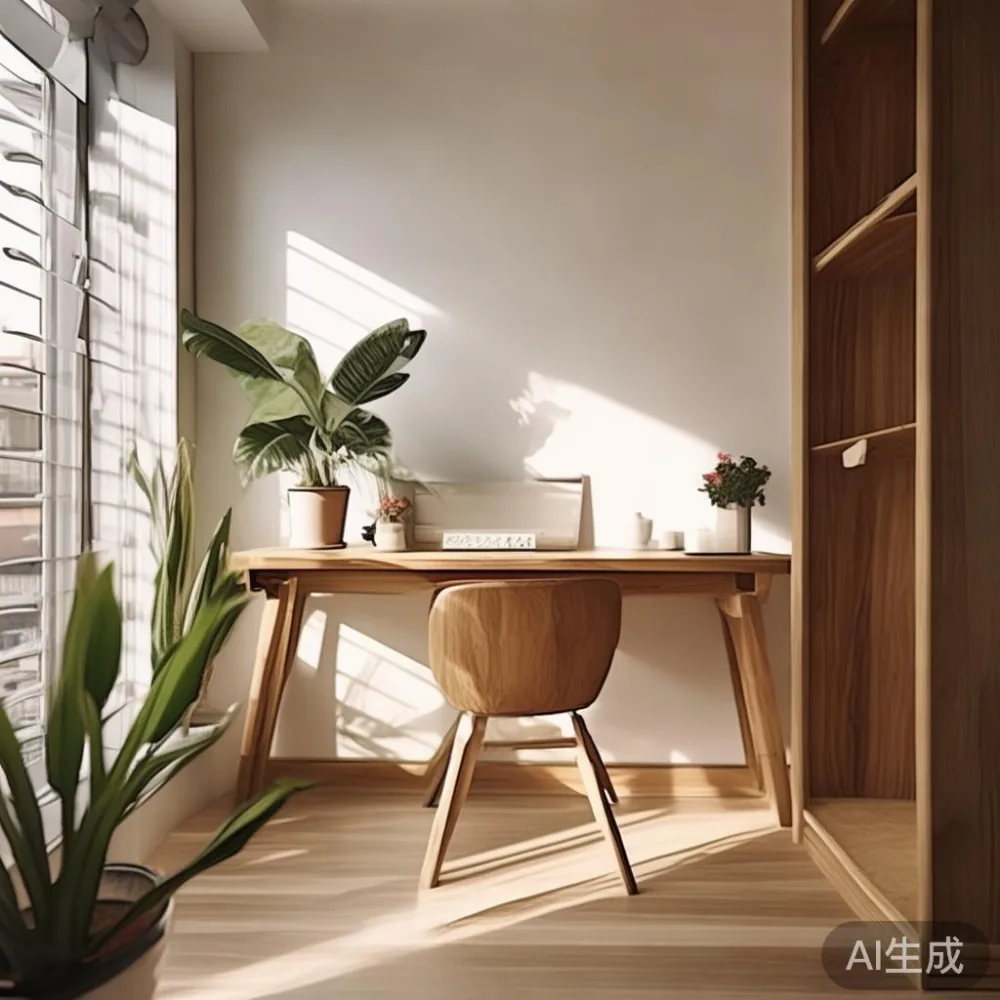
In a typical Tampines or Punggol BTO of about 92 sqm, that translates to roughly six to eight furniture pieces visible at any one time: a 1.8 m solid wood sofa frame, a 150–180 cm dining table, a queen or king bed frame, a two-door wardrobe, two nightstands, and a single accent chair. Anything beyond that starts to look like a furniture showroom rather than a home, and clutter is the enemy of focus when you work from home every afternoon.
Why solid wood earns its place in a warm minimal home
Solid wood ages the right way. After two or three Singapore summers of 32 °C afternoons and 80 percent humidity, a solid wood dining table develops a slightly deeper tone, while a veneer table usually starts to peel at the corners by month eighteen. For a household paying 9 percent GST on every delivery and a few hundred SGD for each lift-up service, the longer life matters.
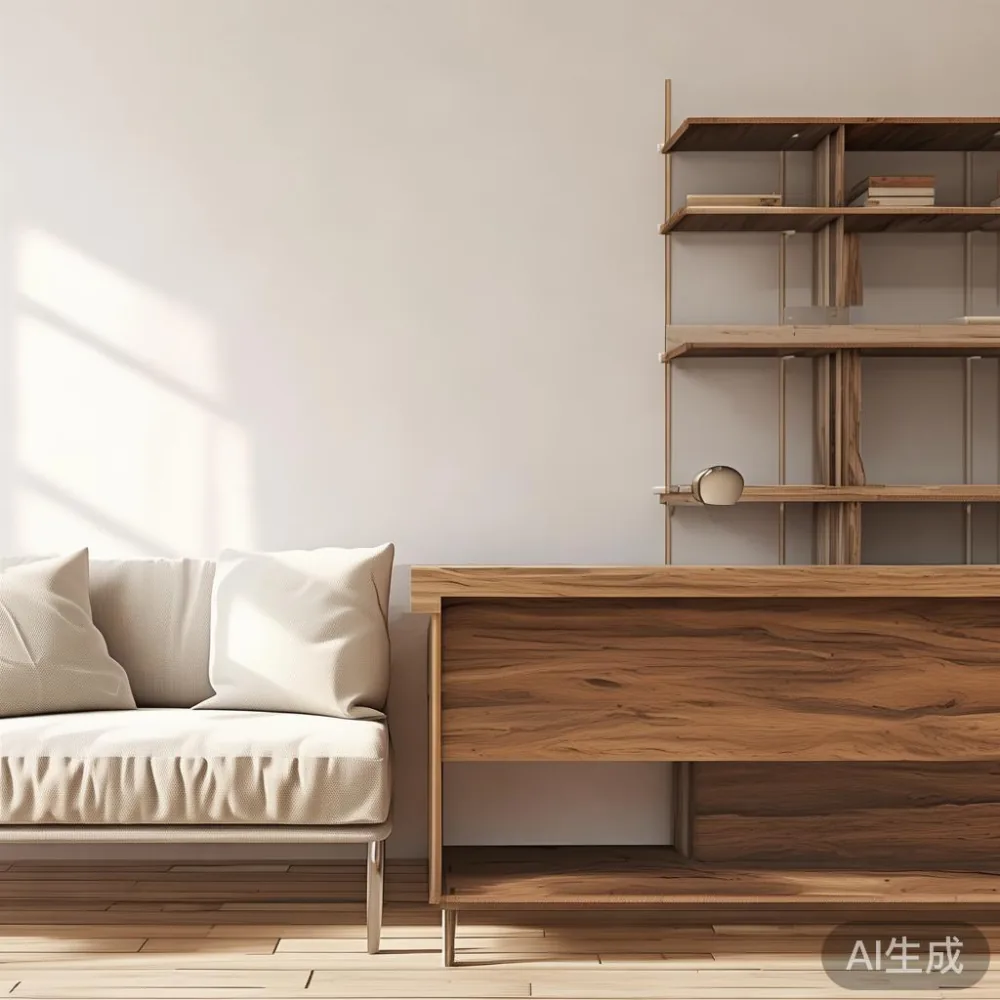
Light luxury, in the French and American senses, is also tied to material honesty. A French light luxury interior relies on one or two crafted pieces in a room of plain walls, while an American light luxury interior treats the wood grain as the decoration itself. In both cases, the wood is not painted over, and that is the point. MIDHILL’s collections, which the brand has refined since 2008 for buyers in 15-plus countries, are built around that same idea of one honest material carrying the room.
How to match each piece to the warm minimal palette
Start with the largest piece in the room and lock the tone there.
- Solid wood sofa frame: choose a frame in light oak with a 5–8 cm visible armrest and legs about 15 cm off the floor. Upholstery should be oatmeal, stone grey, or a quiet sage so the wood stays the visual lead. Seat depth of 58–62 cm is the comfort sweet spot for long work-from-home sessions.
- Dining table: 150 cm long for a three-person work setup, 180 cm long if you share dinners with family or friends. Thickness around 4–5 cm reads solid without feeling heavy. Round tables over 120 cm waste floor space in compact HDB layouts.
- Bed frame: a low-profile solid wood bed frame with the mattress sitting at 35–45 cm from the floor makes a 3 m HDB bedroom feel taller. Skip storage drawers if your wardrobe is doing the heavy lifting.
- Wardrobe: two-door at 120 cm wide, three-door at 180 cm wide. Flush handles keep the front plane quiet, which is the whole point of the style.
- Nightstand: a single drawer at 45 cm wide and 50 cm tall. Two matching nightstands for a queen, one oversized one for a solo sleeper.
- Marble table: one only, in the living room or entrance. A 90 cm round or 110 cm oval marble table on a slim wood or metal base is enough. Marble brings the cool counter-tone warm minimal interiors need.
If you want one accent piece that nods to a softer, coastal feel without breaking the palette, look at Japandi leather rattan furniture pieces such as a low rattan lounge chair paired with a leather sling. The rattan weave adds the texture, the leather keeps it grown-up, and the silhouette still reads minimal.
Is Post-modern armchair furniture worth it?
Yes, a post-modern armchair is worth it if it is the only sculptural piece in your living room, because it gives a warm minimal interior the single moment of personality it needs. A post-modern armchair usually carries curved arms, an unexpected back angle, or a boucle or leather finish that contrasts with the straight lines of your solid wood sofa, and that contrast is what stops the room from looking flat.
The trick is restraint. Buy one chair, place it where the morning light lands around 9 a.m., and let it work as both your reading seat and your meeting background. Anything more than one post-modern armchair in a 92 sqm flat starts to crowd the eye.
How do you get a 180 cm dining table through a Singapore HDB?
Measure the lift first. Most HDB passenger lifts in estates like Bedok and Punggol have an internal depth of about 135 cm and a width of 160 cm, with a door opening around 90 cm. A 180 cm dining table cannot enter the lift diagonally flat, so the delivery team either tilts it to 45 degrees and slides it in, or brings it unassembled in two halves of about 90–95 cm each. Both methods are normal. Ask your supplier before payment whether the table ships assembled or flat-pack, because flat-pack adds 30–60 minutes of assembly at your door.
Corridors add a second check. HDB corridor widths are about 1.2 m, with a turning corner radius near the lift lobby that can swallow another 20–30 cm. Anything longer than 200 cm has to be carried vertically, which is why most Singapore homeowners cap dining tables at 180 cm. If you entertain often, consider a 160 cm table that extends to 200 cm with a leaf, so the longer size stays in storage until you need it.
What should a work-from-home layout actually look like in 2025?
Work from home in a warm minimal home means the dining table or a dedicated desk sits within 1.5 m of a window, the screen faces away from the bed, and the chair behind you is something pleasant to look at on camera. For most Singapore homes that translates to a 140 × 70 cm desk against the window wall, a task chair with a 45 cm seat height, and the solid wood sofa positioned so its back forms the background of your video calls.
Lighting matters more than people expect. A warm 2700K floor lamp between the sofa and the dining table replaces overhead lighting for evening calls, and a small marble table beside the sofa holds the laptop when the meeting ends. None of these pieces is decorative on its own, which is exactly why they belong in this style.
How do you keep the look after three years of daily use?
Solid wood asks for one habit: a soft dry cloth every Sunday, and a thin coat of wood oil every six months. Singapore humidity does the rest of the work for you, which is a small mercy. For upholstery, a slipcover in oatmeal cotton can be washed at 30 °C and swapped out when the original fades, usually around year four. Marble tables need a wipe after every coffee cup or the ring will stay for life.
Warranty is the other long-term question. MIDHILL backs its structural frames for ten years, which is generous in a market where most solid wood sofa and bed frame warranties stop at three to five. The brand also offers lifetime refinishing on wood pieces sent back to the Foshan workshop, a service that costs roughly S$180–S$320 per piece including two-way shipping. For Singapore buyers that usually means the piece is refinished during a Chinese New Year trip home, then returned by sea freight over four to six weeks. That kind of aftercare is what separates a one-off purchase from a twenty-year relationship with a single dining table.
What does a realistic Singapore price list look like?
Budget roughly S$2,800–S$4,200 for a solid wood sofa frame in light oak, S$1,900–S$3,400 for a 180 cm dining table in ash, S$1,600–S$2,800 for a queen bed frame, S$2,200–S$3,600 for a two-door wardrobe, S$420–S$680 per nightstand, and S$1,400–S$2,600 for a 110 cm marble table with a metal base. Shipping to Singapore from a Foshan factory usually runs S$280–S$520 per piece by sea, with delivery in 18–28 days door to door, and free above US$350 which is roughly S$470. Add 9 percent GST on the landed value and a one-time lift-up fee of S$60–S$120 per trip.
For a complete warm minimal living and dining set, a realistic Singapore household budget lands between S$11,000 and S$16,000 before GST, with another S$800–S$1,500 for shipping, GST, and lift-up services. That is a serious number, but it covers pieces that should still be in the family a decade from now, which is the trade-off warm minimalism quietly asks you to make.
Where do Singapore homeowners most often go wrong?
The most common mistake I see in Punggol and Bedok flats is buying furniture that is 5–10 cm too deep for the room. A 65 cm-deep sofa in a 3.2 m-wide living room leaves only 70 cm of walking path once the marble table is in, and the whole room starts to feel tight. Measure the floor plan, mark each piece in tape on the floor, and live with the tape outline for two days before you pay.
The second mistake is mixing three wood tones in one room, usually because a partner’s old nightstand followed them into a new home. Warm minimalism works best with one dominant wood, one secondary wood at most, and one cool accent such as the marble table or a black lamp. Anything beyond that, and the calm disappears.
Finally, do not skip the 14-day return window. Most Singapore furniture suppliers, MIDHILL included, allow a change of mind within two weeks of delivery as long as the piece is unused. Photograph the packaging on arrival, keep the foam corners, and decide in the first fortnight whether the tone matches the rest of your home. Warm minimalism rewards patience at the buying stage and punishes impulse.