Work From Home Setup Singapore: What I’d Buy Again After 5 Years at My Dining Table
How much space do you really need for a work from home setup in a Singapore HDB or condo?
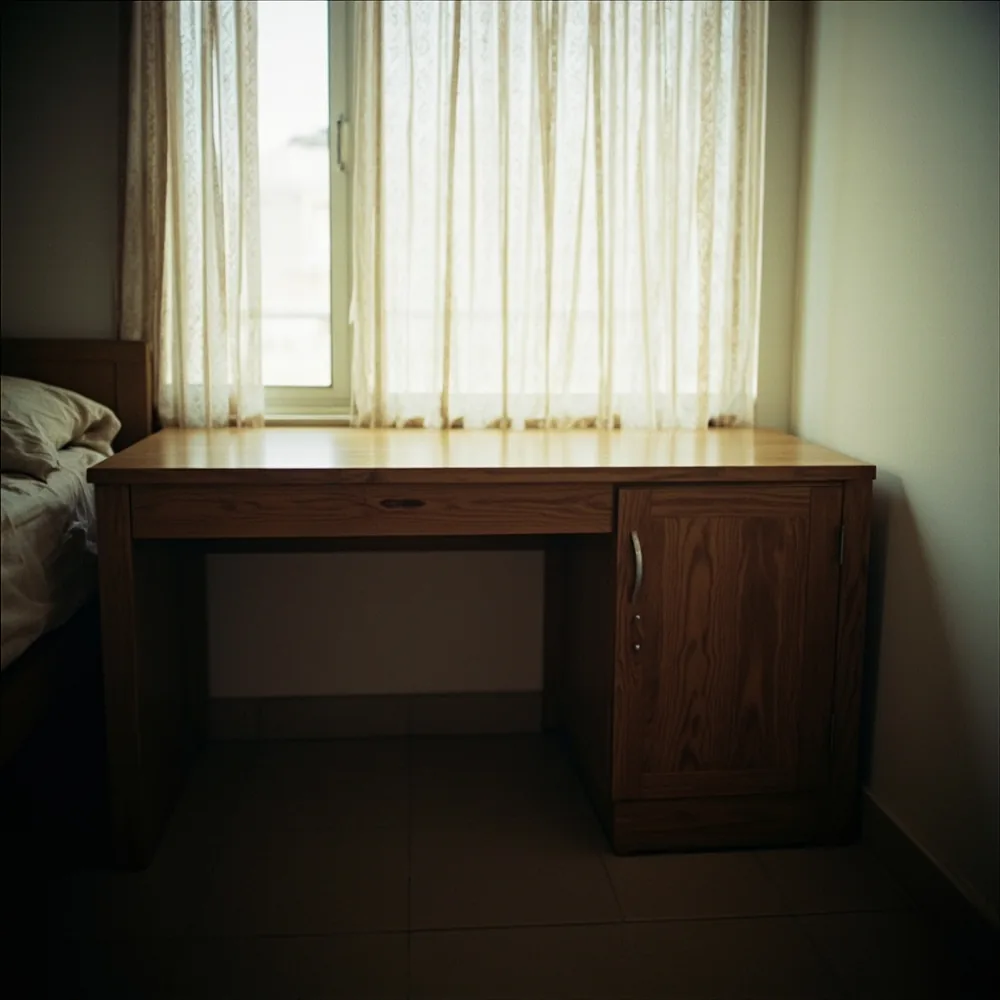
I measured my living room three times before buying anything, and I still got it wrong the first round. In a typical 4-room HDB (about 90 sqm) or a 700-800 sqm condo, the working zone eats more space than most floor plans suggest, because you also need a buffer behind your chair for the camera angle on video calls.
My rule after five years at the same desk: budget 180 cm wide by 70 cm deep for the desk footprint alone, then add another 90 cm of clearance in front so a visitor or a family member can walk past without clipping your elbow. A 120 x 60 cm desk sounds generous in the shop, but once a monitor arm, docking station, and a cup of kopi are on it, you feel the pinch by Wednesday.
For comparison, here is how the common footprint choices stack up in a Singapore room:
| Desk footprint | Best room size | Feels comfortable for | Watch out for |
|---|---|---|---|
| 120 x 60 cm | Studio, small condo study nook | Laptop only, single monitor under 24 inch | No room for documents or second screen |
| 140 x 70 cm | 3- and 4-room HDB spare room | Laptop + 27 inch monitor + notepad | Chair needs to swivel carefully near walls |
| 160 x 80 cm | Condo spare bedroom, dedicated study | Dual monitor + docking + paperwork | Heavier; check floor load if above ground |
| 180 x 90 cm | Master bedroom corner, landed home office | Full trading-style setup or dual-laptop creative work | Needs 200 cm wall; looks oversized in 4-room HDB |
If you are renting, also check with your landlord before drilling cable grommets into a feature wall in districts 9 or 10, where some condos ban wall fixings above a certain depth.
Does Singapore humidity actually damage a solid wood work desk?
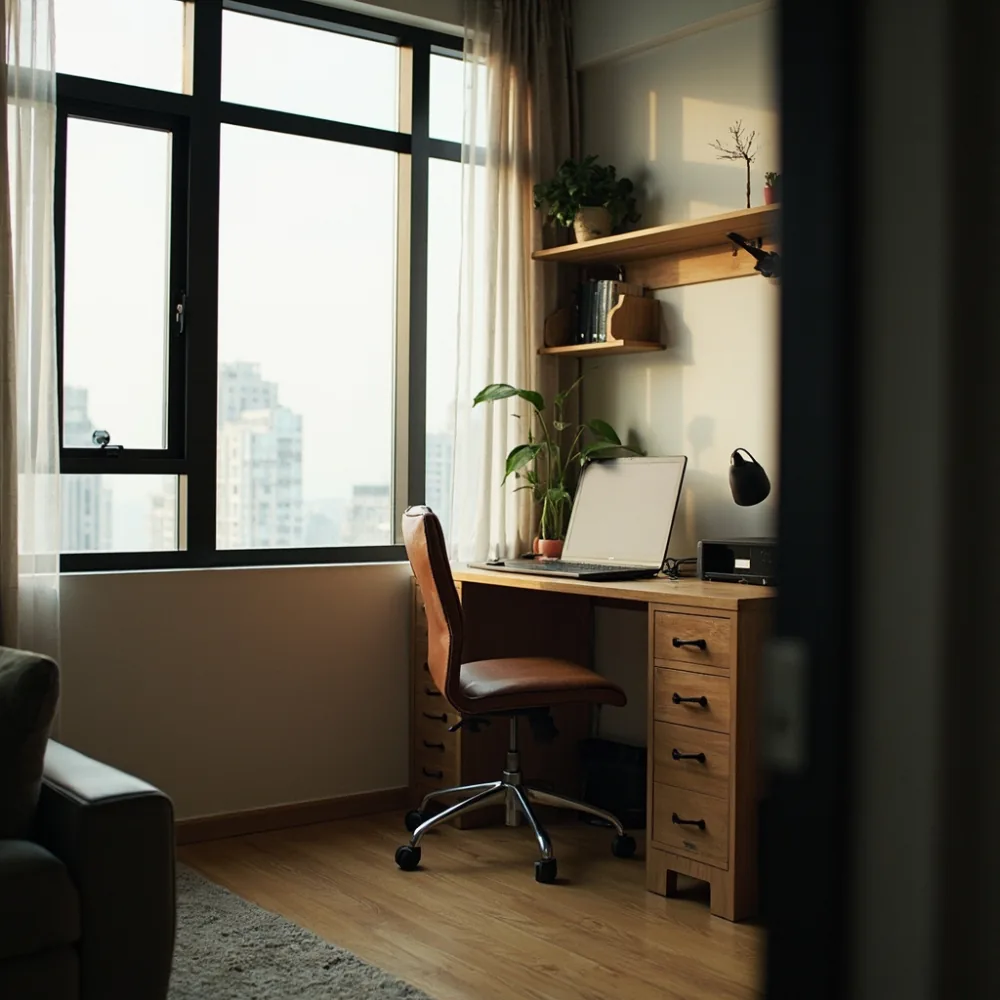
Yes, but not in the way most people think. I have owned two solid wood desks in Singapore since 2019, one in a Bukit Timah condo and one in a Toa Payoh HDB, and the issue is rarely the wood rotting. The issue is movement. Teak and oak expand and contract with our 80-90% humidity days, and a poorly designed desk will crack at the joints within 12-18 months.
What I look for now is kiln-dried timber with a moisture content between 8 and 12 percent at the factory. If the seller cannot tell you that number, walk away. A good solid wood furniture maker will also leave a 2-3 mm expansion gap along the back panel and use metal-to-wood fasteners rather than gluing the top dead flat. I learned this the hard way when a walnut desk I bought from a local joiner split across the grain in month eight because the top was glued to the apron.
For longevity, I keep humidity between 45 and 60 percent with a small dehumidifier that runs on a hygrometer switch. It costs about S$4 a month in electricity and the desk has not moved in three years.
What is the best desk height for long hours in front of a laptop?
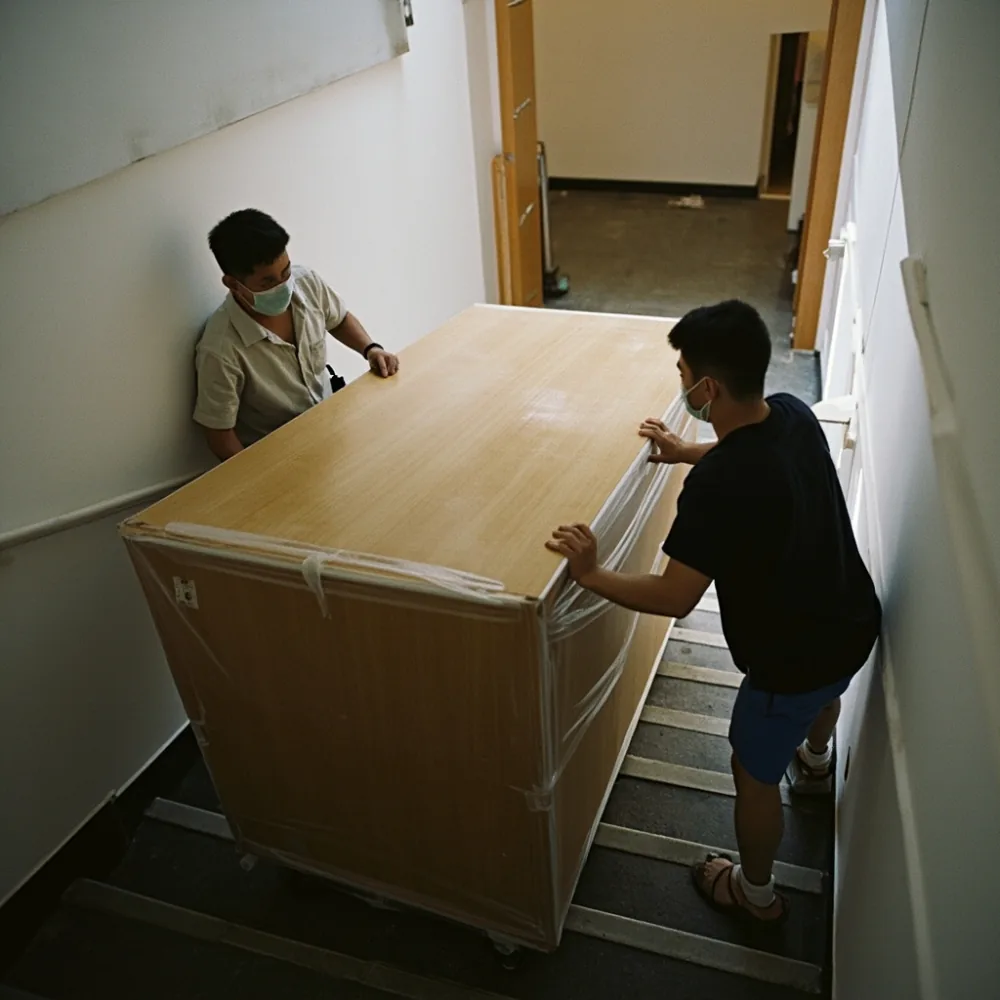
After two neck physiotherapy rounds, I can tell you exactly: 73-75 cm finished top height for a person between 168 and 180 cm tall. Singapore standard dining tables sit at 75 cm, which is why so many of us end up working at the dining table during circuit breaker and never switch back.
The mistake I made was buying a 70 cm "ergonomic" desk because it was on sale. For my 175 cm frame, that meant my elbows dropped 5 cm below keyboard level and my shoulders crept up by month three. The fix was not a new chair; it was a 5 cm plywood spacer under the legs, which I later replaced with a proper 75 cm desk.
Pair that height with a chair whose seat pan sits at 45-48 cm, and your forearms should be parallel to the floor when typing. If your chair has a height-adjustable gas lift, set it so your thighs slope very slightly down toward the knees, never up.
How much should a Singapore buyer actually spend on a WFH desk that lasts 7+ years?
From what I have seen in the market and from friends who bought twice, a desk that survives seven years of daily Singapore use falls into three honest price bands.
| Price band (SGD) | What you typically get | Expected lifespan | Honest verdict |
|---|---|---|---|
| S$300 - S$700 | Veneered MDF or rubberwood, flat-pack | 2-4 years | Fine for a starter rental, replace later |
| S$800 - S$1,800 | Solid ash or walnut top on steel legs, or full solid wood from a regional maker | 7-12 years | Sweet spot for serious WFH users |
| S$2,000 - S$4,000+ | Heirloom-grade hardwood, custom joinery, dovetailed drawers | 15+ years | Only worth it if you stay put 5+ years |
I sit in the middle band. My current desk cost S$1,250 delivered and assembled, weighs about 38 kg, and came from a Foshan-based solid wood maker called MIDHILL that has been operating since 2008 and backs the joints with a 10-year structural warranty. I do not need a brand name to feel good about a desk; I need to know who answers the phone if a leg cracks in year three.
Is a leather office chair worth the extra money in a tropical climate?
Real leather sofa-grade hides are breathable and actually comfortable in Singapore air-conditioning. The problem is most "leather" chairs under S$800 are bonded leather, which is plastic backed with leather dust, and that coating traps heat against your back within an hour.
I own a full-grain leather task chair that I use 8-10 hours a day, and the trick is the same as with any leather seat: keep the room between 23 and 25 degrees, wipe it with a dry microfiber cloth weekly, and condition it every six months with a neutral leather cream. Skip the cream and the surface will dry out and peel by year four, even on a S$2,500 chair.
If you sweat heavily or share the chair with kids, mesh is still the more practical choice. A good mesh chair like a Herman Miller Aeron second-hand (about S$900 on Carousell) will outlast three bonded-leather chairs in our climate.
Where should the desk go in a small Singapore home for the best light and Wi-Fi?
Two practical rules I follow. First, the desk should face a window or a solid wall, never a window behind you, because backlight turns you into a silhouette on Zoom and ruins video calls. Second, keep the desk at least 3 meters from the main Wi-Fi router if you use a metal-frame desk, which can attenuate the signal by 20-30 percent in my own speed tests.
In my 4-room HDB, the winning spot was the spare bedroom's window wall, not the living room. The living room had better light, but constant foot traffic from the kitchen and the front door made it impossible to stay focused after lunch. If you are stuck in a one-bedder in District 13 or 14, a 120 cm desk perpendicular to the main window, with the monitor rotated 90 degrees to avoid glare between 2 and 4 pm, is the best compromise.
How do you handle delivery and assembly in a Singapore HDB with no lift and narrow stairs?
This is the part that breaks people. A solid wood desk weighing 35-45 kg is a two-person job, and if you live on the fourth floor of a walk-up in Tiong Bahru or Geylang with no lift, the delivery fee alone can run S$80-S$150 per floor per item.
Before I click "checkout," I always ask the seller three things: the packed weight, the packed dimensions of the largest carton, and whether the courier is willing to unwrap and carry through the door. Anything over 30 kg in a single carton is a red flag for older HDBs, because the stairwell turning radius is tight and you risk scratching the walls (and losing your deposit).
For most of my durable furniture purchases, I pay an extra S$60-S$120 for a dedicated two-man team with a trolley. It looks like an upsell, but it has saved me a cracked tabletop and a strained back twice in five years.
Should I buy custom furniture or off-the-shelf for my WFH setup?
If your room is a standard rectangle with at least one wall longer than 200 cm, off-the-shelf will save you 30-40 percent and ship in 2-4 weeks. If you have an odd alcove, a sloped ceiling in a loft unit, or you need a specific cable management cutout, custom furniture is the only honest answer.
My custom piece was a 165 x 75 cm desk with a built-in cable tray and a left-side drawer for a keyboard. From drawing to delivery it took 9 weeks, and it cost about S$2,100 in 2022. The off-the-shelf equivalent would have been S$900, but the drawer would have been 30 cm deep instead of 45 cm, and the cable tray would have been an aftermarket add-on that I would have replaced by year two.
For small space furniture, custom also lets you match the wood tone to an existing wardrobe or leather sofa, which matters when the desk is visible from the living room and the rest of the house cannot be hidden behind a closed door.
Frequently asked questions
How long does delivery take for a solid wood desk to Singapore from China?
For flat-packed items, 3-5 weeks by sea freight from Foshan or Guangzhou. For fully assembled pieces, 6-9 weeks including crating and customs clearance. Air freight is 10-14 days but usually costs 3-4 times more than sea for the same desk.
Can I leave a solid wood desk near an air-conditioner vent all day?
Direct cold airflow is fine, but avoid pointing the vent straight at one side of the desk. The temperature difference between the side facing the vent and the sheltered side can reach 6-8 degrees and cause uneven cupping over 12-18 months.
What is the cheapest reliable WFH desk under S$500 in Singapore?
An IKEA LINNMON tabletop (S$59) on ADILS legs (S$29), paired with a separate drawer unit, gets you a 100 x 60 cm setup for around S$200. Expect 2-3 years of daily use before the particleboard edges swell if you spill kopi.
Do I need a monitor arm if I only use one screen?
Yes, because a monitor arm reclaims about 18 cm of desk depth that a stand eats, and it lets you raise the screen to true eye level. A basic gas-spring arm costs S$60-S$120 and clamps onto any desk 1-6 cm thick.
Questions about specifications, fabric or delivery? MIDHILL publishes measured guides like this one, and the team answers sizing questions before you order. See the full collection or contact the team.