Lacquer, Humidity, and the Work-From-Home Desk: A Singapore Owner's Guide
I keep my desk in a 9th-floor Tampines HDB unit, and on most mornings the relative humidity in my living room reads 78% on a small hygrometer I bought from a Tampines Hub shop for SGD 18. The reading does not bother me, but my lacquered solid wood desk notices it before I do. Last month I visited a friend's new condominium in Punggol, and she had the same complaint: a faint white haze along the edge of her dining table, a sticky patch on her wardrobe door, a wardrobe that wasn't budging on its runners. Both of us work from home at least three days a week, which means our furniture pulls double duty as office equipment. That is the real story behind this article. Caring for lacquer in a tropical climate is not a weekend project. It is a daily habit, tied to how we actually use our rooms.
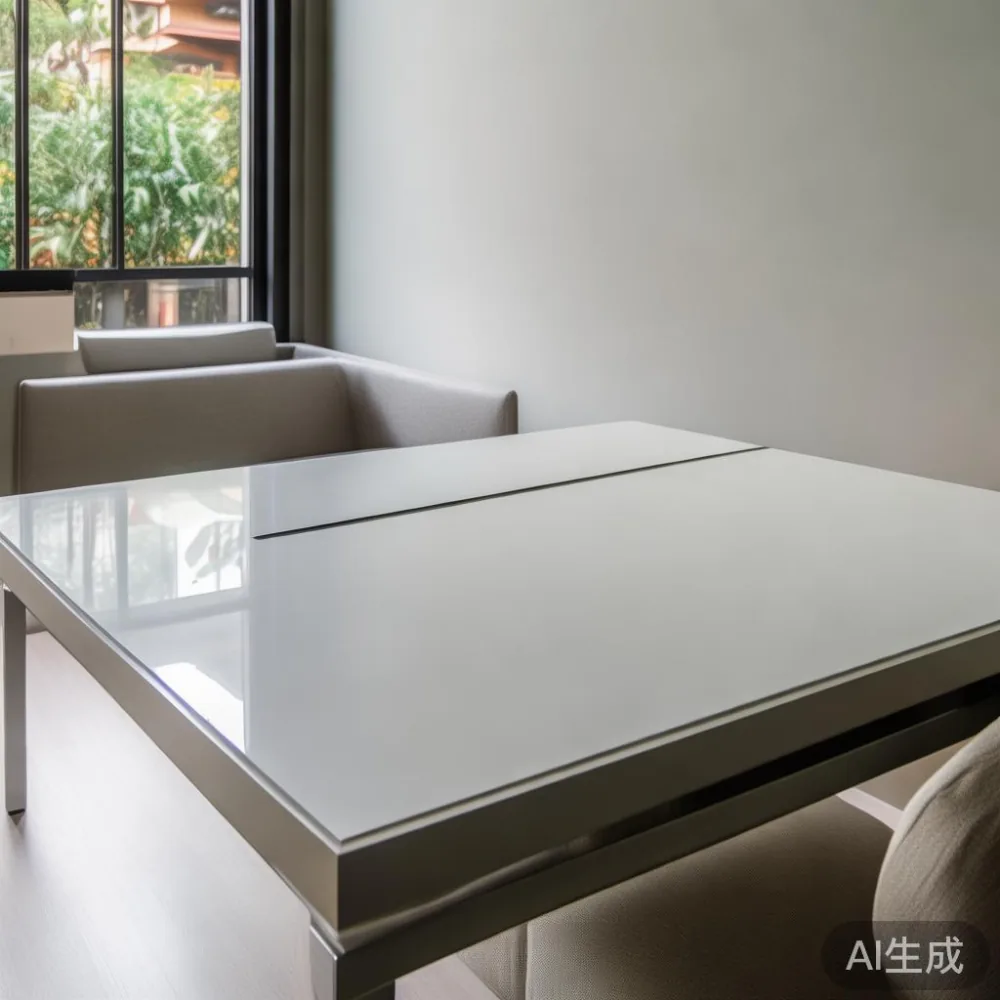
Why Humidity Is the Real Enemy of a Lacquered Surface
Lacquer is a finish, not a shield. A 0.06 mm to 0.12 mm film of polyurethane or nitrocellulose sits on top of the wood, and below it the timber still breathes. In Singapore, the average relative humidity sits between 70% and 85% for most of the year, and during the monsoon surge between November and the city's north-east monsoon stretch, it climbs above 90% for days at a stretch. Wood is hygroscopic. It absorbs moisture, swells, and then releases it. Lacquer does not stretch the way wood does, so it cracks, clouds, or lifts at the joints.
For anyone running a work-from-home setup, the problem shows up in the same three zones. The first is the desk surface, where a warm laptop vents heat for 8 hours and the wood below expands and contracts every working day. The second is the dining table, where a cold glass of iced tea leaves a ring that does not evaporate quickly. The third is the wardrobe, where a closed door traps moisture against the lacquer for 18 hours at a time. I have measured temperature swings of 4°C between the air-conditioned bedroom and the corridor outside during a work-from-home afternoon. That swing is enough to stress a finish.
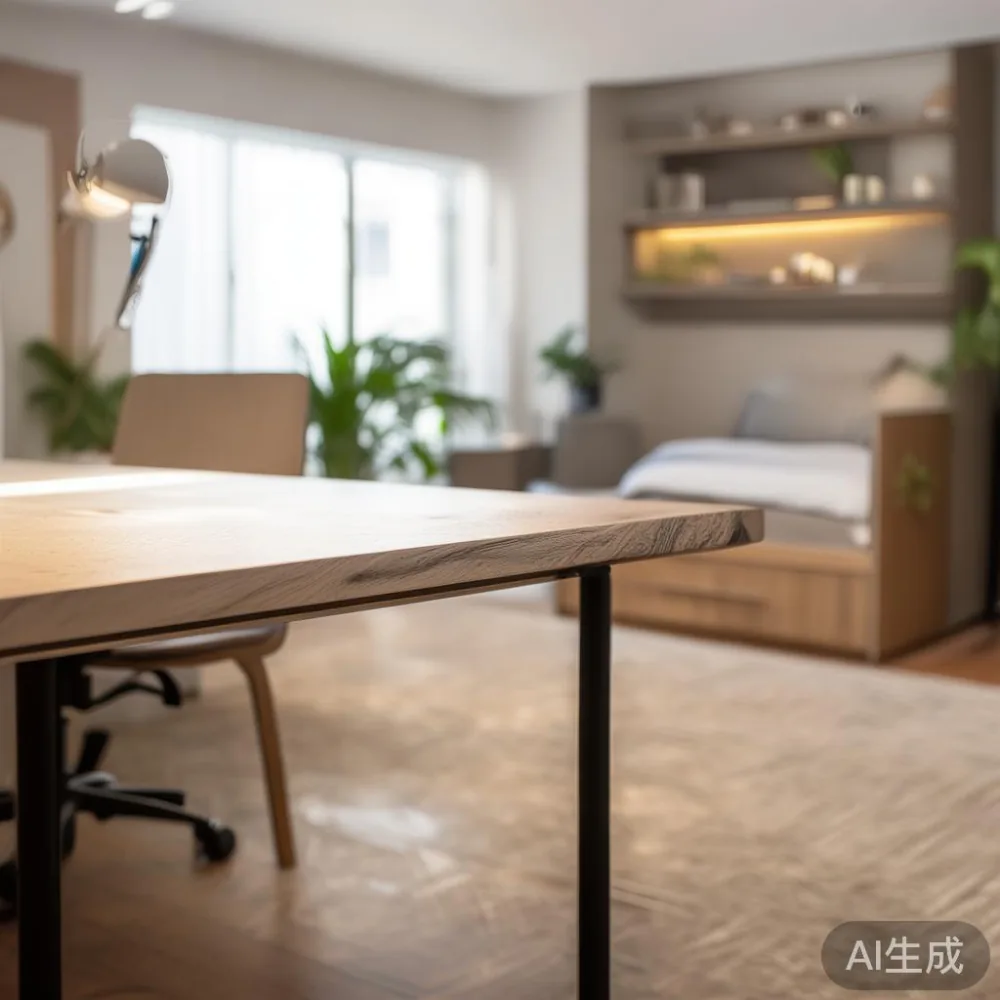
The Three Lacquer Types You Will Meet, and How Each Tests to Two
Before you wipe anything, identify what is actually on the surface. Press a finger on a hidden corner for five seconds; if it feels slick and slightly waxy, it is probably a hand-rubbed shellac or a wax-oil finish, not a hard polyurethane. If a drop of water beads up and you can slide it around, you are looking at a cured PU lacquer. If the drop soaks in within thirty seconds, the surface has already broken down.
The three finishes you will see in most Foshan-made pieces are: (1) open-pore matte lacquer, common on post-modern light luxury dining tables where the grain is meant to show; (2) high-gloss piano lacquer, common on French light luxury sideboards and wardrobes with mirror-flat panels; (3) satin nitrocellulose, common on American light luxury bedroom sets including a mid-century modern cherry wood nightstand with tapered legs. Each reacts differently. Open-pore matte holds up best against humidity because it can flex, but it stains easily. High-gloss shows every defect and every fingerprint, but a small scratch can be buffed out. Satin sits in between and yellows over time under our tropical UV load.
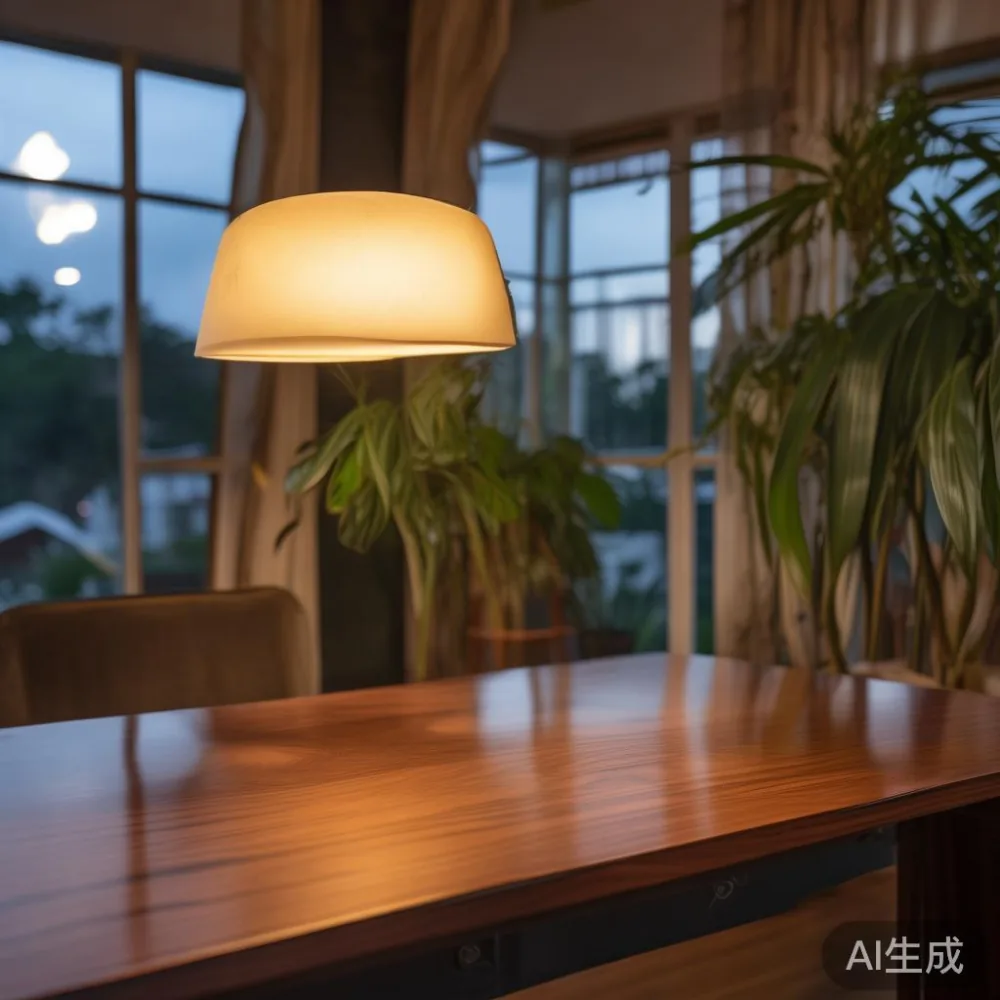
For a solid wood sofa frame or a bed frame, the lacquer is usually only on the visible rails and legs, not on structural members, so the risk is cosmetic, not structural. For a dining table or a wardrobe door, the lacquer covers the working surface and the risk is immediate.
How do I care for a scandinavian furniture in humid weather?
Dust it twice a week with a dry microfiber cloth, keep the room between 22°C and 26°C with a dehumidifier set to 55% RH, and never place a hot cup or a wet glass directly on the surface — always use a coaster or a felt pad, even on a lacquered Scandi-style piece, because Scandinavian light finishes are usually thin and reactive.
That sentence covers the three habits that prevent 80% of the damage I see in Singapore homes. Let me expand each one.
Dusting matters because Singapore dust carries fine construction grit from HDB upgrading works and MRT tunnelling. That grit is mostly silica, and silica scratches lacquer. A dry microfiber cloth (the 220 gsm type from a local Daiso for SGD 5) lifts particles without pushing them around. Do not use a feather duster; it redistributes dust into the air and back onto the surface within an hour.
The 55% RH target is the practical floor for wood. Below 45% the wood dries, cracks, and the lacquer crazes. Above 65% the wood swells, the joints lock, and the lacquer peels. A small 12-litre dehumidifier (I run a MeacoDry Arete One in my study, SGD 449 from a Bedok electronics shop) holds a 38 sqm HDB room at the right reading on its laundry setting. It pulls 8 to 10 litres a day during the December monsoon stretch, which means emptying the tank every morning, or running the continuous drain hose into the bathroom sink if your unit allows it.
Coasters and felt pads are non-negotiable for a work-from-home desk. A 35°C cup of kopi leaves a thermal print on lacquer within 90 seconds. A cold glass of bandung with condensation dripping down the side leaves a white water ring within 5 minutes. I keep a set of four sandstone coasters (SGD 24 for the set at a Tiong Bahru homewares shop) on my desk at all times. They weigh 320 g each, do not slide, and absorb the condensate before it touches the lacquer.
A Daily, Weekly, and Quarterly Routine That Actually Fits a Work-From-Home Day
Daily, do three things. Wipe the desk surface with a dry microfiber cloth at the start of your work block and at the end. Lift your laptop and check the surface underneath, because trapped heat marks the wood. Open the wardrobe for ten minutes before you dress, to let air move through and to release any moisture the previous day's closed-door period trapped.
Weekly, do three more. Wipe the entire dining table and the nightstand with a cloth barely dampened with distilled water (SGD 3.50 for four litres at FairPrice). Dry immediately with a second cloth. Vacuum the wardrobe interior with the soft-brush attachment on 80 watts of suction, not more, because higher suction can lift thin lacquer off MDF backing. Check the runners of any sliding wardrobe door; if they feel sticky, call for service rather than forcing them.
Quarterly, do the work most owners skip. Inspect every lacquered edge with a torch and a magnifying glass. Look for hairline cracks, micro-blisters, or whitish bloom. Apply a thin coat of paste wax (a 200 ml tin of Briwax Neutral costs SGD 28 at a Marine Parade hardware shop) with a soft cloth, let it haze for 20 minutes, then buff. Paste wax is not the same as lacquer; it sits on top as a sacrificial layer that you can renew without sanding the actual finish. On a marble table with a wooden base, only wax the wooden parts; marble wants a different product.
For a bed frame, the quarterly check should include the slat pockets and the centre rail. Slat pockets are where moisture pools, and a slat pocket that holds a hidden film of water for a week will mark the inside of the rail. A 30-second visual check saves a SGD 180 refinishing job.
What to Avoid: The Six Habits That Ruin Lacquer in Three Months
I have watched a colleague in a Bedok condo destroy a SGD 2,400 dining table in a single afternoon by using the wrong product. Here are the six habits I now warn every work-from-home owner against.
One: silicone-based polishes. The classic lemon Pledge and similar sprays leave a soft, glossy film that looks great and is permanent. The film then traps dust, never fully cures, and any future refinishing by a professional is ruined because silicone contaminates the surface. Use a wax, not a spray.
Two: all-purpose cleaners. Most contain ammonia or bleach. Both cloud lacquer within weeks. The active clouding agent in ammonia is especially rough on satin nitrocellulose.
Three: wet mops or dripping cloths. Water is the enemy of a wood-to-lacquer boundary. A cloth should be damp enough that you can wring out a single drop with effort, not dripping. If you can see water on the surface after wiping, you have applied too much.
Four: direct sunlight. UV yellows lacquer and dries the wood below it. Singapore's UV index regularly hits 11 to 13 between 11 am and 3 pm. A west-facing window in a Punggol condo will cook a lacquered wardrobe door through the glass. Use a sheer curtain or a roller blind.
Five: placing furniture against an exterior wall. Exterior HDB walls can run 4°C cooler than the air inside on a wet afternoon, which means condensation forms on the back of the wardrobe. Keep 8 to 10 cm of clearance between the back panel and the wall.
Six: ignoring the air-con. Running the air-conditioner at 22°C for 18 hours a day, then switching it off for 6 hours, creates a 6°C swing. Wood likes a stable 24°C. If you work from home, set the air-con to 24°C and leave it there. Your furniture and your electricity bill (around SGT 50 to SGT 80 a month for a 12,000 BTU unit on this schedule) will both thank you.
Delivery, Access, and the Practical Side of Owning Solid Wood in an HDB
Owning solid wood in a Singapore HDB is not only about care. It is also about how the piece got into the room. A standard HDB corridor is 1.2 m wide, a lift door is 0.9 m wide, and the internal lift cabin is about 1.4 m deep by 1.1 m wide. A king-size bed frame in solid wood usually arrives in two cartons, each weighing between 38 kg and 55 kg. A six-seater dining table can weigh 75 kg to 95 kg unpacked. A three-seater solid wood sofa frame typically arrives in three pieces, each between 28 kg and 42 kg.
This is where the import and shipping side matters, and it is also where a maker like MIDHILL handles the part most local retailers do not. MIDHILL has shipped from Foshan to Singapore since 2008 and ships to more than 15 countries; their cartons are sized for the lift dimensions above, and the structural warranty runs 10 years. For a work-from-home owner in Tampines or Bedok, that matters because the warranty is only useful if the piece survives the journey through the lift lobby without a chip on the corner. A good supplier over-specs the carton and the inner foam by 15 mm to 20 mm. Look for that when you buy.
Free shipping on orders above US$350 (around SGD 480 at the current rate) is common from Chinese factory-direct sellers, and 14-day returns are standard for unopened cartons. MIDHILL also offers lifetime refinishing on its lacquered pieces, which in practice means a SGD 180 to SGD 280 touch-up at their Singapore service partner's cost, rather than a full replacement. In a climate where lacquer needs a fresh coat every 5 to 7 years, lifetime refinishing is the feature that actually pays back.
What to Do When Damage Has Already Happened
If you see white haze, try this. Place a clean, dry cotton cloth over the haze and press a warm iron (set to silk, no steam) on the cloth for 8 to 10 seconds. The heat can sometimes drive the trapped moisture back out of the lacquer. This works on water rings within the first 24 to 48 hours. After that, the mark is permanent and needs a professional buff.
If the lacquer has cracked along a joint, stop using the piece near that joint. A cracked joint on a dining table lets moisture into the wood core, and within a month the table will cup or bow. Photograph the crack, note the date, and call for service. A 5 cm crack filled and recoloured costs SGD 90 to SGD 140. A full re-lacquering of a dining table top costs SGD 320 to SGD 480.
If the lacquer has peeled on a wardrobe door, do not peel the rest off to match. The peeled area is now bare wood and needs a careful sand-and-seal before any new lacquer goes on. A DIY peel-and-repair usually makes the spot worse. Book a refinisher.
Storage, Moving, and the Long-Term View
If you ever need to store a piece, do not wrap it in plastic. Plastic traps moisture against the lacquer and guarantees damage within six weeks. Use a cotton dustsheet or old bedsheets, and stand the piece on timber sticks so that the base is off the floor. Store in an air-conditioned room if you can. A storage humidity of 50% to 60% is ideal.
For a work-from-home owner moving between a Bedok HDB and a Punggol condo, the same rules apply. Photograph every lacquered surface before the movers arrive. Demand that the movers use blankets, not shrink-wrap, on lacquered pieces. A shrink-wrapped wardrobe door can crack within four hours of being moved into a hot lift lobby.
The long-term view is simple. Lacquer is a 10-year finish in a temperate climate and a 5-to-7-year finish in Singapore, regardless of brand. Plan for a refinishing in year six, set aside SGD 300 to SGD 500 for the job, and your solid wood dining table, bed frame, wardrobe, nightstand, and marble-accent pieces will outlast every particleboard replacement that your neighbour buys from a Jurong flat-pack shop. The numbers are not glamorous, but the furniture is, and that is the trade most owners in this city quietly make.