Veneer vs Solid Wood Over 5 Years: What a Work-From-Home Setup in Singapore Really Costs
Last month I visited a friend on the 14th floor of a Punggol Waterway Woods HDB block. She had spent S$1,400 on a glossy "wood-look" wardrobe twelve months earlier, and the lower edge was already bubbling where her corridor-facing wall met the afternoon humidity. Two doors down, her colleague had bought a 1.8 m solid wood bed frame from MIDHILL for S$2,350. Five years on, hers still looks like new because she sent it back for a free lifetime refinishing. That single afternoon became the seed for this article, because the gap between veneer and solid wood is rarely obvious on day one — it shows up on day 365, and again on day 1,825.
Why the work-from-home setup makes your furniture choice louder than it used to be
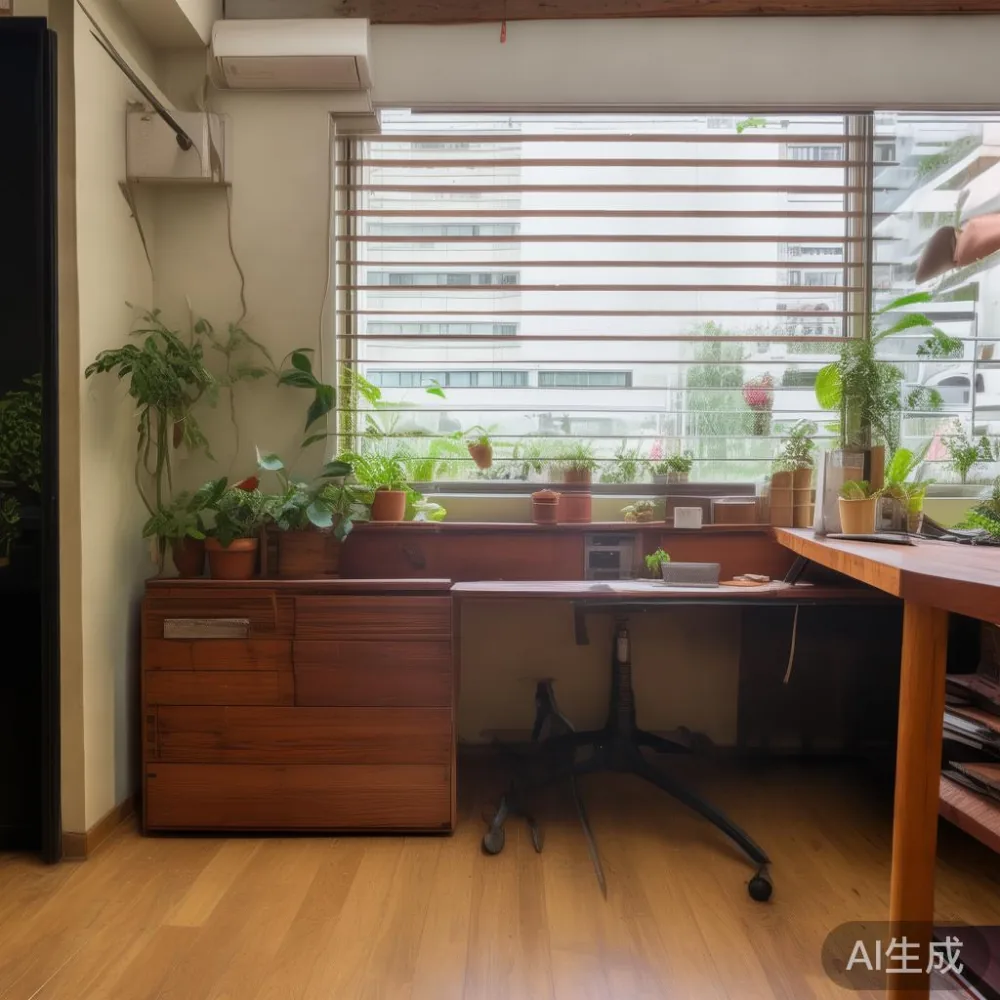
Before 2020, a Singapore homeowner might use their dining table twice a week. In 2025, many of us sit at that same table eight to ten hours a day, parked on a dining chair, a stool, or a proper office chair pulled up to a surface that was never designed for a keyboard tray. The work from home shift turned almost every piece in the living room into a workstation, which means wear patterns arrive faster, in different spots, and from angles the showroom never simulated. Humidity in Tampines and Bedok flats stays between 70% and 85% for most of the year, and air-conditioning cycles push swing humidity through furniture edges every single day. A dining table that once hosted Sunday dinner now hosts a 1.6 kg monitor arm, a laptop dock, and a hot mug at 7 a.m.
All of this is why the 5-year cost question matters more for someone in a Punggol condo than it did for someone in the same flat in 2018. You are not buying a piece of furniture; you are buying a daily surface that has to take keyboard scuffs, ring marks, accidental coffee spills, and the slow creep of moisture from a HDB wall that never fully dries between seasons.
What does a typical veneer dining table and wardrobe setup cost over five years in SGD?
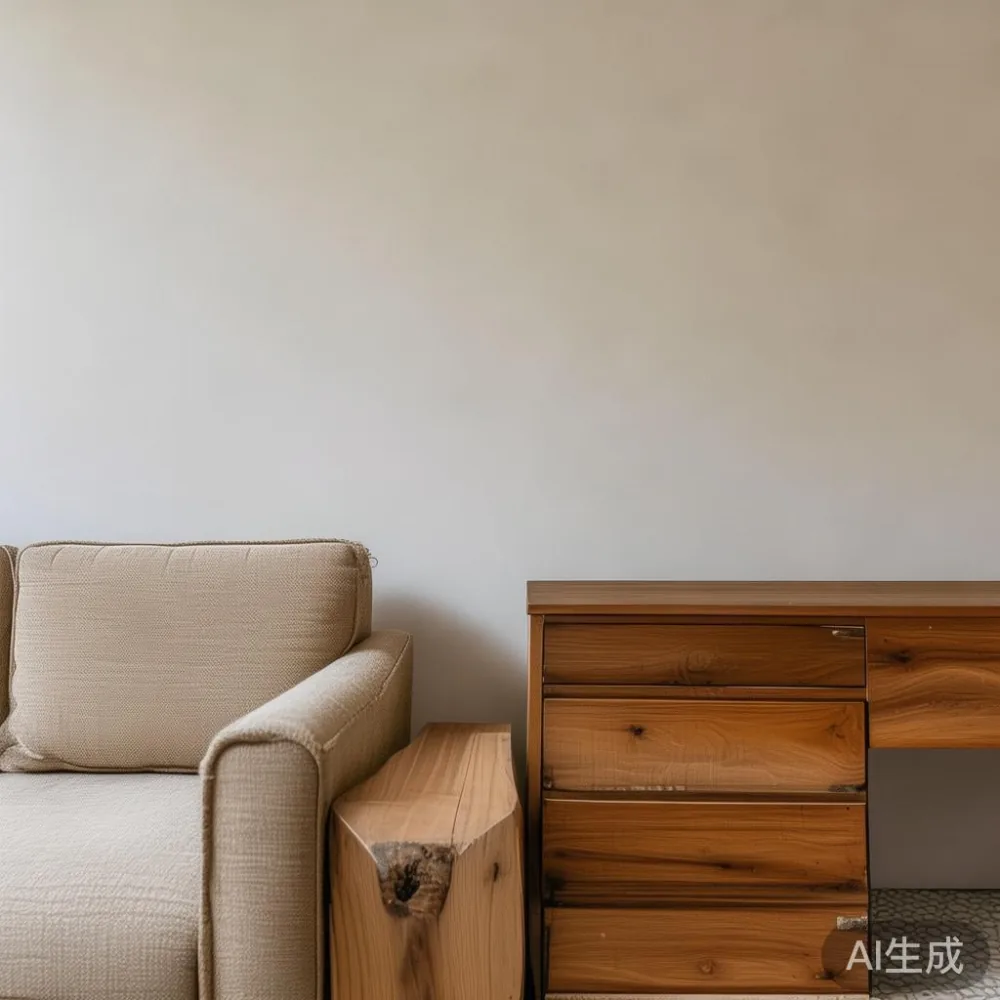
Let's build a realistic baseline using the most common work from home combination in a 92 sqm HDB flat: a 1.4 m veneer dining table, a 1.8 m veneer wardrobe, a 1.5 m veneer bed frame, and two veneer nightstands. In Tampines and Bedok, this kind of bundle — usually labelled "engineered wood with oak veneer" or "American light luxury" — retails for roughly S$1,800 to S$3,200 from mainstream furniture chains. Let us split the difference at about S$2,600 landed, including GST of 9% and a standard lift-up delivery of S$60 to S$120.
Now the five-year timeline, with conservative numbers:
- Year 1: Edge banding lift on the dining table near the air-con vent — S$180 local repair.
- Year 2: Wardrobe door sagging under the weight of hanging coats — S$320 to re-square and replace one hinge set.
- Year 3: Bed frame centre rail cracks under an adult and a 65 kg desk setup that was dragged onto it for a weekend — full replacement of the bed frame at S$1,250 (the bed, ironically, did not survive being used as a work desk).
- Year 4: Two nightstands delaminate; salvage cost is greater than replacement. New nightstands: S$220 each, total S$440.
- Year 5: Disposal fees for the bed and nightstands in Singapore: roughly S$150 to S$220, because HDB corridor widths (typically 1.2 m to 1.5 m) make dismantling and lift access fiddly, and some estate committees charge a bulk removal fee.
Total over five years: about S$5,640, on top of the original S$2,600. That is S$8,240 for a set that started looking tired in Year 2.
What does a comparable solid wood setup cost over the same five years?
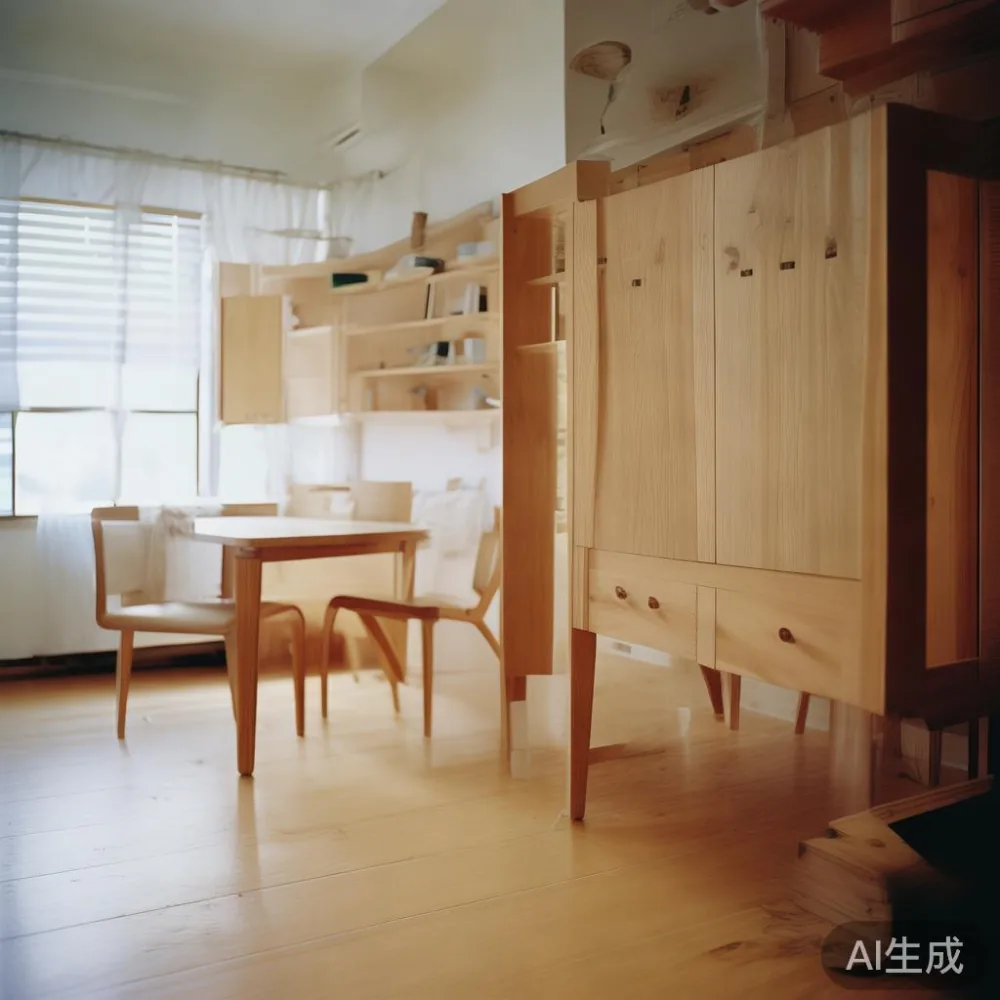
The equivalent solid wood bundle — a 1.4 m oak or ash dining table, a 1.8 m wardrobe, a 1.8 m bed frame, and two nightstands — sits higher on the day-one receipt. A reasonable Singapore-style solid wood configuration, built for work from home with thicker aprons and real joinery, lands between S$4,800 and S$6,500 before GST. Using MIDHILL as a reference (a Foshan solid wood maker exporting to 15+ countries since 2008 with a 10-year structural warranty), a typical bundle for a Singapore address ships at roughly S$5,400 landed, including 9% GST and free delivery over US$350 — that last point matters, because many local competitors in Punggol and Bedok add S$80 to S$220 per trip for stairs, narrow lifts, and tight corridor turns.
Now the same five-year window:
- Year 1: No repairs. Solid wood gains character; a light Danish-oil refresh takes 20 minutes at home and costs about S$22 for a tin.
- Year 2: Still no repairs. One small surface scratch on the dining table from a monitor arm gets hand-buffed with S$15 of walnut oil.
- Year 3: Free lifetime refinishing service sends the dining table back to the workshop; shipping both ways from Singapore to Foshan and back to a Tampines address is roughly S$280 by sea freight consolidator, split with a neighbour who ships at the same time: about S$140. Refinishing itself: S$0.
- Year 4: One hinge on the wardrobe loosens. A solid wood wardrobe from a maker like MIDHILL uses full-mortise hinges; replacement hinges cost about S$12 and twenty minutes with a screwdriver.
- Year 5: Nothing to dispose of. Furniture is still in service, and thanks to the 14-day returns window having closed years ago, the items have appreciated in daily-use value rather than depreciated.
Total over five years: about S$5,569 — but with assets worth roughly S$5,000 still in your flat. Net five-year cost: about S$569. Compare that to the S$8,240 figure above, and the gap is close to S$7,670 across one HDB flat.
What hidden costs push veneer higher in Singapore specifically?
Three forces unique to this city inflate the long-run cost of engineered wood and veneer furniture.
1. Humidity cycling. HDB flats are not sealed boxes. Walls facing the morning sun in Punggol or the afternoon sun in Bedok can hit surface temperatures of 32°C to 35°C while indoor RH swings between 55% (with the air-con on) and 88% (after cooking, showering, and drying laundry indoors). Veneer is in effect a 0.5 mm to 2 mm photo of wood glued to a substrate. That substrate absorbs and releases moisture faster than the face layer, so the bond fails — exactly what I saw on my friend's wardrobe.
2. Lift and corridor access. A 2.4 m wardrobe will not fit in many Punggol and Bedok lifts once you account for the lift car internal width (roughly 1.1 m to 1.4 m) and the door header clearance. Disposal and replacement require two trips a few years apart: one to remove, one to deliver. Each trip is S$60 to S$220, often more if the lift reservation has to be booked with the MCST in a condo.
3. The "replacement treadmill". In a work from home household, a wardrobe that delaminates is not just ugly — it can ruin clothes with mould at the back panel. People replace earlier than they planned. That is why a 14-day return window is useful for the first fortnight and worthless by month 13.
How do specific solid wood pieces compare — sofa, bed frame, dining table, wardrobe, nightstand?
Let us walk through the four-to-five pieces that cover 80% of a work from home flat in Tampines, Bedok, or Punggol, and price them honestly in SGD.
Solid wood sofa (3-seater, 2.1 m). A real solid wood sofa frame — kiln-dried ash or oak, mortise-and-tenon corners, sinuous-spring or webbed suspension — sells for between S$2,400 and S$4,200 in Singapore. A veneer-framed equivalent looks identical in the showroom at S$1,100 to S$1,800, but corners begin to wobble around month 18. The argument we hear most often in showroom chats — comparing a Japanese sofa vs Modern sofa on the same showroom floor — is whether the lower price of a modern sofa framed in plywood justifies the five-year risk. The maths above says no: a solid wood sofa that survives a daily 8-hour sit saves you roughly S$1,500 in replacement and disposal over five years.
Bed frame (1.8 m, queen). A solid wood bed frame sits between S$1,950 and S$3,200. A veneer one sits at S$700 to S$1,400. The bed frame takes the most punishment in a work from home flat because people pile on it during the day for calls, or because the air-con vent near the bed's headboard creates the worst humidity swing in the bedroom. Mid-century modern styling — slim legs, low profile — is popular in Punggol new launches, which is why a fair comparison of a light luxury bed vs Mid-century modern bed always comes down to the wood, not the silhouette. An Italian light luxury bed in solid walnut will outlast a Mid-century modern bed built on MDF at least three-to-one over a five-year window.
Dining table (1.4 m to 1.8 m). This is the work from home workhorse. Solid wood prices in SGD: S$1,800 to S$3,600 for a 1.6 m six-seater. Veneer equivalents: S$700 to S$1,500. Five-year ring-mark and cable-cut count on a work desk-dining table is brutal; solid wood can be sanded lightly and re-oiled, veneer cannot. A French bed vs French provincial bed comparison lives in the bedroom, but the dining table equivalent lives in your laptop's lap. Light luxury here simply means restrained detailing, not engineered shortcuts.
Wardrobe (2.0 m to 2.4 m, sliding or hinged). Solid wood: S$3,200 to S$5,800. Veneer: S$1,400 to S$2,800. The biggest line item and the piece most exposed to wall moisture. A French-inspired or European-style wardrobe can be styled beautifully in a HDB, and the question of how to style European light luxury wardrobe in room comes down to wall colour (warm white or greige), handle finish (brushed brass or matte black), and lighting (2700 K). Whatever the style, the carcass must be solid wood to survive the wall-facing panel.
Nightstand (x2). Solid wood: S$450 to S$900 each. Veneer: S$120 to S$320 each. Smallest ticket, highest proportion of damage, because people rest coffee cups there every morning. Two nightstands over five years can cost S$700 to S$900 in veneer replacements versus zero replacements in solid wood.
A marble table — usually a 90 cm round side table in solid wood with a Carrara or sintered-stone top — sits outside this comparison because the substrate question is different; the wood apron still benefits from being solid.
What does the five-year total really look like side by side?
Here is the cleaner picture, in Singapore dollars, for a work from home household in a 92 to 110 sqm flat. Prices include 9% GST, lift-up delivery, and basic assembly.
Veneer / engineered wood setup, day one: dining table S$900, bed frame S$1,050, wardrobe S$2,100, two nightstands S$360, sofa S$1,400 = S$5,810.
Veneer / engineered wood setup, end of Year 5: one bed frame replacement (S$1,250), one wardrobe repair plus eventual replacement at Year 4 (S$2,400), two nightstand replacements (S$440), sofa frame reinforcement (S$280), disposal trips (S$320) = S$4,690 in upkeep.
Five-year veneer total: S$10,500.
Solid wood setup, day one: dining table S$2,200, bed frame S$2,350, wardrobe S$4,600, two nightstands S$780, sofa S$3,200 = S$13,130.
Solid wood setup, end of Year 5: refinishing the dining table (S$140 shipping only), one wardrobe hinge set (S$12), one Danish-oil refresh kit per year (S$22 x 5 = S$110) = S$262 in upkeep.
Five-year solid wood total: S$13,392.
Yes, solid wood costs about S$2,892 more on day one. After five years, the gap narrows to S$2,892 — the same number, because the veneer setup has been paying itself back in repairs. By Year 7 the solid wood path is cheaper, and by Year 10 it is dramatically cheaper, because the veneer setup will be on its second or third replacement cycle. For a person staying in a Punggol BTO for the standard five-year minimum occupation period, the math still favours solid wood; for someone staying ten years or more, it is not a close call.
Which repairs actually count toward "veneer ownership cost"?
People often forget these line items when they price a flat-pack or engineered wood wardrobe:
- Edge banding repair: S$150 to S$220 per visit.
- Hinge and runner replacement: S$80 to S$320 per visit, more in condos that require booking of service lifts.
- Surface film peeling or bubbling: usually a full panel replacement, S$400 to S$900 per panel.
- Disposal and delivery for a replacement: S$100 to S$280 per trip.
- Storage during repair, if the wardrobe is non-functional: a temporary clothes rail and a 60 L storage box at S$80 total.
These line items are precisely what a 10-year structural warranty and a lifetime refinishing service exist to neutralise on the solid wood side. When you read the warranty small print on the veneer piece, you will often see "exposure to humidity above 70% RH for sustained periods is not covered." That single sentence basically disqualifies most HDB bedrooms for the entire warranty period.
Is there a real difference in daily comfort during work from home hours?
Yes, and it is rarely discussed in price comparisons. Solid wood furniture absorbs and releases heat more slowly than engineered substrates. On a 28°C afternoon with the air-con off, a solid wood dining table feels 2°C to 4°C cooler to the wrist than a veneer one because the latter has a thinner face layer over a plastic-feeling substrate. Over a 10-hour work from home stretch on a sofa or at a dining table, that surface-temperature gap translates to less sweating, fewer forearm stick-points, and a quieter surface for writing and mouse use.
A solid wood sofa also dampens vibration. When you type on a veneer-framed sofa, the frame transmits the keystroke into a faint creak; on a solid wood sofa, the same input is absorbed. That is not a marketing line — it is the physics of a 1.5 kg / cubic cm hardwood versus a 0.7 kg / cubic cm MDF frame. People who spend eight hours a day on a sofa-turned-workspace notice this within a week.
So is solid wood always the right answer for a Singapore work from home flat?
For pieces that take daily punishment or sit against exterior walls — the dining table, the wardrobe, the bed frame — yes. For pieces that see light use and stay in stable interior rooms — a console table, a bookshelf in a dry study, a decorative side table — veneer and engineered wood remain a reasonable way to keep the budget honest. The mistake most people make is treating every piece the same and buying everything in veneer to chase a lower receipt, then paying three times in upkeep within five years.
If you are setting up a Tampines, Bedok, or Punggol address for serious work from home use, a reasonable budget split is roughly 70% of your furniture spend on solid wood for the high-touch pieces (sofa, bed frame, dining table, wardrobe, nightstand) and 30% on engineered wood for low-touch items (console, occasional chair, decorative storage). That split keeps day-one spend reasonable, holds five-year cost down, and lines up with what real households in Singapore actually do once they have lived with both materials side by side.
Where does MIDHILL sit in this picture, and why does the factory matter?
A 10-year structural warranty plus lifetime refinishing is only a marketing line if the maker actually owns the workshop. MIDHILL runs its own production lines in Foshan, has exported solid wood pieces to more than fifteen countries since 2008, and refinishes its own work rather than outsourcing. That is why the lifetime refinishing offer is meaningful — they can sand and re-oil your dining table in the same workshop that built it, ship it back to a Tampines or Punggol address, and stand behind the joinery when the table arrives. Most local Singapore retailers cannot refinish in-house; they would have to refuse the claim. This is also why a buyer comparing a Japanese sofa vs Modern sofa in a Singapore showroom will, on inspection, find very different joinery inside what looks like the same silhouette — the difference is in the maker, not the marketing.
Frequently asked questions from Singapore readers
Will a solid wood wardrobe really survive a HDB bedroom wall in Tampines or Bedok?
Yes, provided the back panel is solid wood or marine ply and the piece is not pushed flat against an exterior wall with no air gap. Keep a 25 mm to 40 mm gap behind the wardrobe, and finish the wall behind with a mildew-resistant primer. In a properly ventilated flat, a solid wood wardrobe from a maker like MIDHILL will outlast the lease on the room.
How soon can a solid wood dining table be refinished, and what does it cost?
Most workshops ask for the table back at their factory, which takes 6 to 10 weeks total — 2 to 3 weeks sea freight Singapore to Foshan, 2 to 3 weeks sanding and re-oiling, 2 to 3 weeks return. Cost under a lifetime refinishing policy is typically zero for labour; the buyer pays sea freight of about S$140 each way if shipped alone, or much less if consolidated. That works out cheaper than any single in-home repair on a veneer table.
Is GST 9% included in the day-one prices I see online?
Not always. Many Singapore retailers show prices excluding GST and add the 9% at checkout. Always check the line item. A S$5,400 piece becomes S$5,886 with GST, which changes the five-year math by S$486 over five annual upkeep cycles where you might also buy cleaning and oiling supplies.
Can a solid wood sofa fit through a Punggol condo lift?
Most 2.0 m to 2.1 m three-seater sofas are designed with a removable legs-and-arms configuration and will fit through a standard condo lift of 1.1 m door width and 1.5 m internal depth when assembled inside the flat. Check the box dimensions before ordering: a flat-packed solid wood sofa from MIDHILL is usually under 2.2 m long and under 0.6 m deep per carton, which clears most HDB and condo lifts without booking a service lift.
One final thought before you spend a single Singapore dollar
Run the five-year numbers before you swipe the card. A S$3,000 saving on day one that turns into S$5,000 of repairs over five years is not a saving; it is a deferred payment with interest in the currency of your own weekends. For high-touch work from home pieces — sofa, bed frame, dining table, wardrobe, nightstand — solid wood pays you back in lower upkeep, longer life, and a surface that genuinely holds up to eight hours of daily use in Singapore humidity. For everything else, spend wisely and ignore the showroom lighting.