Work From Home Furniture in Singapore: A Practical Buying Guide
A practical Singapore guide to choosing work-from-home furniture for HDB and condo spaces, with dimensions, costs, delivery tips and humidity advice.
- How much space do I need for a comfortable home office in a Singapore HDB or condo?
- What is the best desk size for working from home in a Singapore apartment?
- Which chair should I buy for long workdays without making my home office uncomfortable?
- Does humidity damage solid wood furniture in Singapore?
- How much should work-from-home furniture cost in Singapore?
- How do I plan delivery and assembly when I live in an HDB flat or condo?
- Can I build a work-from-home corner without renovating my Singapore home?
- How do I choose furniture that will last in a humid, frequently used home office?
- What should I buy first if I am setting up a home office this month?
How much space do I need for a comfortable home office in a Singapore HDB or condo?
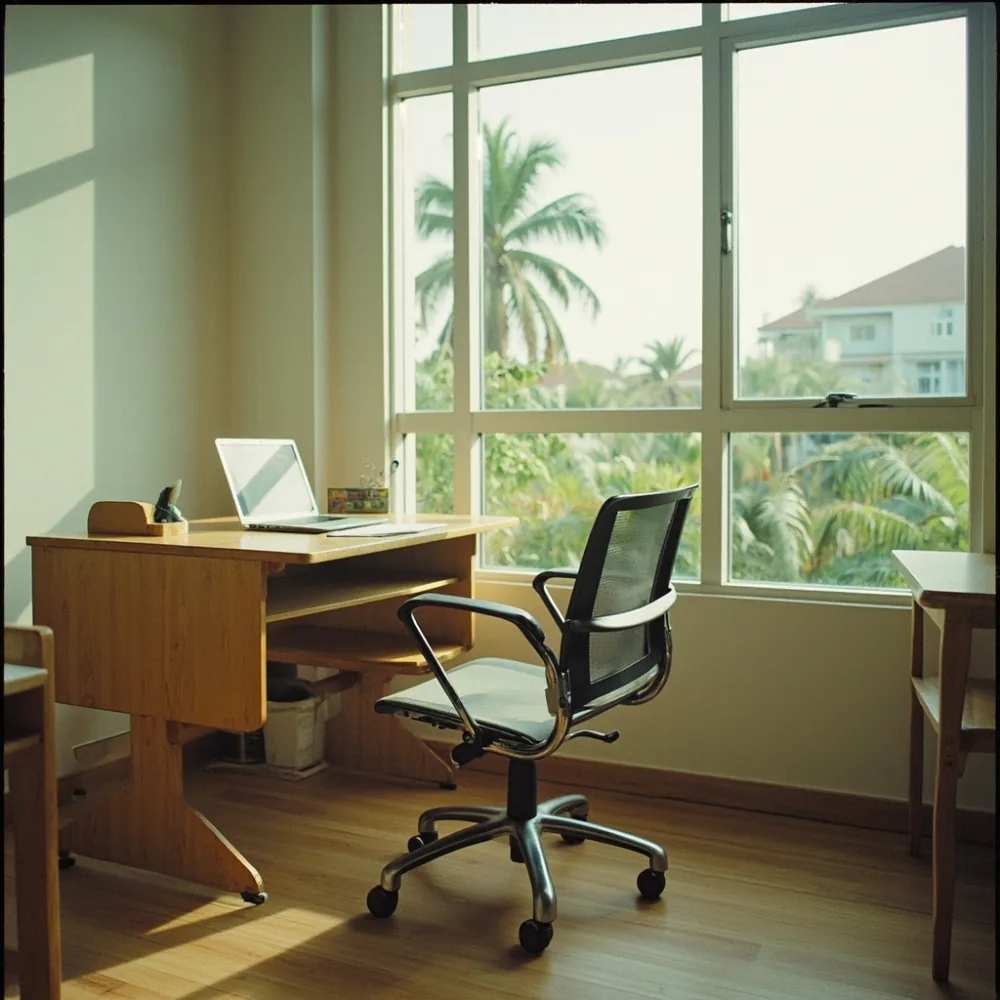
Measure before you buy
Where the office can fit
I start with the room, not the furniture catalogue. A 3-bedroom HDB flat may give me a bedroom measuring about 270 cm by 330 cm, while a compact 2-bedroom unit can offer only 210 cm by 270 cm in a room that must also store clothes and other belongings. In a condo, a dedicated study might be around 240 cm by 300 cm. These are realistic planning ranges, not promises about every unit.
For a desk, I leave at least 90 cm of width, 60 cm of depth and 75 cm of clear height for the main work position. A chair needs another 70 to 80 cm behind the desk when pulled out, plus room to stand without hitting a wall. I also check the door swing, window access and the path from the bedroom or living area, because a desk that blocks circulation can make a small home feel worse than no desk at all.
- HDB 3-bedroom: reserve about 3.3 sq m for a compact office corner when possible.
- HDB 2-bedroom: choose a writing table or wall-mounted desk, not a bulky executive model.
- Condo study: measure skirting, air-conditioner vents and power outlets before ordering.
- Shared space: use a fold-down surface or slim console that can close after work.
I think small space furniture should be measured with a tape, not guessed from photographs. Leave 5 cm between major pieces when possible, and keep the chair zone clear. That small buffer prevents the desk from looking cramped and gives cables somewhere to run.
What is the best desk size for working from home in a Singapore apartment?
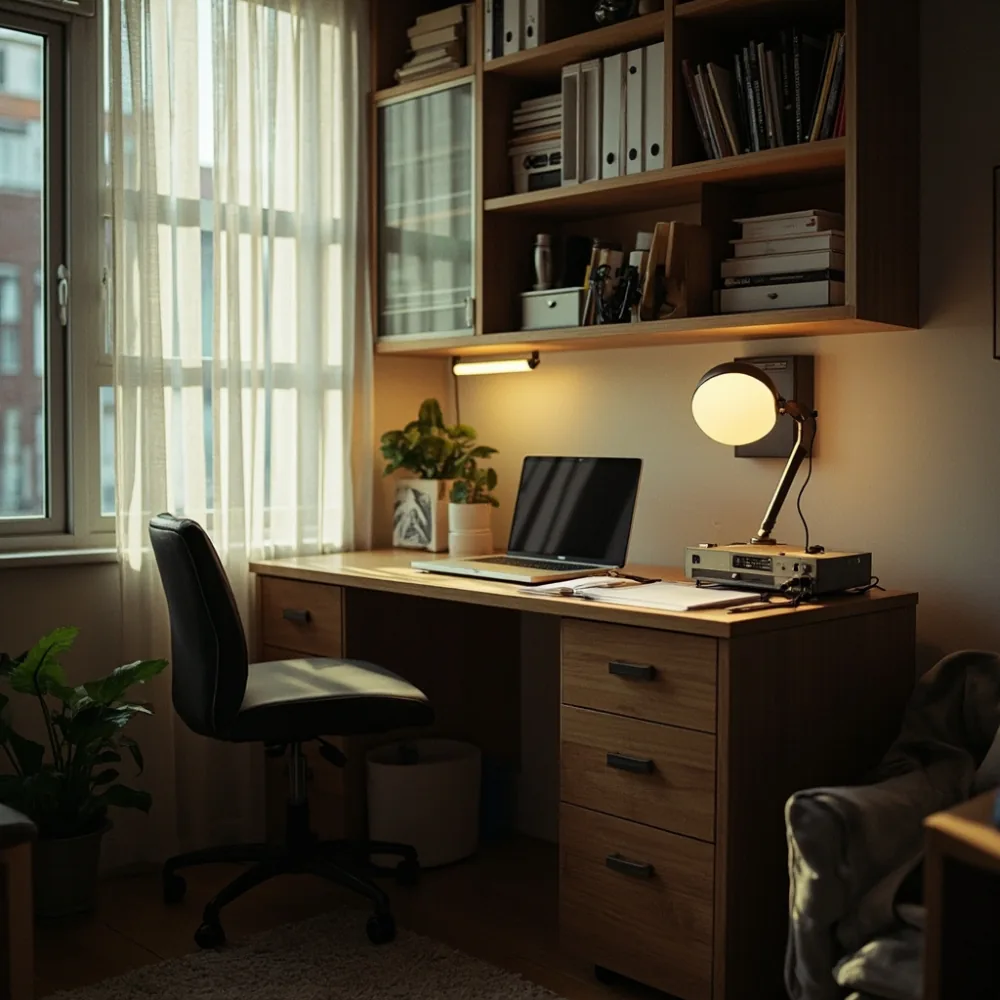
Standard desks versus compact desks
Depth and legroom
For most Singapore home workers, a 120 cm by 60 cm desk is a sensible starting point. It fits a laptop, monitor, notebook and a cup of coffee without taking over the room. If I use one large monitor, I prefer 140 cm by 70 cm. I avoid a 150 cm desk unless the room has a clear 170 cm width or more, because oversized furniture can make an HDB bedroom feel crowded.
Desk height matters more than decorative features. I look for a top around 74 to 76 cm high, adjustable if I alternate between sitting and standing. A 60 cm depth is enough for a monitor at arm’s length, but a 70 cm depth gives better wrist clearance when typing. Under the desk, I need roughly 65 cm of knee width for an ordinary chair; a wider chair needs more space.
Compact desks are useful in rooms around 210 cm wide, but I check the drawer or cable tray carefully. A desk with a deep modesty panel may look tidy while hiding useful legroom. I also prefer rounded front corners in tight spaces because they reduce accidental knocks.
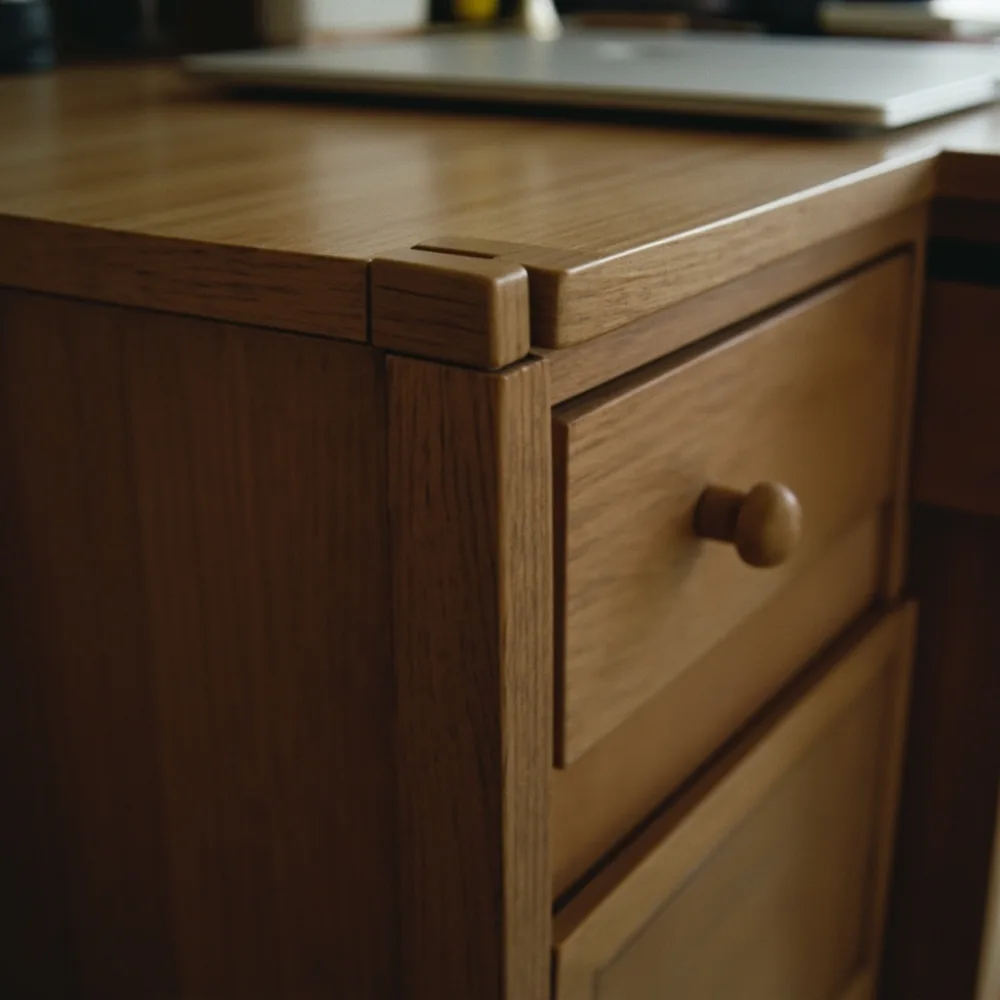
For solid wood furniture, I inspect the underside and joinery rather than relying on the label. A stable apron, solid fixings and a finish that can handle Singapore humidity are more useful than a desk with several small shelves. If a custom size is needed, I give the maker a measured sketch, the required height and the delivery access details before approving production.
Which chair should I buy for long workdays without making my home office uncomfortable?
Seat dimensions and adjustment
Material choices
I look for an adjustable ergonomic office chair with a seat height range of about 43 to 53 cm. The seat should be 45 to 52 cm wide, with usable depth around 43 to 48 cm. A backrest that supports the lower lumbar area matters more to me than a tall “executive” back. The chair should recline gently, not force my knees upward, and its armrests should not hit the desk edge.
In a small room, I prefer a chair with a compact base, ideally no wider than 65 to 70 cm. A mesh back keeps the visual weight lower and ventilates well in humid weather. I have found that a mesh chair can be comfortable, but the seat cushion must still have enough density; a thin pad may feel fine for the first month and uncomfortable after a full workday.
Leather upholstery looks smart in a condo, but I compare it with fabric or mesh before buying. Genuine leather can feel warm and may develop a patina, while high-quality fabric usually gives better airflow. If I choose a leather sofa nearby, I still select a breathable chair for the desk so that the office area does not feel stuffy.
- Minimum useful armrest height: desk height minus about 5 to 8 cm.
- Five-position adjustment is useful, but smooth movement matters more than extra controls.
- A warranty is helpful, yet I still test the chair for at least a week before keeping it.
My practical budget is SGD 250 to 600 for a new task chair, depending on adjustment and materials. I do not chase a high price automatically. The best chair is the one I can sit in for six hours while keeping both feet supported and my shoulders relaxed.
Does humidity damage solid wood furniture in Singapore?
Why solid wood moves
How I reduce moisture problems
Singapore humidity does not automatically ruin solid wood furniture, but it can cause movement. Wood expands when it absorbs moisture and contracts when it dries. A solid timber table may develop small gaps, a door may bind, or a drawer may swell during a humid period. The risk is higher for wide slabs, unfinished wood and poorly sealed edges.
I ask whether the furniture has a factory-applied finish on all faces, including the underside, and whether the pieces are acclimatised before delivery. I keep furniture away from air-conditioning vents, bathroom doors and direct window rain. A room with normal occupancy is usually safer than a balcony or utility area exposed to wind-driven moisture.
I aim for indoor relative humidity around 40 to 65 percent where possible. Singapore buildings often fluctuate with weather and ventilation, so a simple hygrometer is more useful than guessing. I wipe spills promptly and use coasters or a placemat rather than leaving a wet mug overnight.
Solid wood furniture can be a good choice for a desk or dining table when it is well made. I would avoid a cheap untreated table for daily work. If buying custom furniture, I request details about the wood species, finish, expected movement and warranty. A Foshan solid-wood furniture maker such as MIDHILL, established in 2008, is relevant here because it offers a 10-year structural warranty; that structural cover should not be confused with a guarantee against every cosmetic moisture change.
How much should work-from-home furniture cost in Singapore?
Typical prices
What changes the final bill
I use a broad budget because materials, sizes and delivery arrangements vary sharply. A compact writing desk may cost SGD 120 to 300, while a 140 cm solid wood desk can range from SGD 500 to 1,500. A good adjustable chair often costs SGD 250 to 700, and a small shelving unit may add SGD 80 to 350.
Custom furniture costs more because the maker must measure, fabricate and sometimes install non-standard pieces. A made-to-measure desk might be SGD 700 to 2,000, depending on timber, hardware and finish. I treat these figures as planning ranges in 2025 Singapore dollars, not fixed market quotations.
- Budget setup: SGD 400 to 800 for a small desk, chair and compact storage.
- Practical setup: SGD 800 to 1,800 with a better chair and solid wood surfaces.
- Custom or premium setup: SGD 1,800 to 4,000 or more.
Durable furniture is not always the cheapest option, but I compare repairability and warranty terms. A desk with replaceable hardware and a stable frame can be more economical than replacing a thin, wobbly table every few years. For a leather sofa in the same living area, I check that its colour and grain do not make the office corner feel visually crowded.
Delivery can add SGD 30 to 150 for a normal Singapore drop-off, while carrying a large table upstairs may add more. I ask for the lift dimensions, parking access, floor number and whether assembly is included. In districts with difficult access, such as older parts of Geylang or tightly managed condo lobbies, a narrow delivery window can cost extra.
How do I plan delivery and assembly when I live in an HDB flat or condo?
Measure access first
What installers should do
I measure the lift, corridor and doorway before ordering anything. A standard HDB lift may have an internal door around 90 cm wide and 210 cm high, but older blocks and renovated lobbies differ. A table top wider than the lift door may need to be turned on its side or carried through a service entrance. I photograph the route and share it with the supplier.
For a flat-pack desk, I check whether the courier carries it to the door or brings it inside. Assembly should include securing the frame, installing shelves or drawers, checking the cable opening and removing packaging. I would rather pay a little more for clear in-room placement than discover that the box is outside my unit.
Condo management may require a delivery booking, loading-bay use or protection of common-area flooring. I reserve a time slot in advance and avoid moving heavy furniture during peak arrival hours. HDB residents should also check whether the route includes steps, narrow turns or an intercom-controlled lobby.
| Furniture | Typical packed size | Approx. weight | Allow |
|---|---|---|---|
| 120 x 60 cm writing desk | 130 x 75 x 20 cm | 18 to 35 kg | 30 to 60 minutes |
| 140 x 70 cm solid wood desk | 155 x 85 x 25 cm | 35 to 70 kg | 60 to 120 minutes |
| Adjustable task chair | 70 x 70 x 120 cm | 12 to 25 kg | 15 to 30 minutes |
I allow extra time when a lift is unavailable or when the unit is on a high floor. Good durable furniture should arrive with clear instructions and secure fittings, but delivery remains part of the purchase decision.
Can I build a work-from-home corner without renovating my Singapore home?
Use the living room
Use vertical storage
Yes. I often find that rearranging existing pieces is enough before a renovation. In a living room, I place a slim desk near a power outlet but away from the television glare. A 100 cm console can become a temporary writing surface when closed after work. In a dining area, a laptop stand and a comfortable chair can make shared space usable, provided I clear the table each evening.
Vertical storage helps when floor area is limited. A wall shelf at 35 to 45 cm above the desk can hold books and a printer, but I verify the wall type and use appropriate anchors. I keep the top shelf below eye level so that the desk does not feel boxed in. A narrow bookcase, 25 to 35 cm deep, is enough for binders and stationery.
I use cable clips, a surge protector fixed to the wall and a cable channel under the desk. This keeps trip risks down and makes cleaning easier. I avoid placing a fabric chair directly under a window where afternoon sun can fade it.
Small space furniture works best when each piece has one clear job. I would not buy a large sideboard for a two-person HDB study if a movable trolley can do the same job for SGD 40 to 120. When the room must serve several purposes, light colours and furniture with visible legs can make it feel less enclosed.
How do I choose furniture that will last in a humid, frequently used home office?
Check the joints and finish
Test the maintenance
I inspect the frame first. For a desk, I look for straight rails, tight corner joints and hardware that does not loosen with daily use. Drawers should run smoothly, and shelves should not sag under a row of books. I press lightly on the joints after the furniture is assembled; creaking or flexing is a warning sign.
For finishes, I choose a water-based coating or a well-sealed surface that can be wiped with a damp cloth. I ask for care instructions and avoid harsh cleaners on lacquered or oiled timber. Metal legs should have a powder coating or other corrosion-resistant finish, especially in a room near a window.
Durable furniture is also furniture I can maintain. I prefer removable chair pads, replaceable screws and surfaces that hide small marks. A fabric chair may be easier to clean than pale leather, while a dark solid wood top may disguise everyday wear better than a very light finish.
I give new furniture at least two weeks before judging it. I test the desk with my usual monitor, sit in the chair through a full meeting and place everyday objects on the shelves. If a supplier offers a warranty, I read what is covered. MIDHILL’s 10-year structural warranty is useful for a Foshan solid-wood furniture purchase, but I still check the finish and moving parts separately.
What should I buy first if I am setting up a home office this month?
My practical order
A two-week adjustment plan
I buy the chair and desk before decorative storage. A desk that is stable and deep enough for my equipment solves the daily problem; shelves and matching boxes can come later. My starting kit is a 120 by 60 cm desk, an adjustable chair, a surge protector, a document tray and one small drawer unit.
I spend 10 minutes measuring the room, 20 minutes checking power access and 30 minutes comparing dimensions on a supplier’s site. Then I place a temporary mat where the chair will sit. If the chair fits and I can reach the desk without scraping the wall, the layout is probably sound.
During the first week, I keep the desk uncluttered and change the chair height gradually. In week two, I add a monitor arm if needed and adjust the keyboard position. This is more reliable than buying every accessory on day one. It also gives me time to notice whether the desk is too deep or the chair needs a different seat depth.
For a buyer who values longevity, I look for stable construction, replaceable parts and clear warranty terms. I do not need a perfectly coordinated office; I need a place where I can focus, move around and shut down cleanly at 6 pm without turning the apartment into a permanent workplace.
Frequently asked questions
Is a 120 cm desk too big for a Singapore HDB bedroom?
It can fit many HDB bedrooms, but the room width and door route decide. A 120 by 60 cm desk is a useful minimum for a laptop and monitor. Measure the clear wall space, chair area, door swing and lift access before ordering.
Should I buy solid wood furniture for a humid home office?
Solid wood can work well when it is sealed on all faces and protected from direct moisture. Expect slight seasonal movement, especially with wide timber panels. Keep it away from wet walls and air-conditioning vents, and wipe spills quickly.
How much does a complete home-office setup cost in Singapore?
A compact setup usually costs around SGD 400 to 800, while a practical setup with solid wood surfaces and a better chair often costs SGD 800 to 1,800. Custom furniture, premium materials, upstairs delivery and installation can increase the total.
What furniture delivery details should I give a Singapore supplier?
Share the floor, block, unit, lift dimensions, parking route, door width and preferred time slot. For HDB flats and condos, ask whether assembly and in-room placement are included. Clear access details help prevent arrival problems.
Questions about sizing, fabric or delivery?
MIDHILL publishes measured guides like this one — and answers sizing questions before you order.
See the collection