How Singapore Humidity Wrecks Solid Wood Furniture — A Work-From-Home Guide for HDB and Condo Owners
I keep a small hygrometer clipped to the back of my own desk at home. Last month, during the second week of the December monsoon surge, the needle swung past 86% RH and stayed there for six straight days. My solid oak writing table — the one I bought two Christmases ago when I finally committed to a proper work-from-home corner in my three-room flat in Bedok — developed a faint crowning along the front edge. Not catastrophic. Not cracked. But you could feel the warp when you rested your wrist on it. That single observation is what pushed me to write this piece for MIDHILL readers, because Singapore humidity is not like Melbourne humidity, and it is not like London humidity. It is its own animal, and if you are spending real money on a solid wood sofa, a bed frame, a dining table, a wardrobe, or a nightstand, you deserve to know what you are buying into.
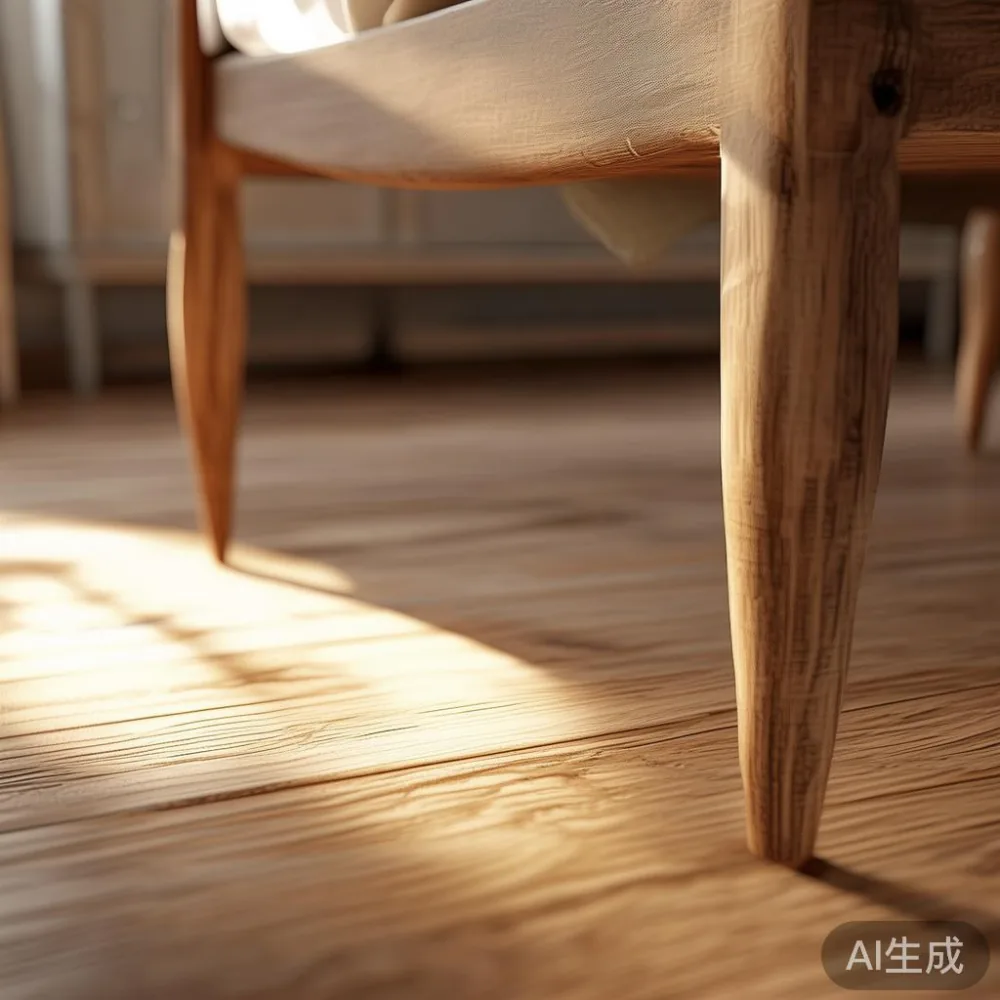
Why 75–95% Relative Humidity Is the Real Enemy of Your Solid Wood Sofa and Bed Frame
Solid wood is hygroscopic. That is the polite, scientific way of saying it drinks. In Tampines, Punggol, and the older parts of Toa Payoh, indoor relative humidity routinely sits between 75% and 92% from October through March, and dips only slightly during the brief dry spell in June and July. Engineered boards with thin veneers cope by hiding the movement inside a plywood core — but a solid wood sofa with exposed timber arms, a solid wood bed frame with visible end posts, or a solid wood dining table with a single 4 cm thick top will visibly expand, contract, cup, and bow under that load. A 180 cm oak plank can swell by 4–6 mm across its width between February and August. That is the difference between a drawer that slides like butter and a drawer that jams shut on your socks.
The finish matters too. Lacquer, hard-wax oil, and conversion varnish each behave differently when the timber underneath is breathing. Lacquer is rigid and tends to micro-crack along the grain when the wood moves underneath it. Hard-wax oil flexes with the fibre, which is why serious makers — including the workshop teams behind MIDHILL's light-luxury collections — tend to favour oil-and-wax systems on exposed faces and reserve lacquer for protected interiors.
What Actually Happens to Wood at 85% RH: The Physics in Plain English
Wood reaches equilibrium moisture content with the air around it. Singapore's outdoor EMC sits around 19–22%, which sounds dry on paper, but inside an HDB with closed windows, no cross-ventilation, and air-conditioning set to 25°C, the EMC can still settle in the 14–17% range — and that is the danger zone. Below 12%, joints shrink and crack. Above 18%, fibres swell and surfaces feel slightly damp to the touch. Between those numbers, you get the slow seasonal creep that loosens chair legs, makes wardrobe doors stick in the morning and rattle by evening, and pushes the centre of a marble table's wooden stretcher half a millimetre proud of its mortise.
Glue lines fail quietly first. A traditional mortise-and-tenon joint on a dining chair can lose a third of its holding power after just two monsoon cycles if the timber was dried below 10% in the factory and then shipped into a 30°C, 85% RH HDB bedroom. This is why good makers kiln-dry to roughly 10–12% before assembly, then specify a joint allowance of 1–1.5 mm per running foot.
Will My Lift Actually Fit a 220 cm Dining Table? The Singapore Delivery Question Nobody Talks About
Real customer question: "My new HDB in Punggol has a cargo lift that measures 1.1 m deep by 1.4 m wide. Can a 220 cm long dining table actually get up to the 14th floor?"
It depends on three numbers: the lift door width, the internal cabin depth, and the diagonal of the unpacked top. A standard 6-person rectangular dining table at 180 cm by 90 cm disassembles into a top and two bases, so the longest piece is 180 cm — that fits most HDB passenger lifts with the doors removed and the piece angled. A 220 cm table is the awkward middle child. Tilted diagonally, 220 cm needs a cabin diagonal of around 240 cm. Newer BTOs since 2018 tend to have 1.5 m by 1.8 m cargo lifts, which clears it. Older lifts in Bedok and Tampines from the 1990s sometimes only manage 1.1 m by 1.4 m, and the table must come up in two halves — which means a jointed top, not a single slab. When you are searching for a MIDHILL dining table, ask the seller for the unpacked dimension and the diagonal, then measure your lift with a tape measure before you commit. The same logic applies to a wardrobe taller than 210 cm and a bed frame longer than 215 cm.
Corridor widths matter too. HDB corridors in blocks built before 2000 often run 1.2 m wide with a 90° turn every 12 m. A 90 cm wide nightstand turns that corner with 15 cm to spare. A 120 cm wide six-drawer dresser does not. Always walk the route with a measuring tape before delivery day, especially if GST has pushed you toward a once-in-a-decade upgrade.
How to Style Japandi Sofa in Apartment Living Rooms That Never Fully Dry Out
Japandi — the hybrid of Japanese restraint and Scandinavian warmth — happens to suit Singapore HDB living rooms beautifully, because both traditions were designed for small, humid spaces. Linen slipcovers breathe. Low-profile solid wood sofa frames in white oak or ash sit close to the floor, which lets air circulate underneath instead of trapping damp. When clients ask me how to style Japandi sofa in apartment settings without the cushions going musty, my answer is consistent: pick a frame with a 10–12 cm ground clearance, choose a removable, washable cover in a light oatmeal or undyed cotton, and place the sofa against an interior wall rather than the exterior concrete one — the temperature differential across that wall can run 4°C and creates condensation on cool nights.
Pair the sofa with a marble table or a stone-topped coffee table on the opposite side of the rug, never directly under a window. Marble stays cool to the touch and helps buffer the microclimate of the seating zone. If you are wondering where to buy coffee table from MIDHILL for this exact arrangement, look for pieces under 110 cm long so the rug can extend 30 cm beyond it on every side — that is the proportion rule that makes a 12 m² living room feel like a 16 m² one.
Light Luxury Bed vs Mid-Century Modern Bed: Which One Survives the Equator?
Both styles lean on visible timber. The difference is in the joinery and the silhouette. A light luxury bed tends to use softer curves, upholstered headboards in bone or putty boucle, and tapered solid ash or walnut legs in a French light-luxury register — think gentle, romantic proportions. A mid-century modern bed is more architectural: clean right angles, exposed dowel joinery, and legs that splay at 8° to create a "floating" headboard feel.
For Singapore bedrooms, the light luxury bed tends to age more gracefully because the upholstered headboard absorbs the seasonal movement of the timber frame behind it. A mid-century bed with a slatted headboard can develop a slight rattle after three monsoon cycles as the dowels work loose. On the other hand, the mid-century frame dries faster after a wipe-down, which matters in a HDB without ceiling fans. If your bedroom window faces the morning sun, the light luxury option also fades less visibly because the upholstery protects the headboard timber from UV.
Whichever you pick, request a slatted base with at least 12 mm of spacing between slats. This lets air circulate under the mattress — the single biggest reason mattresses in Singapore develop mould on the underside within 18 months. A solid platform traps moisture. A slatted base breathes.
A Work-From-Home Furniture Checklist for Humid Climates
Your work from home desk is the piece you touch 8–10 hours a day, so it deserves the most attention. Pick a solid top at least 2.5 cm thick (avoid 1.8 cm veneered MDF at all costs — it sags under a monitor arm within a year in this climate). Look for desks with a rear cross-stretcher between the legs, not just side rails; the stretcher prevents racking when the timber swells. A standing desk with a metal frame is fine, but the wooden worksurface still moves, so leave a 10 mm expansion gap at the back wall.
Your work from home chair should have a mesh back or a removable fabric cover. Leather — even bonded leather — will peel at the headrest within 24 months in a non-air-conditioned study. For drawers on a work from home credenza, ask for solid wood drawer boxes with dovetail joinery on the front and metal side-mount slides rated to 45 kg. The slides compensate for the wood's seasonal movement better than traditional wooden runners.
Storage pieces are the silent casualties. A solid wood wardrobe with full-height doors needs at least 3 mm of clearance at the top and bottom of each door for expansion. Anything tighter and you will see the doors bind in March and gap in September. Two small nightstands will behave better than one wide six-drawer unit, because each individual case expands independently and the cumulative distortion is smaller.
Real Numbers: What Good Furniture Costs in Singapore (and What "Cheap" Really Costs You)
Quality solid wood furniture landed in Singapore — including 9% GST, delivery to a HDB, and basic installation — typically falls in these bands. A solid wood dining table for six in light luxury or American light luxury styling runs SGD 2,400–4,800. A solid wood bed frame in king size runs SGD 2,000–3,600. A solid wood sofa frame (without upholstery) runs SGD 3,200–6,500 depending on the timber. A four-door solid wardrobe runs SGD 3,800–7,200. A marble table with a stone top and timber base runs SGD 2,800–5,400. A two-drawer nightstand runs SGD 600–1,200 each.
Midhill's pricing — for readers cross-checking from overseas — sits in the same bands when shipped from the Foshan workshop, with the offset that you save 30–40% by importing direct and the freight is consolidated. For homeowners browsing for sale Minimalist furniture listings on local marketplaces like Carousell or Facebook, the same piece in chipboard with a 0.6 mm oak veneer retails for SGD 600–1,200. That is real money saved upfront. But the chipboard swells irreversibly after a single wet-mop incident, the hinges pull out of the substrate within 18 months, and you replace the whole unit within five to seven years. Over a 20-year horizon, the solid piece is cheaper.
Maintenance Routine That Actually Works at 85% RH
Run a dehumidifier in the bedroom for at least four hours a day during monsoon season. A standard 12 L/day unit costs roughly SGD 0.35 per hour to run and pulls the room down to a comfortable 55–60% RH, which keeps your timber happy without cracking your lips. Wipe all horizontal surfaces — dining table tops, marble tables, nightstand tops, desk tops — with a barely damp microfibre cloth every week, then follow with a dry cloth. Never use furniture polish containing silicone on a humid-climate piece; the silicone traps moisture against the finish and creates cloudy rings within six months.
Rotate your dining table's exposure to direct sunlight every two months if it sits near a window. UV breaks down lignin in timber and creates a visible tone difference between the exposed centre and the protected ends. For a solid wood sofa, plump and rotate the cushions weekly so the foam dries evenly. For a bed frame, lift the mattress every three months and vacuum the slats — dust plus humidity equals mould, and mould equals a mattress you cannot save.
Re-oil exposed timber every 12–18 months with a hard-wax oil. The application takes about 45 minutes for a dining table and uses roughly 200 ml of oil. Budget around SGD 35–55 per tin. This is the single highest-return maintenance task you can do, and it is the difference between a piece that looks tired at year five and a piece that looks better at year ten than it did new.
Top 10 Rustic Furniture Pitfalls to Avoid in a Tropical Climate
Rustic styling — rough-sawn surfaces, distressed edges, reclaimed-look timber — is having a moment in Singapore, but the aesthetic carries specific risks here. Reclaimed timber often hides old metal fasteners that bleed rust when humidity climbs. Rough-sawn surfaces catch moisture in the grain valleys and grow black mildew spots within six months. Distressed edges expose end-grain, which absorbs moisture 10–15 times faster than the long grain of a face surface. If you love the look, commit to a quarterly oiling schedule and accept that the piece will patina faster than its temperate-climate siblings. The top 10 Rustic furniture mistakes I see in local homes are predictable: unprotected end-grain, unsealed undersides, reclaimed timber with hidden iron stains, paper-wrapped rattan inserts in a chest of drawers, MDF cores under a 2 mm veneer, no rear cross-stretcher on a work-from-home desk, lacquer-only finishes with no oil undercoat, drawer boxes with stapled (not dovetailed) joints, metal legs that leave black oxidation rings on a marble table, and wardrobes placed against exterior HDB walls.
Buying Direct From Foshan: What to Ask Before You Click "Place Order"
If you are browsing for sale Minimalist furniture from Chinese workshops and trying to figure out where to buy dining table from MIDHILL without getting burned, here is the checklist I give friends. Ask for the kiln-dry certificate (target 10–12% moisture content). Ask for the joint construction photos (mortise-and-tenon with a 1–1.5 mm allowance per foot, dovetail on drawer fronts, no staples on structural joins). Ask for the finish specification (hard-wax oil brand, number of coats, dry-film thickness). Ask for the unpacked dimensions in cm and the weight in kg per box. Confirm the freight quote includes 9% GST landed in Singapore, customs clearance, and delivery to the door of your HDB unit — not just the lift landing. Confirm the warranty covers structural integrity for at least ten years and that refinishing is offered either free or at a fixed workshop rate. Confirm the return window is at least 14 days for unassembled pieces in original packaging.
For readers who already own a piece and want to know how to style Japandi sofa in apartment corners without inviting mould, the short answer is airflow: 10 cm behind the frame, removable covers, a marble table or stone surface nearby to stabilise the microclimate, and a dehumidifier running on a timer. For readers upgrading a bedroom and weighing light luxury bed vs mid-century modern bed, the short answer is upholstered headboards for sun-facing rooms, exposed timber for shaded rooms, slatted bases everywhere, and at least 12 mm of expansion clearance on every door and drawer.
The Honest Bottom Line for Singapore Owners
Humidity does not mean you cannot own beautiful solid wood. It means you must buy it from a maker who kiln-dries properly, joins with movement in mind, and finishes with breathable oil. It means you must maintain it on a schedule rather than only when something looks wrong. It means you must measure your lift, walk your corridor, and budget for the dehidification electricity rather than pretending the climate is something it is not. A well-chosen solid wood sofa, bed frame, dining table, wardrobe, nightstand, and marble table will outlast three flat-screen TVs, two air-conditioning units, and at least one renovation cycle. The piece you do not buy cheaply is the piece you also do not replace cheaply, and in a 99% RH December, that is the only calculation that matters.