How Southeast Asian Humidity Affects Solid Wood Furniture at Home
Singapore’s tropical climate can change the dimensions, movement and finish of solid wood furniture faster than many owners expect. During the monsoon months, relative humidity can rise above 80% for several hours, while air-conditioned rooms may fall below 50% by late evening. That daily swing matters for a solid wood sofa, bed frame, dining table, wardrobe or nightstand, particularly in tightly proportioned HDB flats and condos in Tampines, Bedok and Punggol.
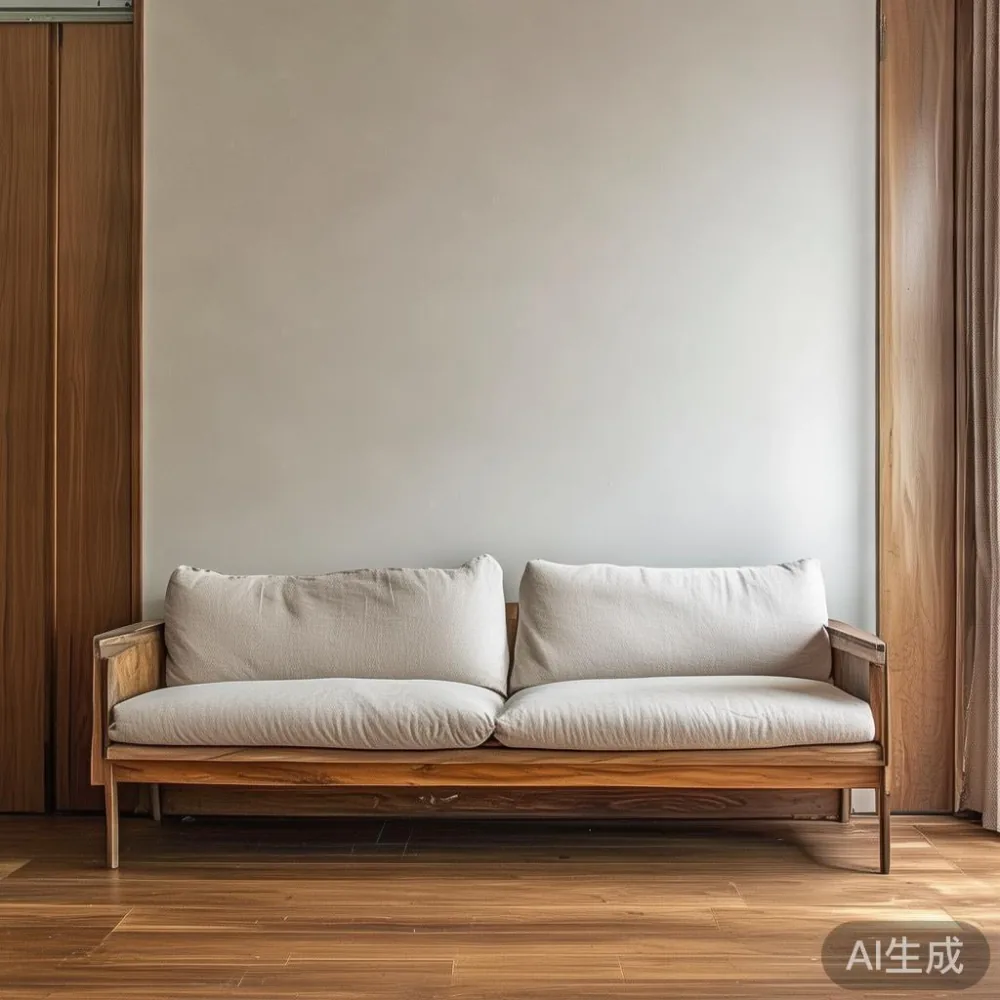
At MIDHILL, we design and manufacture solid wood furniture with that regional reality in mind. Our pieces are made for everyday use, backed by a 10-year structural warranty and supported with lifetime refinishing. Understanding how moisture moves through timber is the difference between furniture that ages gracefully and furniture that develops gaps, swollen drawers or a dull surface.
Why does humidity make solid wood furniture move?
Wood is hygroscopic: it absorbs atmospheric moisture and releases it when the surrounding air becomes drier. In Singapore, a dining table near an open window may swell by roughly 1–3 mm across a 180 cm top during a humid afternoon. A nightstand positioned beside an air-conditioning vent can lose around 1–2 mm across its 50 cm width overnight. These are small measurements, but repeated movement can loosen drawer runners, distort joints and make doors rub against their frames.
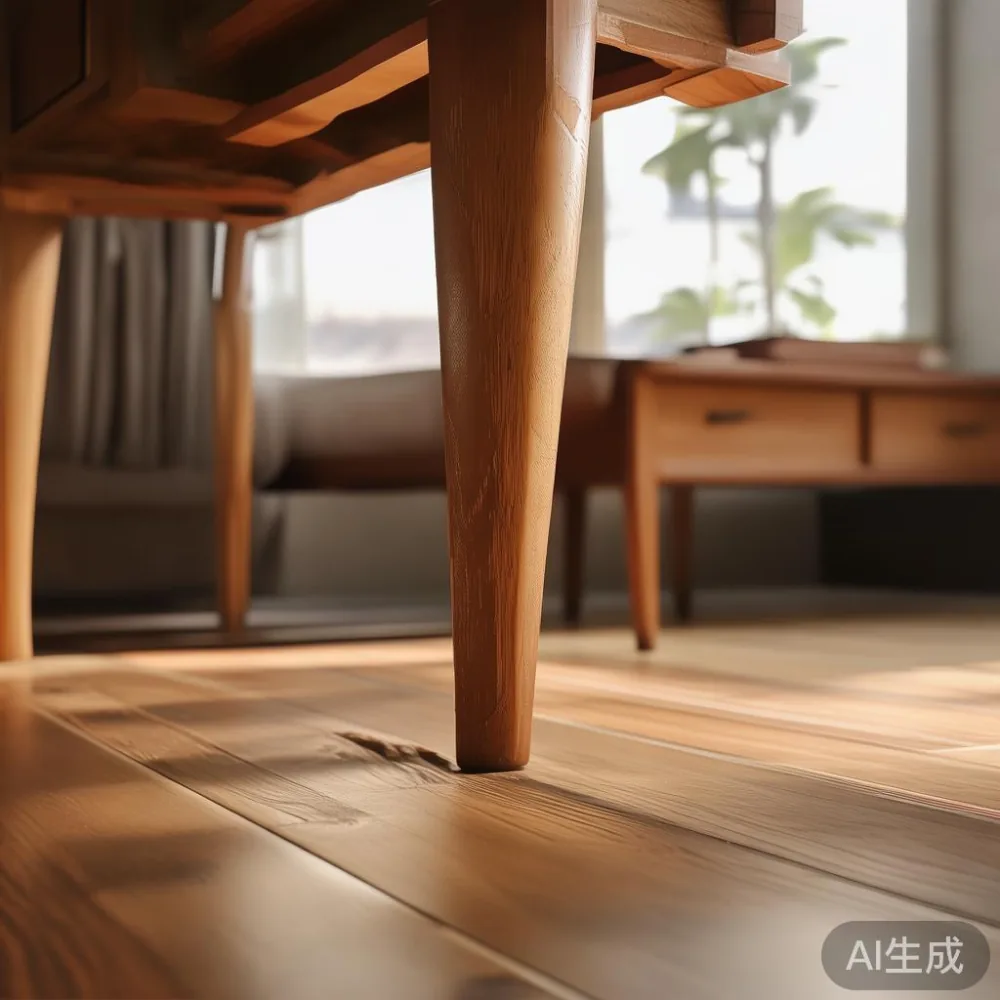
Seasoned hardwood still responds to humidity. Kiln-drying reduces moisture to a manageable level, but it cannot permanently seal timber from the environment. The more stable the indoor environment, the less movement occurs. For a work from home setup, that means keeping a solid wood desk or table away from direct air-conditioning airflow and away from windows that receive the heaviest rain.
The practical target is not laboratory-perfect dryness. It is a reasonable range, ideally between 45% and 65% relative humidity, with fewer abrupt changes. A hygrometer costing about SGD 18–35 makes the invisible condition visible. Place one in the room used for work from home rather than relying on a reading from the corridor, where the temperature can differ by 2–4°C.
How much room should I leave around a solid wood dining table?
Humidity-related movement is easier to tolerate when furniture has breathing space. For a 180 × 90 cm solid wood dining table, allow at least 90 cm from the table edge to a wall or fixed cabinet. That leaves roughly 60 cm for a seated person and 30 cm to pull out a chair. In a compact HDB dining area, a 140 × 80 cm table may be more workable: keep 75–90 cm around at least two sides and 60 cm on the others.
Do not push the table tightly against a cool wall or tile surface. Timber can lose moisture against those materials, while warm, moist air collects nearby. A gap of 5–10 cm improves airflow and gives you room to inspect the timber edge. It also helps when the table expands by a few millimetres.
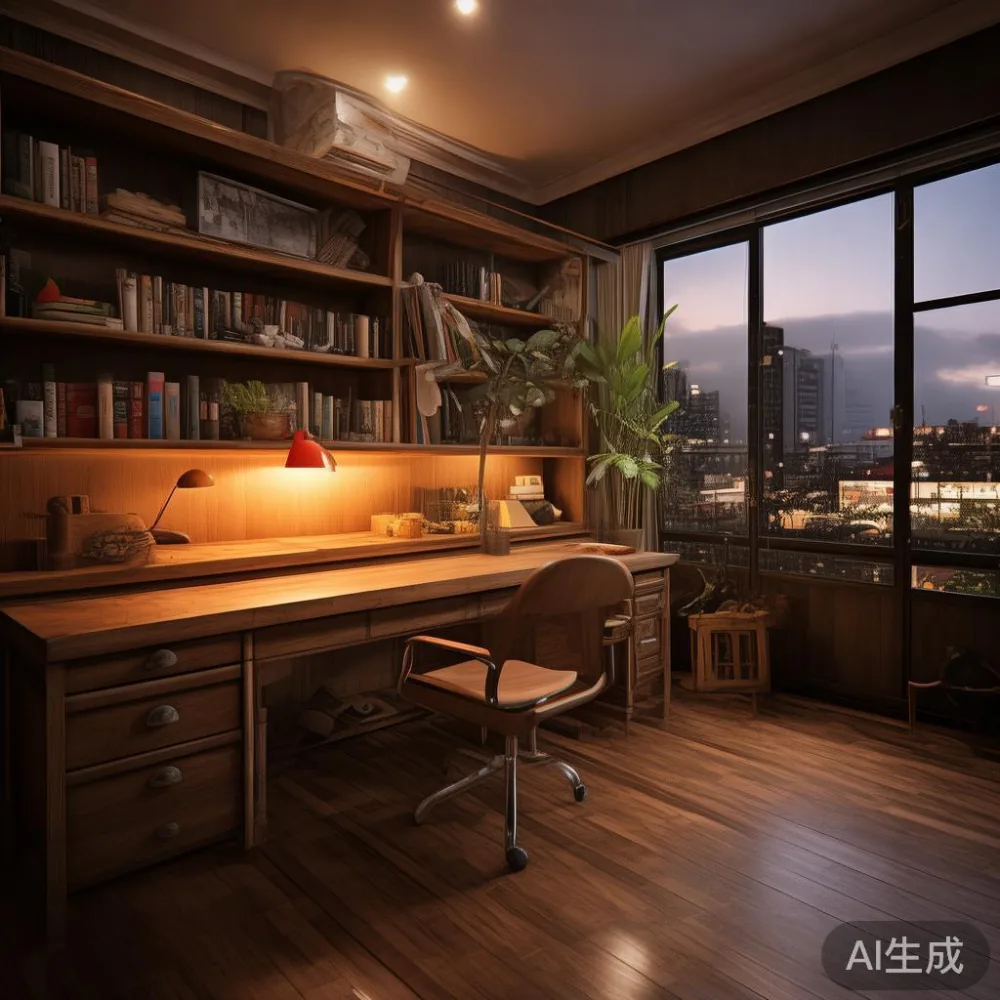
For a work from home corner, the same clearance applies to a solid wood desk. A 120 × 60 cm model should have at least 75 cm of clear space in front and 60 cm behind where a chair moves. Keep filing cabinets and printers at least 30 cm away so heat is not concentrated beside the timber. These clearances also make the arrangement feel calmer and more deliberate, especially in a room measured in centimetres rather than spare metres.
Which timber and construction details suit Singapore conditions?
Dense hardwoods such as oak, ash, beech and teak are commonly chosen because they are less prone to obvious movement than softer woods such as pine. No timber is completely immune, however. A wide solid wood tabletop can still respond to a 20-percentage-point humidity change. The key is stable seasoning, sound joinery and a finish that allows controlled moisture exchange.
Look for furniture whose panels are joined rather than relying on a large sheet held together entirely by screws. Mortise-and-tenon joints, dowelled drawer boxes and carefully fitted cabinet hardware help maintain alignment. For a solid wood sofa, choose a frame with sound corner joints and seat cushions that can be removed for airing. For a wardrobe, allow internal clearance for hanging garments and check that doors can be adjusted after the unit has acclimatised.
Oak and ash suit a Scandinavian mood, teak brings warmth to a tropical interior, and darker walnut-toned woods can support French light luxury or American light luxury styling. The finish should be described accurately: a hardwax oil or matte lacquer protects the surface differently from a high-gloss film. Ask the supplier how the coating is applied, how often it can be renewed and whether refinishing is available.
If you are comparing Japanese sofa vs Nordic sofa options, consider the timber frame separately from the upholstery. A Japanese approach often emphasises low profiles and restrained lines, while a Nordic sofa commonly uses lighter visual cues. For a 220 cm seating arrangement, a slim frame of 82–88 cm depth can preserve circulation in an HDB living room. Any solid wood base should remain clear of exterior walls where condensation is more likely.
Can I use a solid wood bed frame and wardrobe in an HDB bedroom?
Yes, provided the furniture is sized with ventilation in mind and is not placed against a damp exterior wall. A queen bed frame measuring 160 × 200 cm typically needs 10–15 cm beside the longer sides if drawers are built in, or 5–8 cm without under-bed storage. A king frame at 180 × 200 cm needs more room, especially where bedroom doors open inward.
For a wardrobe, allow around 5 cm behind the carcass if it is a freestanding piece. A built-in installation may need more care because the carcass has less opportunity to expand independently. Keep heavier solid wood pieces on level floors: in some older HDB blocks, a simple 1.5 m spirit level can reveal a local floor variation exceeding 5 mm. That unevenness can cause doors to bind even when humidity is stable.
Singaporean lift and corridor dimensions deserve attention before delivery day. A common HDB lift car measures about 1.1 × 1.4 m at the door, with internal dimensions near 1.35 × 1.8 m in many blocks, although older and newer estates vary. A bed frame packaged at 165 × 105 × 25 cm may fit many standard lift cars, but a sofa packed at 220 × 95 × 65 cm often will not. Check the lift capacity too: a protected solid wood dining table may weigh 55–90 kg, while a large wardrobe can reach 120–180 kg.
For corridor delivery, measure the narrowest turn rather than assuming a rectangular package will clear. Allow another 5–10 cm for protective corners and the carrier’s trolley. If a unit cannot enter the lift, it may need to be carried around the HDB corridor, a route that can involve corners, thresholds and fire doors.
How do I prevent mould, musty smells and finish changes?
Use your solid wood furniture in a way that separates daily moisture from the timber. Coasters with a 10–12 cm diameter are sensible beneath hot drinks, and a tray can protect a marble table from rings. A marble table should not be treated as a damp surface for potted plants: place a 15–20 cm waterproof saucer beneath each pot and avoid water running over the edge.
Clean wood with a soft cloth lightly dampened with water, then dry it within 5 minutes. Avoid soaking cloths, steam cleaning or household cleaner directly on the surface. For lacquered pieces, follow the maker’s care instructions; a neutral pH-7 cleaner is generally safer for coated and oiled finishes than an acidic or strongly alkaline product.
Leave a 20–30 cm air gap behind a wardrobe when the wall is exterior-facing, and use a moisture absorber rated for roughly 10–20 litres if the room repeatedly exceeds 70% humidity. Replace the absorber when its collected water reaches the marked level. Do not stack solid wood bed frame components or solid wood sofa cushions against a wardrobe side, because trapped moisture can create musty odours and mould risk.
For ventilation, run the air conditioner for 30–60 minutes before opening a wardrobe in the evening. If condensation appears on the glass, leave the gap between the window and the frame unobstructed. A dehumidifier that extracts 10–16 litres per day can keep a bedroom near 55% relative humidity. Position it away from the wardrobe and solid wood dining table, because concentrated airflow may dry one side faster than the other.
How should I style solid wood furniture in a small apartment?
Start with proportion, then layer on style. In a Tampines HDB flat, a 180–200 cm solid wood sofa can work if the room is at least 300 cm wide. For a narrower living room around 270 cm, a 160–175 cm sofa is easier to manage. Leave 80–90 cm from the sofa arm to a coffee table and at least 60 cm to the television console. A solid wood coffee table should sit 35–45 cm from the sofa edge.
If you are planning how to style Japandi sofa in apartment spaces, focus on low visual weight. A low-backed solid wood sofa in a pale oak tone, a slim 100–120 cm console and a rug measuring at least 160 × 230 cm can make the room feel ordered. Keep the rug 8–12 cm beyond the front sofa legs for a balanced proportion.
French light luxury can be introduced through curved profiles, warm cream textiles and a marble table with visible grey veining, not through an overload of ornament. For a 3.3 × 4.2 m condo living room, a round marble table of 90–100 cm diameter offers useful circulation when family members move around it. The restrained result reflects Modern light luxury for apartment layouts, where clean lines meet a few tactile focal points.
For the bedroom, anyone asking how to style French provincial bed in apartment interiors should use the frame as the main decorative element and keep nearby furniture simple. A 160 × 200 cm solid wood bed frame with curved corners suits a room around 3 × 3.6 m. The similar question of how to style French bed in apartment rooms has the same answer: use one upholstered headboard, two compact nightstands and curtains that stop 1–2 cm above the floor.
A dining zone can draw on the top 10 Scandinavian furniture ideas without filling every wall. Pair a 140–160 cm solid wood dining table with four slim chairs, a pendant centred 70–90 cm above the tabletop and one framed print. Maintain 75–90 cm around the table so humid expansion does not cause a chair or cabinet to touch it.
What should I do before a new piece enters my Singapore home?
Give new solid wood furniture time to acclimatise. Keep it in its protective packaging for 24–72 hours if possible, then unwrap it and leave it in the intended room for 7–14 days before tightening adjustable parts or treating the surface. This lets the timber respond gradually to local humidity.
During that period, inspect the dining table top, wardrobe doors and drawer fronts every 2–3 days. Minor gaps of less than 2 mm can sometimes appear as the wood changes; larger cracks, bouncing joints or doors that will not close should be reported with photographs and measurements. Keep packaging, hardware and care instructions until the furniture has settled, as they may be needed for assembly, warranty claims or refinishing.
After acclimatisation, check every 3 months during wetter periods and twice a year in drier months. Wipe the surface, inspect moving parts and note the room’s humidity reading. Buffing every 6–12 months helps maintain the finish, while refinishing should follow the maker’s guidance rather than an improvised sanding sequence.
Delivery arrangements should be confirmed before the day arrives. MIDHILL offers free shipping for orders over US$350, which is useful for cross-border purchases, though Singapore orders should have the local currency, GST treatment, delivery window and return arrangements confirmed in writing. Typical furniture delivery may require 7–21 days depending on production, stock, customs and the final Singapore address. The company also provides a 14-day returns policy, subject to the applicable item condition and terms.
Singapore’s humidity does not make solid wood furniture unsuitable for local homes. It makes responsible placement, stable indoor conditions and regular care important. With the right sizing for HDB corridors and lifts, a moisture-conscious finish and a clear maintenance plan, a solid wood sofa, bed frame, dining table, wardrobe, nightstand or marble table can remain comfortable and visually composed for many years.