How Southeast Asian Humidity Affects Wood Furniture at Home
Singapore’s warm, humid climate can change the dimensions, movement and appearance of solid wood furniture, especially in compact HDB flats and condominiums where work from home furniture shares space with bedrooms and dining areas. Outdoor relative humidity often reaches 70–85% during rainy periods, while air-conditioned interiors may remain near 50–60%. That difference matters because wood naturally responds to moisture by expanding, contracting and, over time, developing checks or joint movement.
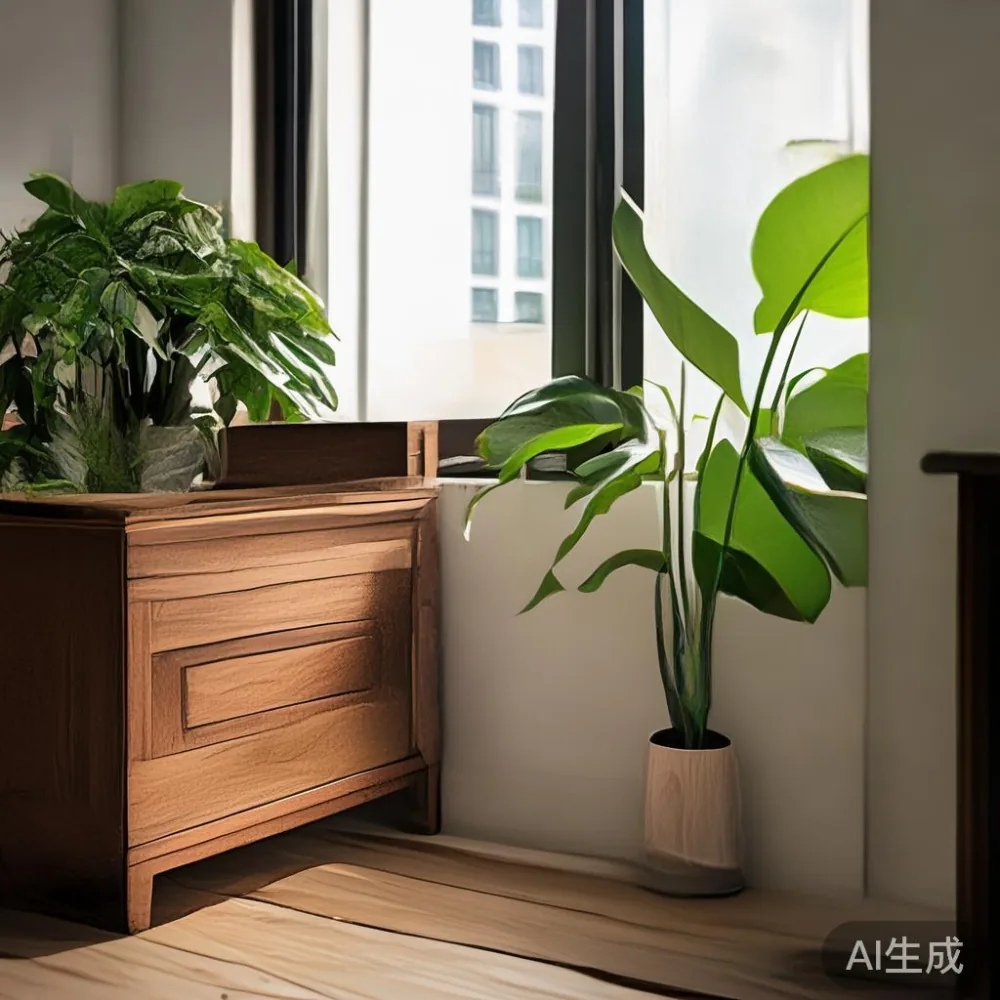
Good furniture planning accounts for this behaviour without treating every dark mark as a defect. It also considers lift dimensions, corridor turns, floor protection, delivery access and the practical needs of a home office. MIDHILL designs its solid wood furniture for repeated use and provides a 10-year structural warranty, lifetime refinishing and free shipping for orders over US$350, or approximately SGD 460 at a representative exchange rate of 1.32.
Why does Singapore humidity change solid wood furniture?
Wood is not dimensionally frozen. Its cellulose fibres absorb atmospheric moisture and release it again. In a humid room, a panel may swell across its width; in an air-conditioned room, it may shrink. A dining table top 180 cm long and 90 cm wide could undergo visible seasonal movement of roughly 2–6 mm depending on its species, thickness, finish and exposure. Movement of less than 1 mm may be barely noticeable, while wider gaps or distorted edges deserve investigation.
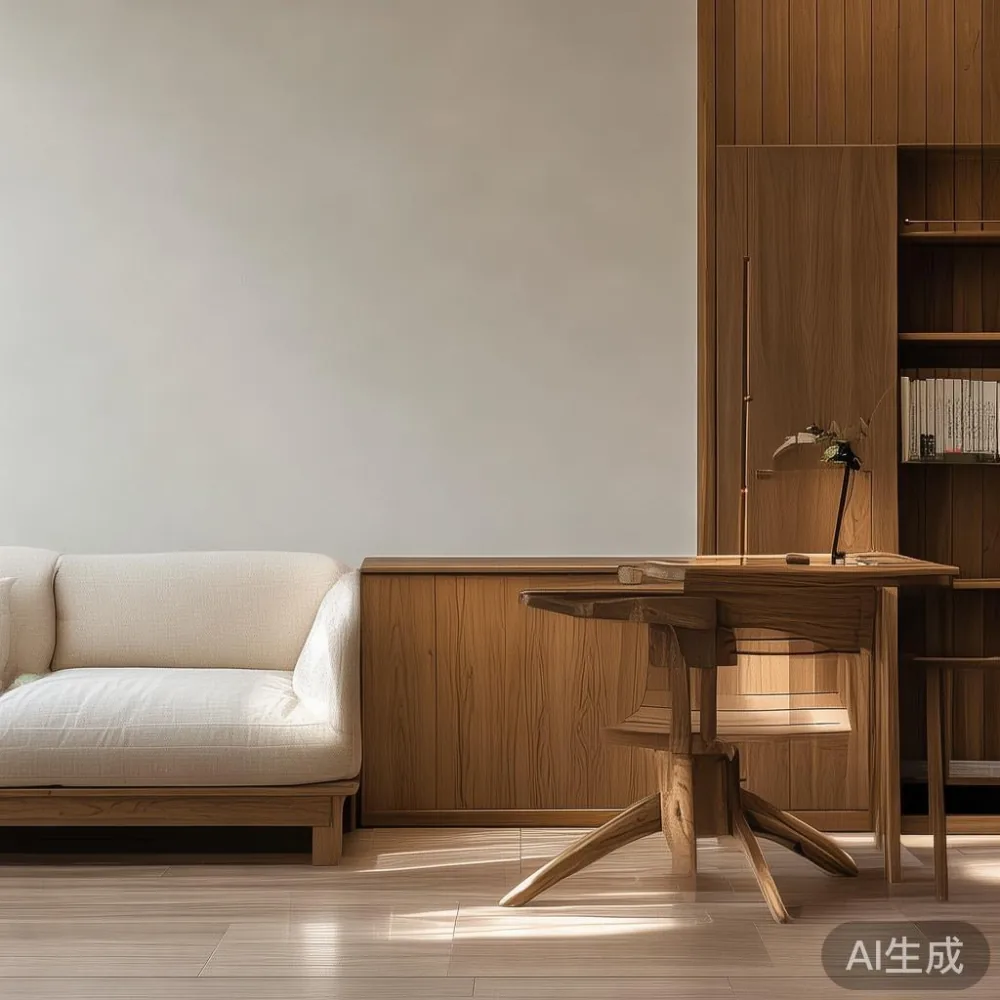
Seasonal movement differs from structural failure. A properly made solid wood table should tolerate normal expansion without collapsing. Poorly seasoned stock, an unsuitable joint design or direct water exposure can create deeper cracks called checks. A wardrobe door that catches repeatedly at 70% humidity may indicate movement, but it may also indicate a hinge alignment issue. A nightstand drawer that feels tight after a rainy afternoon should be inspected for both the wood and the hardware.
Singapore HDB flats amplify the challenge because internal corridors and compact rooms may restrict airflow. Tampines, Bedok and Punggol homes often have excellent natural ventilation, yet furniture placed against an exterior wall can still experience afternoon condensation risk. Air conditioning lowers humidity but may dry the surface unevenly if vents point directly at a bed frame or dining table.
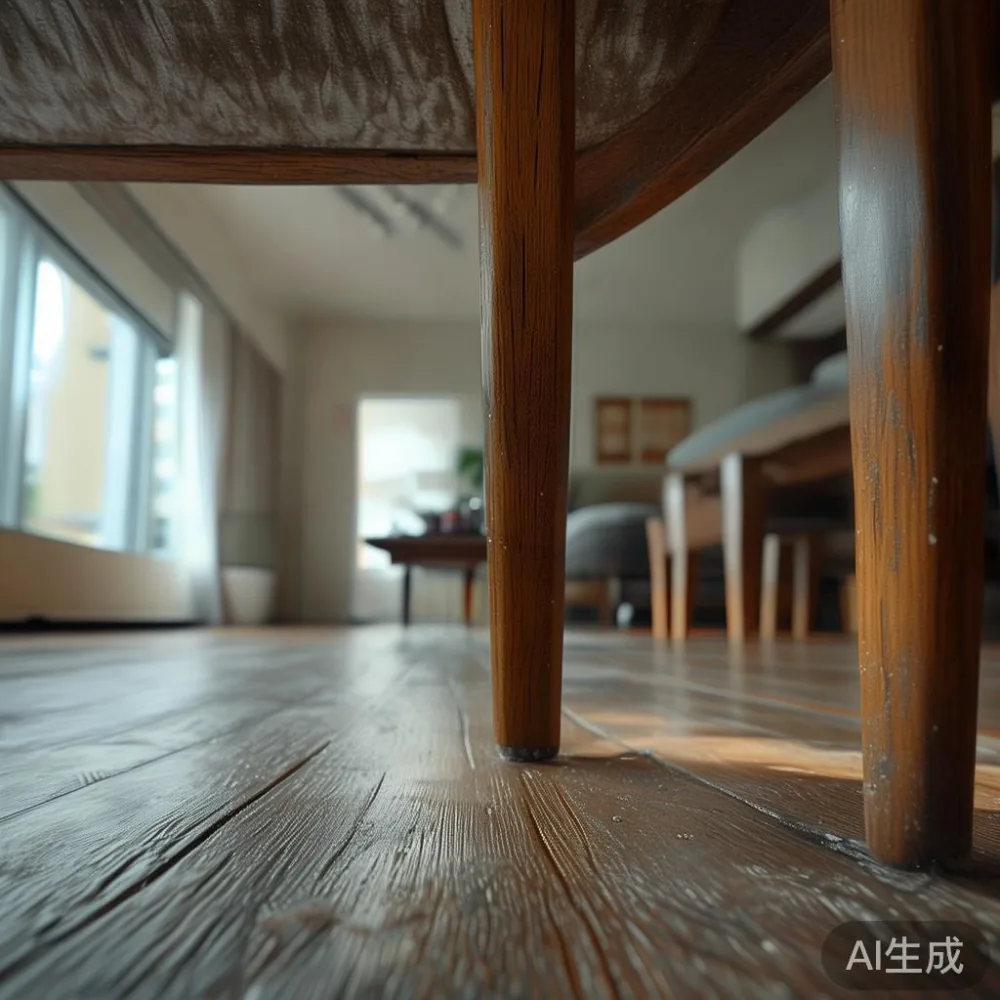
My own test was modest but revealing. Last month, I visited a colleague’s three-room Bedok HDB flat and placed one oak test strip beside a solid wood dining table. The strip was 60 cm long, 12 cm wide and 1.8 cm thick. It was marked at 0, 30 and 60 cm so any distortion could be observed. After 21 days of changing weather and daily air-conditioning use, its width changed by about 1.5 mm, while the longest measurement changed by less than 1 mm. The finish stayed intact, and the movement closed when moisture conditions shifted. The lesson was clear: stable indoor conditions and sensible placement reduce stress, but no solid wood product can remain completely motionless.
How much humidity is comfortable for wood furniture?
For most occupied Singapore interiors, maintaining relative humidity around 45–60% is a sensible target. During very wet afternoons, short peaks may occur, especially near windows. Below about 40% for many hours or days, wood may lose enough moisture to tighten joints, develop small surface checks or contribute to veneer-related finishes drying differently. Above 65%, the risk of mould on nearby fabrics, swelling in drawers and corrosion on metal fittings becomes more noticeable.
A digital hygrometer is inexpensive: practical models commonly cost SGD 12–35. Place one 80–120 cm above the floor and away from an air-conditioner vent, bathroom door or sunlit window. Check it at three times: around 8 a.m., 3 p.m. and 10 p.m. Record readings for 7 days. This gives a more useful home profile than a single reading.
Climate control should be gradual. Running an air conditioner for 2–4 hours after a humid afternoon can bring a room into a stable range. A dehumidifier may help in persistently damp corners, but it should not be directed straight at a wardrobe or solid wood sofa. Rapid surface drying can exaggerate movement while the centre of a thick board remains moist.
Leave space around large furniture. A solid wood dining table with leaves extended may need at least 90 cm of clearance for chairs and 60–90 cm of circulation space on frequently used sides. In an HDB dining zone close to a wall, allow approximately 10–20 cm behind the table for airflow and maintenance. A wardrobe should normally have 5–10 cm of rear ventilation space where the installation instructions permit, with its sides not pressed against damp masonry.
Which furniture needs the most moisture protection?
A marble table is less vulnerable to humidity because stone does not absorb water in the same way as timber. Its concerns are different: acidic liquids can etch the surface, heavy objects can chip edges and protective sealers require maintenance. A marble dining top measuring 160 cm by 90 cm may weigh about 65–110 kg, depending on thickness and density. Check that the route from the service lift to the dining position can accommodate both the packaged dimensions and the weight.
A bed frame should be treated as a long-term investment, especially when doubling as work from home infrastructure for daytime calls. Keep the solid wood frame 30–60 cm from an open window if rain-driven humidity is frequent, and avoid placing laptop vents directly against a headboard panel. A mattress or under-bed platform trapped beneath the frame needs airflow, particularly if it retains moisture after air conditioning stops.
A wardrobe with tall side panels offers more surface area for seasonal change. Inspect hinges every 3–6 months because seasonal movement can slightly alter alignment. Do not force a swollen drawer. Remove contents, reduce indoor humidity and allow the wood to respond naturally. If a door needs 2–3 mm of adjustment, an installer may be able to correct the hinge rather than cut the panel.
A nightstand is useful for a work from home setup because it can hold a lamp, charger and 25–35 cm-wide laptop. Choose a model with a rear cable opening or a surface large enough for a lamp and documents. Place coasters beneath drinks and use trays for pens. Small spills matter more on a lacquered or oiled surface than some engineered surfaces, although the finish still requires care.
For clients searching Japanese for guest room ideas, use humidity awareness to guide material selection rather than relying only on appearance. A bed frame or compact daybed should sit on stable ventilation, while a Japanese-style guest room concept still benefits from concealed storage, washable textiles and simple monitoring. For under 2000 Boho furniture, ask whether the seller distinguishes solid timber from plywood, particleboard or veneer, and request the moisture content range for the local market.
How can I prepare a solid wood dining table for Singapore weather?
Before delivery, acclimatise the table to the actual room. If possible, bring it to the dining area 24–48 hours before breakfast use. Remove any shipping film only after checking the surface for condensation. A recommended routine is to wipe it with a soft cloth dampened with plain water, not a household cleaner, and dry it immediately. Repeat every 7–10 days during humid spells and every 2–4 weeks in air-conditioned periods.
Use felt pads under each leg, sized for the actual floor and table load. A 180 cm solid wood dining table may weigh roughly 55–90 kg depending on species and construction. Felt pads prevent scratches, allow air circulation and make future movement less abrasive. Avoid rubber mats that trap moisture. Position the table away from bathroom doors, kitchen steam, laundry areas and exterior walls with visible dampness.
For extension leaves, clean the leaf cavity gently and inspect the locking mechanism. Apply the manufacturer’s approved wax or maintenance product sparingly, approximately once every 6–12 months, unless the finish is factory-sealed and the supplier specifies otherwise. Never pour oil directly onto timber. One measured application of 5–10 ml per small panel is usually enough to distribute with a clean cloth.
A light luxury accent chair can soften a work from home room without overwhelming a compact dining area. Give the chair 75–90 cm of clearance behind it and keep any roller mechanism clear of the table legs. Choose a removable washable seat cover in humid conditions. If the chair has solid timber arms, wipe them after handwashing or rain exposure, since skin oils and water can darken untreated areas.
What should I check before furniture is delivered to my HDB flat?
Measure the route before choosing the largest box. Record the HDB unit door width, corridor width, lift car dimensions, lift doorway and any turn between the lift lobby and home. A sofa with a boxed width of 225 cm may fit a standard HDB corridor but can become impossible to rotate near a fire door. A bed frame may disassemble into sections of 110–165 cm, while a dining table may arrive in one protected carton.
Measure diagonally as well as horizontally. For example, a 210 cm corridor with a 90 cm turn may not admit a 220 cm rigid panel. Ask the supplier for the carton dimensions and gross weight, not merely the furniture dimensions. A solid wood dining table packed at 190 cm by 105 cm by 18 cm may require a lift opening above 105 cm and a trolley rated for at least 90 kg.
Confirm delivery timing before purchasing large items. Singapore domestic delivery commonly takes 7–14 days after order confirmation, although stock, access and renovation dates can alter the schedule. Add 1–2 days for a new HDB handover or an unmeasured stair route. Check whether the delivery team carries items into the unit, places them in the room and removes packaging; these services should be stated clearly.
Protect floors during the move. Cardboard sheets should be at least 3 mm thick, and heavier frames may require 6–12 mm protection boards. Do not drag a solid wood bed frame across tile. Use lifting straps rated for the load, furniture sliders or a team of 2–3 people. A 55 kg dining table is manageable with the correct technique, not brute force.
How do I maintain a work from home bedroom without damaging wood?
Separate sleeping and work functions where the room allows it. A compact work from home setup can use a 120–140 cm desk, a 60–70 cm solid wood sofa or a small dining table, and a wall shelf placed no closer than 20–30 cm from a window. If a dining table serves as the desk, measure seated knee room: approximately 60 cm wide and 55–65 cm deep is practical for many adults.
Keep a hygrometer on the desk shelf, not directly beside a humidifier or air-conditioner remote. Use a coaster for a mug and a tray for headphones, chargers and a 500 ml water bottle. If a work from home bedroom also receives clients, remove papers from the bedside area during humid nights and allow the room to air after meetings.
For design planning, Scandinavian for small living room layouts often combine pale timber, simple storage and restrained visual elements. That approach suits Punggol or Tampires interiors where the sofa, dining table and work surface must coordinate. Check that the sofa frame is genuinely solid where the product description says solid wood sofa, and ask whether cushions are foam, latex or feather; those fillings have different humidity-related care needs.
For a bed frame, inspect joints and corner blocks after the first 30 days, then every 6 months. Do not over-tighten bolts simply because seasonal movement is normal. Keep the frame 15–30 cm away from curtains that touch the floor, and avoid placing it against a frequently damp exterior wall. For advice on how to style European bed in apartment layouts, measure the room in 10 cm increments, leave 60 cm beside the bed where possible and reserve 90 cm at the foot for circulation.
Can humidity damage a marble table or a European-style bedroom?
Humidity does not usually make marble bend, but moisture around the stone can affect adhesives, sealers, cleaning residues and nearby timber. Wipe water promptly from the base and edge. Test any cleaner on an inconspicuous area, wait 24 hours and compare the result. Keep acidic liquids such as citrus juice, vinegar and wine away from the surface, even when a sealer is present.
European-style furniture works well in Singapore apartments when scale is controlled. A European bed with a tall headboard may look substantial but consume 15–30 cm of visual and physical space. For a condo bedroom, a headboard below 110 cm can preserve openness, while a 150–180 cm bed frame needs 60 cm minimum clearance on at least one side. The mattress should breathe beneath its cover, and solid timber panels should not be sealed against wet walls.
For product questions, including how to choose Japanese sofa, ask about frame material, cushion density, removable covers and aftercare. A Japanese-style sofa is often low and compact, but its dimensions still matter. A 180 cm model may need 90 cm in front for circulation and can be difficult to carry through a narrow corridor. Request the actual packed size before selecting the colour or finish.
MIDHILL coffee table planning should account for the work from home routine: laptop heat, water rings and frequent cleaning. Choose a finish approved for the table’s wood species, place it at least 20 cm from an open window and keep coasters on every frequently used position. A solid wood top should be wiped dry after evening meetings, while a marble top should receive a neutral, stone-safe cleaner rather than a generic household spray.
What is the sensible 7-day humidity routine?
Begin by checking the hygrometer at the same three times each day for 7 days. Note whether the reading rises above 65% after rain or falls below 45% when air conditioning runs for 8–10 hours. Look for condensation on window frames, wall bases and wardrobe doors. Damp fabric or musty odours are moisture indicators even when the timber itself appears unchanged.
Use a routine that takes less than 15 minutes on a Sunday. Dust with a dry microfibre cloth, inspect coaster placement, check moving drawers and wipe any exposed spill. Every 30 days, inspect the dining table, bed frame, wardrobe and nightstand near walls or windows. Every 6 months, check hinges, bolts, legs and finish sheen. These intervals are guides, not guarantees; increase them after severe rain or a water leak.
Do not compensate for humidity by placing every piece directly against an air-conditioner vent. Airflow is useful, but an abrupt dry stream can stress edges and lacquer. Aim for gentle movement, moderate temperatures and stable conditions. Keep plants on a separate stand where possible, use laundry outside the bedroom when practical and separate drink stations from timber work surfaces.
Solid wood furniture can remain serviceable in Southeast Asia when humidity is treated as a living environmental factor rather than an enemy of wood. Stable indoor conditions, measured clearances, careful cleaning and realistic expectations allow a solid wood sofa, bed frame, dining table, wardrobe, nightstand or marble table to fit a Singapore home for years. MIDHILL’s 14-day returns policy and lifetime refinishing offer practical support during the first assessment period, while the 10-year structural warranty addresses long-term construction confidence.
Before placing an order, save the room measurements, request the packed dimensions, check the finish maintenance guidance and plan delivery for a dry access window. Small preparation before a 7–14 day delivery can prevent much larger problems later.