Veneer vs Solid Wood Over 5 Years: A Singapore Home Office Cost Breakdown
My colleague Priya moved into a 4-room HDB in Punggol in mid-2024 and spent her first weekend walking through the Tampines IKEA with a tape measure. She needed a work from home desk, a bookshelf, and a dining table that could survive her two-year-old, her husband, and the steady humidity that pushes past 80% most afternoons. Five months later, two of those veneer panels had already bubbled along the back edge of the desk where it met the wall, and the laminate top of her dining table had a faint ring from a forgotten mug. That was the moment she started asking me whether veneer really costs less than solid wood once you look past the price tag.
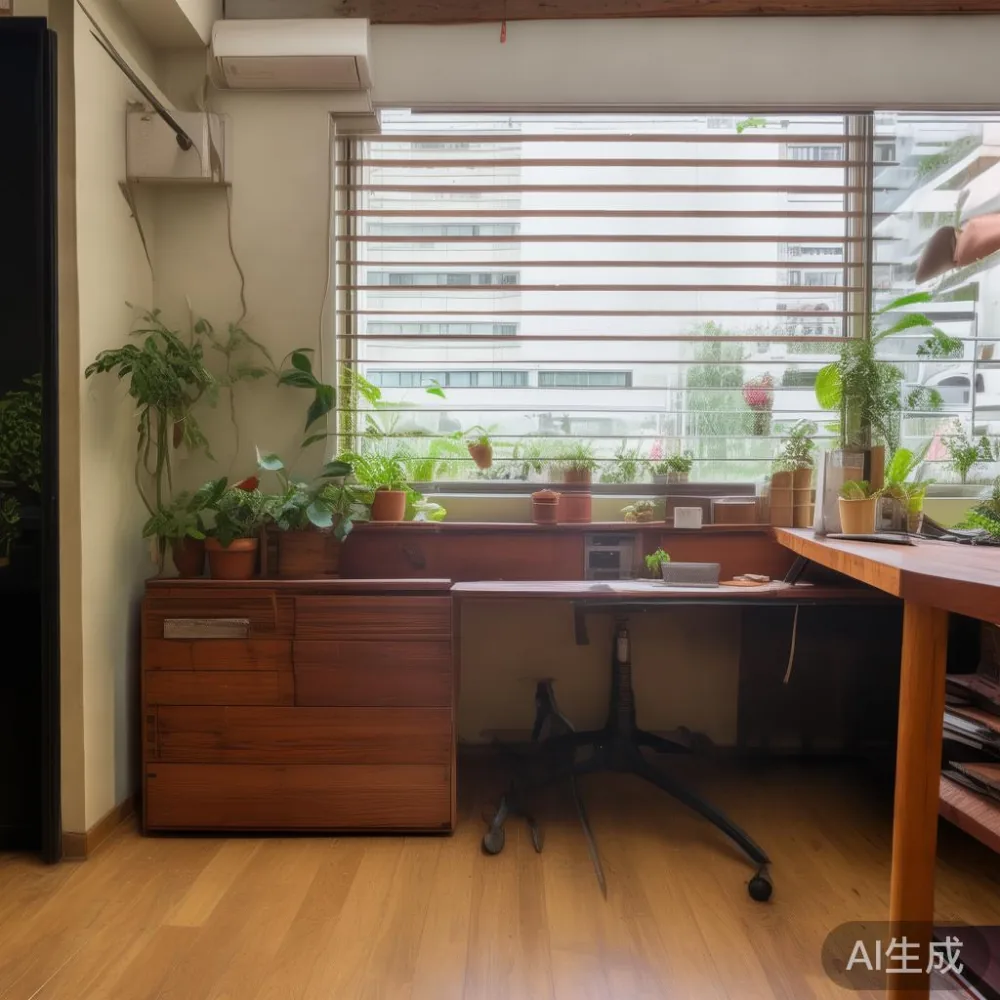
For Singapore buyers furnishing a BTO or a resale condo, the upfront difference between a veneered particleboard dining table and a solid wood one feels obvious: S$459 versus S$1,290 for what looks like a similar table. But anyone running a work from home setup in a Tampines or Bedok flat learns quickly that the sticker price is only the first chapter. A five-year window covers daily WFH wear, two or four GST-inclusive deliveries up the lift, at least one humid season, a possible move, and the small accidents that turn cheap surfaces into tired ones. Below is the breakdown I now share with anyone who asks, built around real numbers from Singapore showrooms and shipping quotes.
What you actually pay on Day 1 in Singapore
Let us anchor the comparison in a specific piece: a 140 cm x 80 cm dining table for four, the kind that doubles as a standing-desk overflow during peak work from home weeks. In local stores, a veneer-on-MDF table from a mass-market chain sits between S$399 and S$659 including the 9% GST. A comparable solid wood dining table in white oak, ash, or rubberwood runs S$1,190 to S$1,890 delivered. A heavier 160 cm x 85 cm model in walnut or teak sits at S$1,890 to S$2,690.
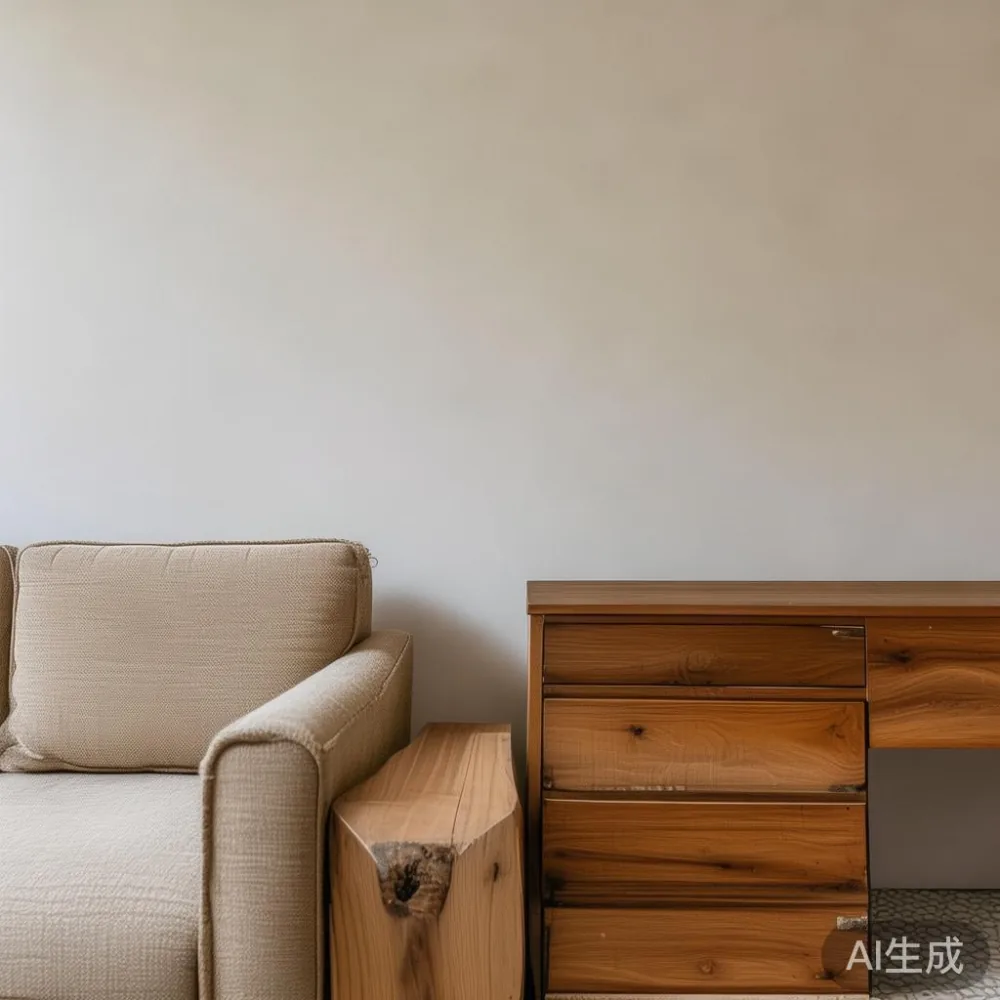
Add delivery, since lift access in HDB blocks limits the cart to pieces under about 1.8 m and under 80 kg per panel. Veneer pieces arrive flat-packed in 2 to 3 cartons weighing 25 to 40 kg total, and most local stores deliver free above S$300. A solid wood table ships in a single crate between 60 kg and 90 kg, fits comfortably in a service lift, and is often delivered and carried in for S$60 to S$120. If you live above the 10th floor in a Punggol or Bedok block without a service lift, that number climbs toward S$180. MIDHILL handles white-glove delivery into the unit across the island, which is one reason Priya eventually went that route after her first flat-pack wobble.
So the realistic Day 1 delta for the dining table alone, including GST and delivery, is roughly S$850 to S$1,400 in favour of veneer.
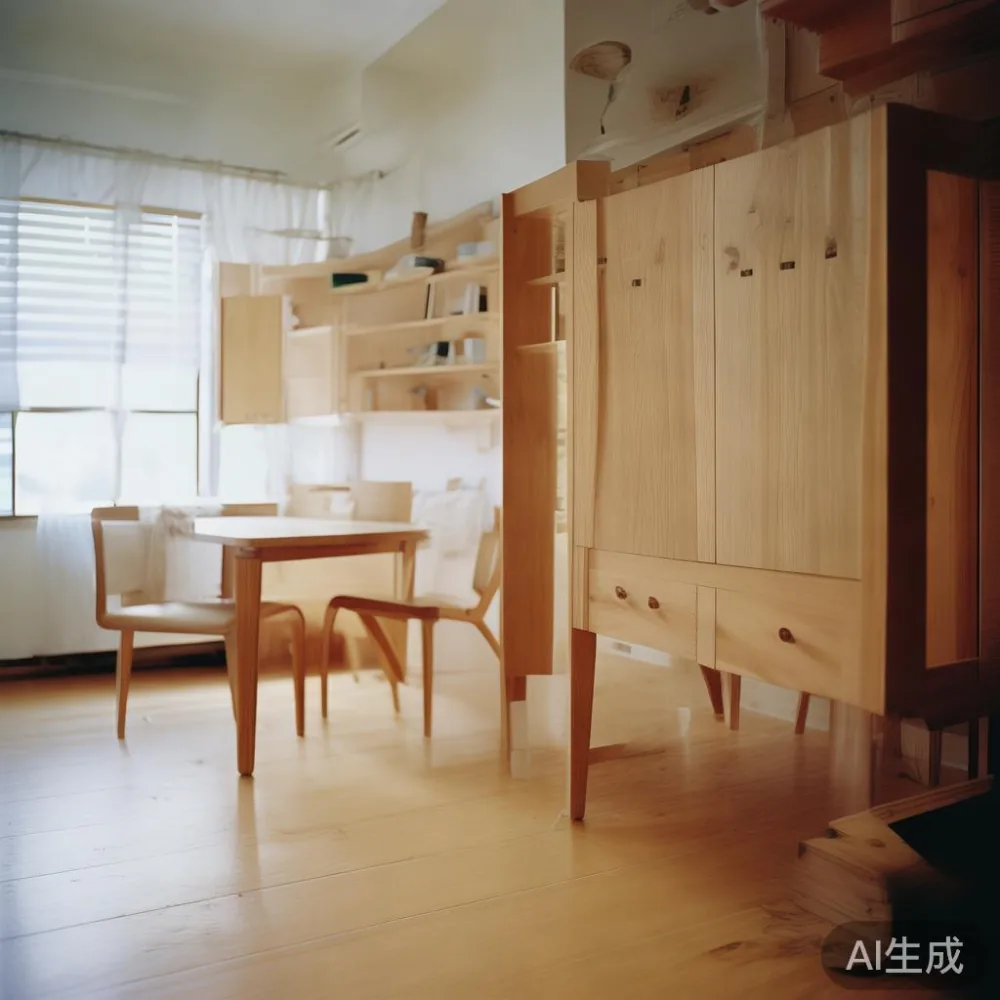
Years 1 to 2: humidity, daily wear, and the work from home grind
Singapore averages 78% to 84% relative humidity for most of the year, and the indoor temperature in a non-air-conditioned study sits between 27°C and 31°C. Veneer is a 0.3 mm to 0.6 mm slice of real wood glued to an MDF or particleboard core. Once the seal fails along an edge, the substrate wicks moisture and the surface lifts within weeks. Priya's desk showed the classic 8 cm bubble near the cable grommet by month five. A solid wood slab, by contrast, absorbs and releases moisture across the whole board, so it moves as one piece rather than delaminating.
This matters even more for work from home furniture that is stationary all day. A solid wood desk in a 3 m x 3 m study in a Punggol Northshore BTO still needs a wipe-down each evening, but it does not swell at the seams when the afternoon thunderstorm rolls in. A solid wood bed frame, wardrobe, and nightstand will outlast the same items in veneer by years under the same conditions, simply because there is no paper-thin surface layer to peel back. For light luxury bed vs Nordic bed decisions specifically, the construction method matters more than the label: a French light luxury bed in solid ash and a Scandinavian-style bed in solid pine will both survive Singapore humidity; a French light luxury bed built on MDF with a 0.5 mm oak veneer will not.
By month 18 to 24, a veneered dining table in daily use typically shows one or more of the following: a 3 cm to 6 cm bubble near the edge, a permanent ring from a hot mug, a chipped corner from a chair leg, or a sun-bleached patch by the window facing west. Solid wood in the same spot shows scratches, light surface dents, and a gradual honey patina that most people describe as character rather than damage.
How much do repairs actually cost in Singapore?
Veneer repair is fiddly and rarely invisible. A local carpenter in Tampines or Bedok charges S$80 to S$160 to glue and clamp a small bubble, but the seam will usually show. Replacing a delaminated top on a flat-pack dining table is rarely worth the labour because the new top is closer to the original price than the repair quote. Local furniture restorers charge S$120 to S$280 to patch and colour-match a heat ring or chip on a veneer top, with no guarantee the patch stays flat through the next monsoon.
Solid wood repair is simpler. Surface scratches on an oak or ash dining table take 20 minutes with a 180-grit sand and a wipe of hard wax oil. A local refinisher in Singapore charges S$180 to S$350 to sand and re-oil a full dining table top, and a nightstand usually sits at S$80 to S$120. Solid wood pieces from brands like MIDHILL come with a lifetime refinishing service, so the cumulative spend on restoration over five years can be zero aside from courier fees. Add those to the math: even if you refinish the solid wood dining table once in year four and the nightstand once in year three, you are looking at S$300 to S$450 across five years.
Year 5: what each piece is worth on Carousell or to a new BTO owner
This is the line item most people forget. A typical 4-room HDB owner stays 4 to 7 years before moving up or out, which means almost everyone selling their work from home furniture does so within a five-year window. A used veneer dining table that has bubbled or chipped has a residual value close to zero; I have watched Priya list a three-year-old veneer desk for S$40 and receive no takers for six weeks. A solid wood dining table in good shape lists for 40% to 55% of its original price. A solid wood bed frame in white oak regularly sells for S$600 to S$900 after four years of use. A solid wood wardrobe and nightstand hold similar value.
Run the numbers for Priya's three pieces. The original veneer desk (S$459), dining table (S$599), and bookshelf (S$349) cost S$1,407 plus S$165 in delivery and one mid-cycle repair of S$140, for a five-year total of S$1,712. Resale value today: roughly S$200, giving a net five-year cost of about S$1,512.
The comparable solid wood set from a Foshan manufacturer such as MIDHILL (solid wood sofa frame, bed frame, dining table, wardrobe, nightstand in ash or oak) cost S$2,990 plus S$120 in white-glove delivery. One refinish in year three added S$220. Resale after five years: about S$1,400. Net five-year cost: roughly S$1,930. The gap closes from S$850 on Day 1 to about S$418 by year five, and the solid wood pieces are still serviceable for another five to ten years.
How does this change if you actually use the room for work from home every day?
A study room used eight hours a day, five days a week, takes 2,000 to 2,200 hours of annual use on the desk alone. Veneer tops on budget desks are typically rated for 10,000 to 15,000 hours of light office work before edge failure, which sounds generous until you remember a child, a cat, or a daily mug of kopi. A solid wood work from home desk, even a basic ash or rubberwood model, is rated well past 30,000 hours. If you are choosing between a S$489 veneer work from home desk and a S$1,090 solid wood work from home desk, the five-year cost per hour of use is roughly S$0.10 for veneer versus S$0.07 for solid wood once resale is included.
The same logic applies to a work from home wardrobe that doubles as a study closet. A 120 cm x 60 cm veneer wardrobe starts to sag at the hinge by year three; the solid wood version still hangs straight at year ten.
What about marble, marble tables, and statement pieces?
Marble tables are a different category, but they often enter the same room. A 90 cm round Italian Carrara marble table for the study sits at S$1,890 to S$3,490. Marble does not delaminate the way veneer does, but it stains, etches, and chips from acidic spills, which means coasters, sealing every 12 to 18 months, and a S$180 to S$320 professional polish around year three. Pair a marble table with solid wood chairs or a solid wood base, and the five-year story reads well. Pair it with veneer chairs, and the chairs fail long before the marble does.
For seating, the same math holds: a solid wood sofa frame under a washable slipcover outlasts a veneer-frame sofa by 8 to 12 years, and the cushion foam is the only replaceable part. Light luxury bed vs Nordic bed shoppers should weigh construction before fabric, since the frame is what survives Singapore humidity. Buyers comparing European sofa vs Italian light luxury sofa options should ask specifically about kiln-dried beech or ash frames, since both styles live or die on the joinery underneath the upholstery. For shoppers chasing the best light luxury sofa for 2026, a kiln-dried solid wood frame with eight-way hand-tied springs is the detail that separates a five-year sofa from a twenty-year sofa, even when the fabric looks identical in the showroom.
Is the lighter, post-modern light luxury look still possible on a solid wood budget?
Yes. American light luxury and post-modern light luxury styles lean on clean lines, slim profiles, and warm neutrals, all of which translate well into solid ash, white oak, and walnut. A post-modern light luxury dining table in solid ash with a 6 cm chamfered edge runs about S$1,490 in a 150 cm x 80 cm size, well within the same bracket as a heavy veneer table once you include refinishing and resale. A French light luxury nightstand in solid beech with brass pulls lists at around S$420, comparable to a high-end veneer nightstand at S$280 that will not survive its first move.
The style categories often blur in Singapore showrooms. Buyers searching Italian light luxury for guest room setups frequently end up comparing solid walnut beds against engineered-wood beds that look similar on Day 1. The difference shows up in year three, when one still feels firm under hand pressure and the other has started to creak at the centre rail. Buyers comparing the best Mid-century modern sofa for 2026 against an Italian light luxury sofa should ask the same kiln-dried question, and weigh that against the 10-year structural warranty that comes standard on solid wood frames from manufacturers like MIDHILL.
Will my veneer furniture survive the move to my next BTO?
Most HDB movers charge S$280 to S$520 for a 3-room flat and S$380 to S$680 for a 4-room flat, depending on lift access and floor. Flat-pack veneer pieces disassemble and reassemble cleanly the first time. After a second or third move, the cam locks strip, the particleboard crumbles at the corners, and a wardrobe that cost S$549 new is worth S$20 at the recycling bin. Solid wood furniture moves more cheaply per trip because it does not need disassembly, and it survives three or four moves without joint failure. After five years and one move, the solid wood wardrobe has roughly S$700 of resale value left. The veneer wardrobe has zero.
So is veneer really cheaper, or are we just measuring Day 1?
Veneer is cheaper on Day 1, and that is a fair reason to choose it for short-term staging furniture, a one-year rental, or a child's room that will be re-themed next year. For a work from home setup that will see daily use, a move within five years, and Singapore humidity, solid wood delivers a lower five-year cost once refinishing and resale are included. The Day 1 delta of roughly S$850 to S$1,400 shrinks to about S$400 to S$600 by year five, and the solid wood set still has five to ten years of service left.
If you are furnishing a Tampines, Bedok, or Punggol flat for the next half-decade, ask the showroom for the substrate spec, the warranty length, the refinishing policy, and the kiln-dry certificate. The MIDHILL dining table is a good benchmark for the price-to-life ratio, since the white-oak construction and lifetime refinishing cover the two failure modes that punish veneer in Singapore. The cheapest piece on the showroom floor is rarely the cheapest piece you actually own.